Seasonings may not seem like a survival essential compared to food staples, water, and shelter, but they play a far greater role than many realize. In any long-term off-grid or post-collapse scenario, flavor, nutrition, and morale become scarce resources. A properly stocked spice cabinet can transform bland rations into nourishing meals, provide medicinal remedies, and create high-value barter goods.
In this guide, we’ll go beyond the basics and take a deep dive into how to harvest, preserve, store, and use herbs and spices off grid with minimal equipment.
The Survival Value of Seasonings
- Flavor: Staples like rice, beans, wheat, and potatoes can sustain life, but without seasonings, they become monotonous. Boredom with food often leads to appetite fatigue, which can cause malnutrition even when calories are available.
- Medicine: Garlic as an antibiotic, cayenne for circulation, peppermint for digestion, oregano for respiratory issues, and turmeric for inflammation are just a few examples. Seasonings double as a survival pharmacy.
- Nutrition: Many herbs provide trace minerals, antioxidants, and vitamins that store-bought rations often lack.
- Barter: In any collapse scenario, a jar of dried garlic or smoked chili could hold more trade value than gold.
Growing & Harvesting: Getting the Most Potency
Best Herbs & Spices to Grow
- Leafy herbs: oregano, basil, thyme, mint, parsley, cilantro
- Roots: ginger, horseradish, turmeric
- Seeds: coriander, dill, fennel, cumin
- Bulbs: garlic, onions, leeks
- Spices: chili peppers, paprika, mustard seed
Harvest Timing
- Leaves: harvest before flowering when oils are most concentrated. Pinch off just above a node to encourage regrowth.
- Seeds: cut seed heads once they turn brown but before scattering. Place in paper bags until fully dry.
- Roots: dig in fall after foliage dies back, wash, slice, and dry immediately.
- Bulbs: harvest once stalks fall over and tops begin to yellow. Cure in a dry, airy space for 2–3 weeks.
Off-Grid Preservation Methods
1. Air Drying
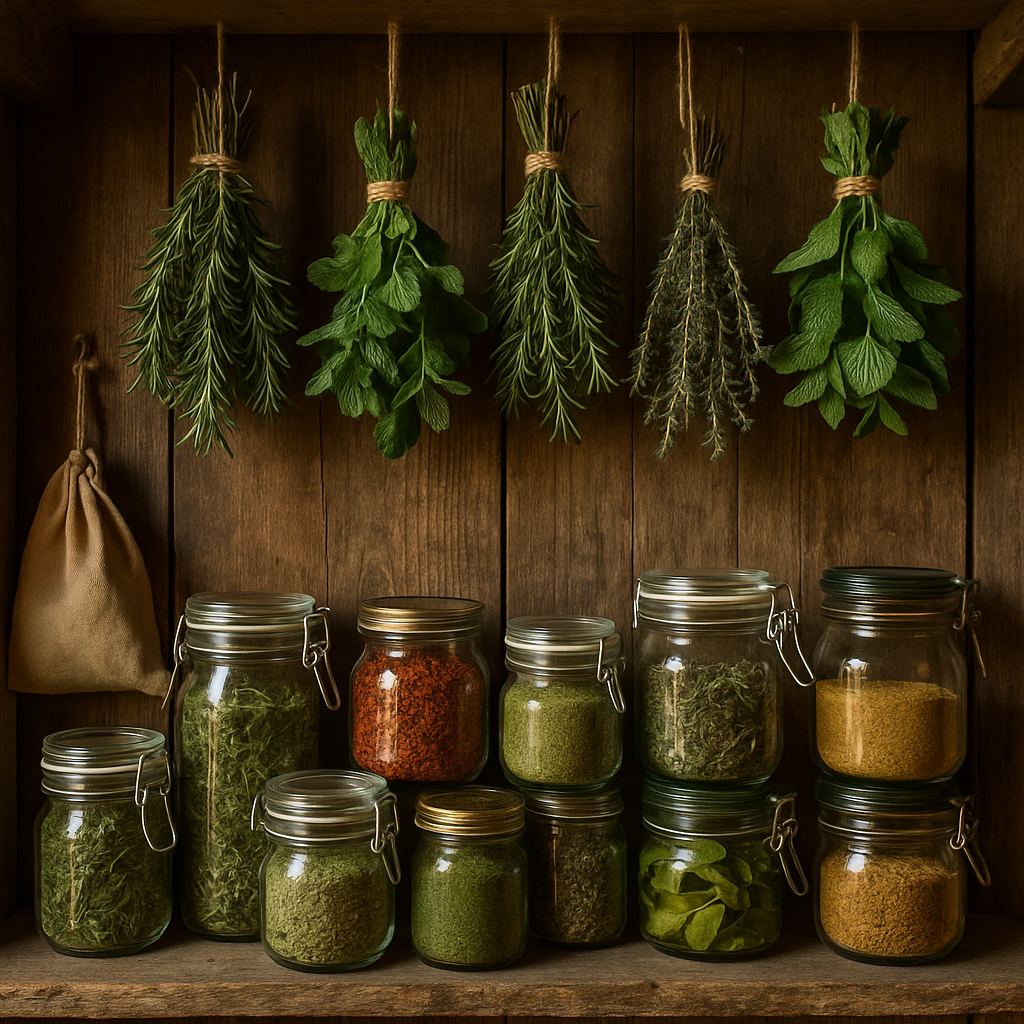
- Bundle herbs in small bunches and hang upside down in a shaded, airy place.
- Avoid direct sunlight, which degrades oils.
- Herbs with low moisture (rosemary, thyme, sage) dry best this way.
- Average drying time: 7–14 days.
2. Solar Drying
- Build a simple solar dehydrator: a wooden frame, screen racks, vent holes, and a clear cover.
- Speeds up drying and reduces mold risk in humid climates.
- Great for garlic, onion slices, and hot peppers.
3. Clay Pot or Charcoal Drying
- Traditional method: herbs placed in a perforated clay pot above smoldering charcoal.
- Gentle heat plus smoke adds flavor and preservation.
- Works especially well for paprika, garlic, and chili peppers.
4. Salt Preservation
- Chop fresh herbs and layer them in jars with coarse salt.
- Salt pulls out moisture while preserving oils.
- Use directly in cooking: salt and herb in one scoop.
- Shelf life: 12+ months if sealed.
5. Vinegar Infusions
- Cover herbs with apple cider vinegar or homemade wine vinegar.
- Store in cool dark space for 4–6 weeks, then strain.
- Creates both flavorful vinegars and medicinal extracts.
- Great for oregano, rosemary, garlic, cayenne.
6. Oil Infusions
- Short-term preservation (must be used within weeks unless refrigerated).
- Cover herbs in oil, let sit for 1–2 weeks.
- Works for basil, garlic, hot peppers.
⚠️ Botulism risk: if you’re off-grid without refrigeration, heat oils to 180°F (82°C) and seal in sterilized jars for safer short-term storage.
7. Smoking & Wood Ash
- Smoke herbs and spices in a low-fire smokehouse. Adds both preservation and flavor.
- For longer storage, bury roots like horseradish or turmeric in dry wood ash within clay jars—an ancient preservation trick.
8. Fermentation
- Herbs like garlic, peppers, and mustard can be lacto-fermented.
- Provides probiotics, preserves nutrients, and creates sauces or pastes.
- Requires only salt, water, and a fermentation vessel.
Tools for Off-Grid Preservation
- String & cloth bags – for bundling and air drying.
- Mason jars, reused canning jars, or clay crocks – for sealed storage.
- Solar dehydrator or smokehouse – for efficient drying.
- Mortar & pestle – to grind dried herbs into powders.
- Wax, beeswax, or rendered animal fat – to seal jars against moisture.
Long-Term Storage Practices
- Keep in airtight containers—glass is best.
- Store in dark, cool, and dry spaces like cellars, underground pantries, or root storage.
- Label everything with name and date—old herbs lose potency.
- Rotate yearly: use the oldest jars first, replace with fresh.
Trade & Barter Applications
Imagine a barter market after a collapse:
- A pouch of dried garlic could buy you a week’s worth of eggs.
- A small jar of cayenne powder could trade for nails, soap, or antibiotics.
- Medicinal herbs like peppermint or chamomile could be worth even more when healthcare collapses.
Seasonings are lightweight, compact, and universally desirable—perfect prepper currency.
Final Thoughts
In an off-grid lifestyle or survival situation, preserving seasonings is about much more than taste. It’s about:
- Nutrition – trace minerals and antioxidants.
- Medicine – natural remedies for common ailments.
- Morale – good-tasting food keeps spirits high.
- Trade – small jars of herbs become valuable currency.
By mastering drying, salting, infusing, smoking, and fermenting, you can create a self-sufficient seasoning pantry that keeps you prepared year-round. When the grid goes down, those small jars of oregano, garlic, or chili could mean the difference between mere survival and true resilience.