Reloading interruptions, preloaded magazines and an ammunition supply that matches your needs
An ammunition supply on a basement shelf can create a reassuring feeling. You have bought the supplies, put them away and checked another preparedness task off the list.
But an ammunition supply answers only one question: how many cartridges do you own?
It does not tell you whether your magazines are serviceable, whether your loading accessories fit, or whether your supply will support years of practice and lawful hunting if replacement becomes difficult.
For a Canadian household preparing for prolonged disruption, those distinctions matter. Five cartridges in a magazine and several hundred in storage represent very different things. Neither figure, by itself, describes a complete preparedness plan.
Reloading Is an Interruption, Whatever the Equipment
There is no honest universal answer to the question, “How long does reloading take?”
The firearm, its magazine system, the equipment’s condition and the owner’s familiarity all affect the process. So do cold hands, gloves, fatigue and poor visibility. A smooth demonstration on a comfortable range day establishes very little about someone’s capabilities on a freezing November evening.
Nor should an impressive internet video become your planning assumption. Demonstrations may show a practised person using selected equipment under favourable conditions. Your household needs a plan that allows for uncertainty.
A firearm can become unavailable, and the rest of your safety plan must continue functioning during that interruption.
Secure doors, household communications, emergency lighting, medical supplies and a way to leave danger still matter. An ammunition purchase cannot replace them.
What Preloaded Magazines Actually Provide
A compatible detachable magazine holds ammunition in a feeding device designed for a particular firearm or family of firearms. Keeping ammunition in a magazine can reduce the loose-cartridge handling involved in preparing equipment, where lawful and consistent with manufacturer guidance.
That convenience comes with responsibilities. A magazine must be compatible, serviceable and compliant with applicable capacity restrictions. Two magazines that look almost identical may have important differences. A product listing that says “fits” is no substitute for the firearm and magazine manufacturers’ instructions.
Treat magazines as equipment requiring inspection rather than permanent accessories that can be forgotten in a drawer. Check for visible damage, corrosion and contamination according to manufacturer guidance. Identify individual magazines so that a recurring problem can be traced to a particular item. Remove suspect equipment from service pending assessment.
Additional magazines also create an allocation decision. Money spent on accessories cannot simultaneously buy ammunition for practice, qualified instruction, secure storage or replacement parts. A modest collection of suitable equipment that you understand is a more defensible purchase than an assortment chosen mainly because it was inexpensive.
Affiliate promotion — Strikeman
Explore Strikeman Training Systems
Considering a compatible laser training system? Review Strikeman’s equipment and manufacturer instructions. Training products supplement qualified instruction; they do not establish performance during an emergency.
Stripper Clips: Useful, but Different
A stripper clip and a magazine perform different jobs. The magazine holds cartridges and presents them to the firearm’s feeding mechanism. A stripper clip holds cartridges together to assist loading a compatible magazine. It does not replace that magazine.
The SKS is a familiar example commonly associated with a fixed magazine and stripper clips. Owners should identify their particular configuration and consult its documentation rather than assume every accessory advertised for an SKS is suitable.
Clips offer a compact way to organise compatible ammunition. They also introduce another component whose fit and condition matter. Bent, rusty or poorly fitting clips should not be regarded as useful simply because they still hold cartridges. Before buying in quantity, establish suitability through manufacturer guidance and qualified range instruction.
Avoid modifying clips, magazines or firearms to make questionable combinations work. An accessory that requires improvisation is a poor foundation for dependable equipment.
Familiarity Before the Stopwatch
The sensible starting point for handling proficiency is qualified instruction and the correct manual. Ask an instructor to assess safe handling, compatibility and consistent use of the firearm’s controls. The goal is a process you understand and can perform safely.
A stopwatch cannot tell you whether you have selected the right ammunition, overlooked a damaged component or developed an unsafe habit. Keep training appropriate to the location and instructor’s rules. If an instructor recommends handling exercises with inert training cartridges, use suitable products and keep live ammunition out of that practice area.
The important measure is dependable familiarity. A household should not base its security arrangements on a promised reload time.
Set Your Ammunition Supply Target
“Everyone needs a thousand rounds” sounds decisive. It leaves most of the planning questions unanswered.
A household with one hunting rifle and modest annual consumption has different requirements from an active target shooter using several calibres. Someone preparing for a year of disrupted retail supply faces a different decision from someone building a longer reserve.
Build your ammunition supply target around your actual consumption. Look at ammunition used for regular practice and qualified instruction, sight verification and equipment checks, lawful hunting, and other lawful rural uses relevant to your property. Use records where possible.
Then choose the period your reserve should cover and add a contingency allowance appropriate to your circumstances and budget.
Planned annual use × years of coverage + contingency allowance = purchasing target.
For example, an owner who normally uses 150 cartridges annually would need 300 to cover two years at that same consumption level, before adding a contingency allowance. This is an inventory example, not a recommended quantity for every owner.
Consumption may change during a disruption. Hunting access can change, travel may become difficult and suitable places to practise may be unavailable. Revisit the assumptions instead of treating the first number as permanent.
Count Your Ammunition Supply Only Once
Ammunition in magazines or on clips remains part of your total supply. If you have 200 cartridges altogether and place 25 into compatible magazines, you still own 200 cartridges. You have changed their organisation, not increased the reserve.
Maintain an inventory by calibre, cartridge designation and intended use. Record quantities and retain manufacturer and lot information where practical. Separate ammunition intended for different purposes clearly. Similar appearance is not a reliable identification method.
This also prevents repeatedly buying for a favourite firearm while overlooking another firearm’s dwindling supply.
More Calibres Complicate Your Ammunition Supply
Every additional calibre creates another stock line to fund, identify and store. It may also require separate magazines, clips, cleaning equipment and spare parts.
Different firearms serve different lawful purposes, but variety carries a cost. Before adding another firearm to a preparedness plan, ask whether you can adequately support what you already own.
A collection can grow faster than its supporting supplies. The result may be several firearms with shallow reserves and incomplete equipment, rather than a few well-supported choices.
Affiliate promotion — Aniioki
Include Transportation in Your Preparedness Planning
Exploring an electric bicycle for everyday travel? Compare Aniioki models, charging requirements, carrying limits and local riding rules before deciding whether one fits your household.
Protect the Ammunition Supply You Have Paid For
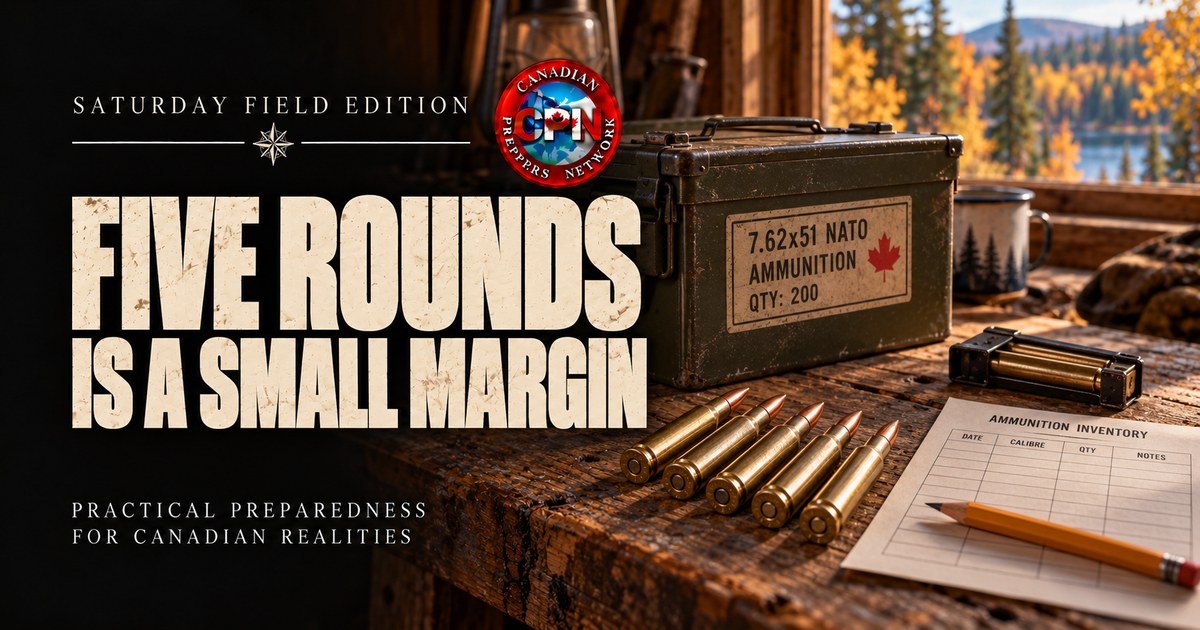
Protecting your ammunition supply deserves as much attention as purchasing quantity. SAAMI’s ammunition-storage guidance recommends a cool, dry location away from solvents, other chemicals, heat sources and open flames. Suitable packaging also helps protect and identify the contents.
Avoid turning an ammunition container into a mixed storage box for cartridges, leaking oil bottles and cleaning chemicals. Follow the specific magazine manufacturer’s guidance on loaded storage and maintenance. Blanket claims about every magazine spring, material and design are a poor substitute for instructions covering your equipment.
Inspect stored supplies periodically and investigate signs of moisture or deterioration. A sealed-looking container does not guarantee suitable conditions indefinitely.
A Pause Is Not an All-Clear
If violence occurs near your home or retreat, a lull does not explain what has happened. It does not establish that someone has left, that a firearm is empty or that it is safe to approach. Guessing about another person’s ammunition supply is no basis for exposing your household to danger.
Keep people away from openings, communicate clearly, contact emergency services where available and make evacuation decisions according to actual hazards. Avoid pursuit or investigation.
The same uncertainty should shape your own preparedness. Equipment can fail. Supplies can be misplaced. The person most familiar with a firearm may be unavailable. Build a household plan that can tolerate those problems.
Five rounds is a small margin when it becomes the entire plan. A documented ammunition supply, suitable equipment and safe familiarity address parts of the problem. Your doors, communications, medical readiness and decisions must address the rest.
Start With the Household Essentials
Put this equipment discussion into a broader preparedness plan with CPN’s free Canadian Grid-Down Starter Kit.
Related Reading
- You’re Armed. Can You Actually Defend Yourself?
- Can Your Household Manage Without You?
- A Stomach Bug Can Cripple Your Retreat
Useful Supporting Equipment
Prioritise suitable storage and personal protective equipment. These links open Amazon.ca searches; check individual specifications before purchasing.
Affiliate disclosure: CPN may earn a commission through qualifying purchases from affiliate links in this article. As an Amazon Associate, I earn from qualifying purchases.