Stomach bug preparedness: keeping dehydration, contamination, and lost manpower from becoming a survival emergency
Disclosure: This article contains affiliate links. As an Amazon Associate, Canadian Preppers Network earns from qualifying purchases. We may also earn a commission through our Prepare Medical link, at no additional cost to you.
Your retreat has food, stored water, backup heat, and people who know how to work. Then a stomach bug leaves someone vomiting.
By morning, another person has diarrhoea. The person responsible for meals is ill, the bathroom needs cleaning, and nobody has slept properly. Firewood still needs bringing inside. Animals still need feeding. Your water supply still needs managing.
A stomach bug can attack the people who make every other preparation useful. After a collapse, the danger extends beyond an uncomfortable night: you may have fewer healthy hands precisely when sanitation and caregiving require more work.
Medical preparedness needs to cover that situation as deliberately as it covers injuries.
FREE CANADIAN PREPAREDNESS DOWNLOAD
Canadian Grid-Down Starter Kit
Test your first 72 hours before a prolonged outage exposes gaps in water, sanitation, medical supplies, heat, and household responsibilities.
Table of Contents
A Stomach Bug: Don’t Assume You Know What Caused It
Vomiting and diarrhoea can have several causes. Norovirus is one possibility, but contaminated food or water, other infections, and certain medications can produce similar symptoms. Calling everything “food poisoning” does not establish what treatment is appropriate. Mayo Clinic notes that viral, bacterial, and parasitic illnesses can be difficult to distinguish from symptoms alone.
For retreat planning, treat unexplained vomiting and diarrhoea as a potential contamination problem while seeking medical advice whenever available.
Move the sick person away from communal activities. Remove them from food preparation. Give them their own drinking cup and towels, and establish where contaminated bedding and waste will go.
Doom and Bloom’s survival-medicine coverage identifies norovirus as a concern for the family medic because it spreads readily through contaminated food, water, surfaces, and close contact. That makes it particularly relevant to a crowded retreat with shared facilities.
Stomach Bug Preparedness Starts With Hydration
Dehydration is a major complication of gastroenteritis. Vomiting and diarrhoea can remove fluid faster than a person replaces it, with older adults and people with weakened immune systems especially vulnerable.
Your preparations should include commercial oral rehydration products, safe drinking water, and a clearly marked measuring container. Choose products intended for rehydration during vomiting and diarrhoea; do not assume every sports electrolyte powder serves the same purpose.
Keep the original directions. Mix packets with exactly the stated quantity of safe water, and follow the product’s storage and disposal instructions. A packet without readable instructions is an avoidable problem.
Small, frequent sips may be easier to tolerate than drinking a large amount at once. As appetite returns, simple foods such as rice, noodles, oats, crackers, and soup can be useful.
Store those foods somewhere a replacement cook can find them. The sick person should not have to explain the pantry while struggling to keep fluids down.
Build a Sick Area You Can Actually Manage
A spare bed does not complete a sick-room plan.
Think through the route between the bed and toilet. Does it cross the kitchen? Are there stairs? Could a weak person reach the bathroom safely at night?
A stable bedside commode may be worth considering where that route is difficult. Check its weight capacity, seat height, cleaning requirements, and compatibility with any liners before purchasing.
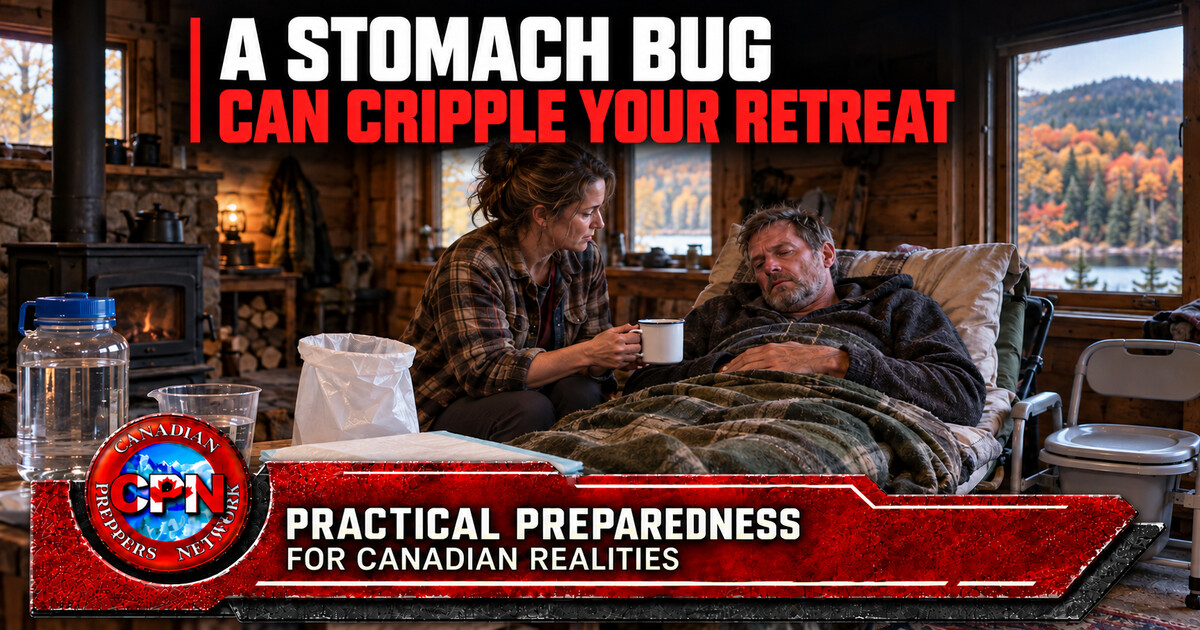
Keep emesis bags or a dedicated washable container within reach. Add absorbent bed pads, spare bedding, disposable gloves, paper towels, and suitable waste bags. A cot with a cleanable sleeping surface can provide a separate sleeping space where bedrooms are limited.
These items solve different problems. A bag catches vomit. A pad protects bedding. A commode reduces travel. None replaces cleaning, handwashing, or a safe waste-disposal arrangement.
Set up the space once while everybody is healthy. You will discover missing supplies much faster during a practice run than during a miserable night. For the broader layout and caregiver plan, see Build a Collapse-Era Sick Room.
Protect the Kitchen and Water Supply
In a small retreat, one person may normally cook, collect water, and help anyone who is unwell. During a stomach bug, that overlap creates a planning problem.
Where possible, assign one healthy person to caregiving and another to food preparation. Keep sick-room cleaning equipment separate from kitchen equipment, and establish a handwashing point near the toilet or commode.
For norovirus, soap and water matter. Alcohol hand sanitiser is less effective and should not replace handwashing. People recovering from suspected norovirus should avoid preparing food for others for at least 48 hours after symptoms stop. Recovery does not mean hygiene precautions can end.
Protect stored drinking water from unnecessary handling. A container with a dispensing tap can reduce the need to dip cups into a shared supply. Keep waste containers and contaminated equipment away from clean-water storage.
Your water reserve must support washing and cleaning as well as drinking. An illness can expose how little sanitation capacity a supposedly well-stocked retreat actually has.
Buy Disinfectant With a Specific Purpose
A pleasant smell and a “kills germs” label do not tell you whether a cleaner is suitable for norovirus.
Choose a product whose label specifically covers the intended pathogen and surface. Keep its instructions for dilution, ventilation, protective equipment, and contact time. Cleaning away visible contamination and disinfecting the surface are separate steps.
Avoid copying a universal bleach recipe into your retreat plan. Products vary in concentration, and surfaces vary in compatibility. Use the instructions for the product you actually own. Never mix bleach with other cleaners.
Bag contaminated laundry separately and handle it carefully, without shaking it. Keep enough spare bedding to maintain a usable sleeping area while washing and drying take place.
In an off-grid Canadian winter, laundry can become a substantial workload. Plan where it will be washed, how water will be heated, and where items can dry without overwhelming your living space.
AFFILIATE SPOTLIGHT
Prepare Medical: Plan Ahead for Prescription Needs
Discuss emergency medication preparedness before access to clinics and pharmacies becomes difficult. Prepare Medical facilitates clinician assessment and prescription fulfilment through partner pharmacies, with medication choices based on your individual needs.
Ask about appropriate options for nausea and vomiting, their directions, and the warning signs that require medical assessment. Antibiotics do not treat viral stomach buges.
Prescription Preparedness Needs a Plan
Antibiotics do not treat viral gastroenteritis. Having them in storage does not make them the right response to an unidentified stomach bug.
Prepare Medical’s listed medication options include treatments for nausea and vomiting, but the actual prescription depends on the individual assessment. A listed medicine is not a guarantee that it will be prescribed or suitable for everyone.
The useful preparation is to discuss appropriate medications beforehand, understand their directions, and keep that information with the supplies. Know when a medicine should be used and when symptoms require further assessment.
Keep prescriptions assigned to the person for whom they were prescribed. A retreat medicine cupboard should not become a communal guessing exercise. Advance medication supplies do not replace medical assessment or emergency care.
Recognise When the Situation Is Getting Worse
Seek prompt medical assessment for blood in vomit or stools, severe abdominal pain, significant dehydration, or persistent inability to keep fluids down. Warning signs of dehydration include little urine, marked weakness, and dizziness. Do not wait for a predetermined deadline if someone is deteriorating.
New confusion, collapse, or difficulty staying awake warrants emergency help. Activate your medical communications and transport plan immediately.
Keep a brief record of symptoms, fluid intake, urination, and medicines taken. It helps caregivers notice changes and gives a clinician useful information if contact becomes possible.
Include medical communications and transport in the retreat plan while those options remain available. The Medical & First Aid in Canada hub connects this preparation to the wider household medical plan.
Stock for the Work a Stomach Bug Creates
Buy equipment around your actual space and the people using it. Then practise with two adults unavailable: one sick and one caring for them.
Who handles heat, meals, water, animals, and essential security? What work can wait? Where are the cleaning supplies?
Make sure at least one relief caregiver knows the setup. A handover should cover symptoms, fluids, medicines, waste removal, and supplies running low. An exhausted caregiver is another weak point in the retreat.
Preparedness Buying Box: Stomach Bug and Sick-Room Supplies
Build the care setup before someone needs it. These links open Amazon.ca searches, allowing you to compare current options. Check specifications, seller details, and suitability before ordering.
- Oral rehydration salts and solutions — choose products intended for vomiting and diarrhoea, with clear mixing directions.
- Bedside commodes — compare stability, weight capacity, seat height, and cleaning access.
- Commode liners with absorbent pads — confirm compatibility with your commode bucket.
- Emesis bags — keep them accessible beside the bed and in medical transport supplies.
- Absorbent bed pads — protect bedding and simplify changes.
- Nitrile examination gloves — stock appropriate sizes; wash hands after removal.
- Mercury-free, non-digital clinical thermometers — choose a thermometer intended for body temperature.
- Folding cots — check cleaning instructions and weight capacity for a separate care space.
- Portable patient stretchers — assess carrying capacity, available helpers, and your transport route.
For the separate trauma kit: tourniquets and vented chest seals support different emergencies. Buy from reputable suppliers, verify authenticity, and obtain appropriate training.
As an Amazon Associate, Canadian Preppers Network earns from qualifying purchases.
Keep the Retreat Functioning
A retreat depends on people being able to function. Preparing for an ordinary stomach bug means protecting that capacity before a shared bathroom and a contaminated kitchen turn one sick person into an entire sick household.
Set up the care space, test the sanitation routine, and assign replacement workers while everyone is healthy. Food and equipment cannot carry out those jobs for you.
Sources and Further Reading
- Doom and Bloom: Norovirus — The Stomach Flu
- Mayo Clinic: Viral gastroenteritis — symptoms and causes
- Mayo Clinic: Viral gastroenteritis — diagnosis and treatment
- Cleveland Clinic: Norovirus
- Cleveland Clinic: Cleaning up after norovirus
- Prepare Medical: How it works
- Prepare Medical: Medication options