
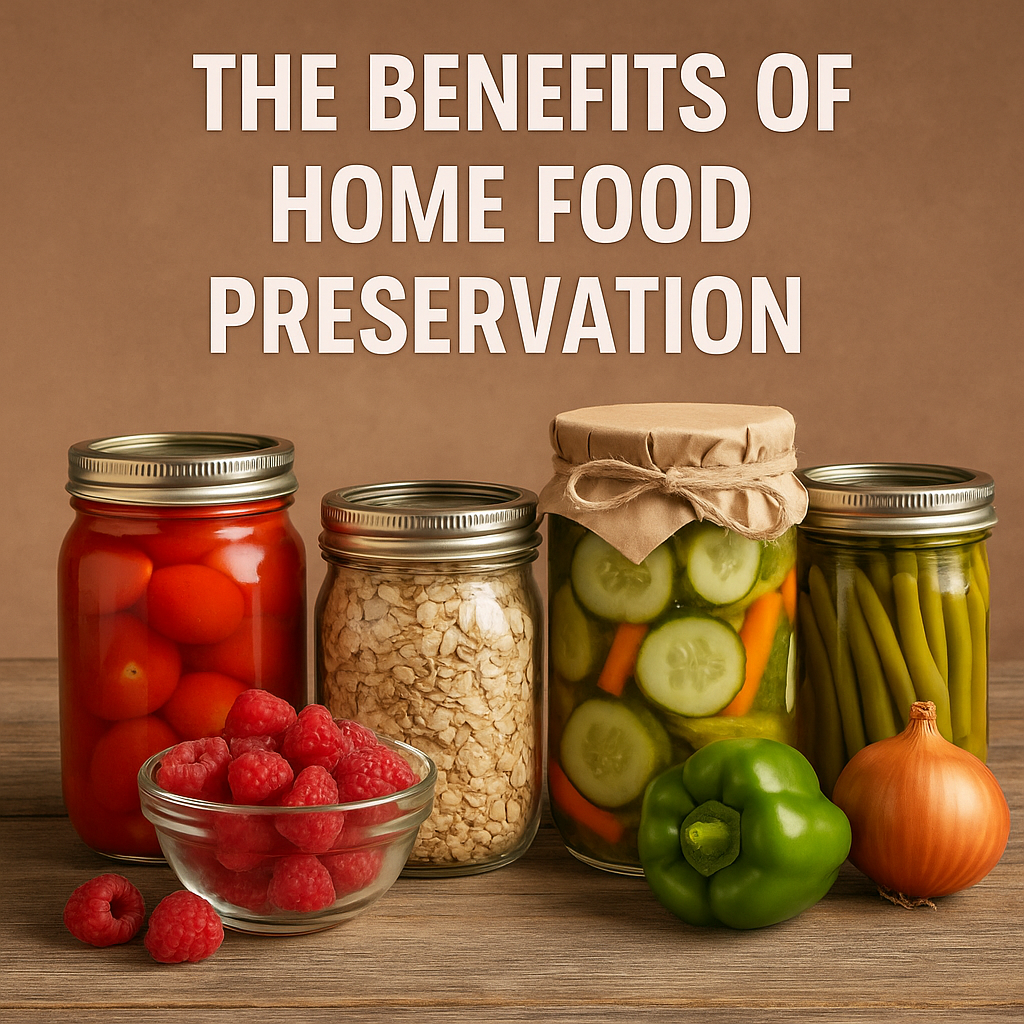
In a world of rising food costs, unpredictable supply chains, and increasing environmental concerns, the age-old practice of home food preservation is making a well-deserved comeback. Whether you’re a prepper, a homesteader, or simply someone who values self-reliance and nutrition, preserving your own food at home brings a wealth of benefits that extend far beyond the pantry shelf.
1. Food Security and Preparedness
Perhaps the most compelling reason to preserve food at home is the boost it gives to your personal food security. Whether you’re facing power outages, natural disasters, economic instability, or global crises, a stockpile of shelf-stable, home-preserved foods provides peace of mind.
- Canned goods last for years and require no electricity to store.
- Dehydrated or freeze-dried foods take up minimal space and are lightweight—ideal for bug-out bags or long-term storage.
- Fermented and pickled items offer probiotic benefits and variety in your emergency diet.
Preppers know that it’s not just about having food, but about having nutritious, versatile food you trust. Home preservation lets you take control of quality and longevity.

2. Reducing Food Waste
One of the most satisfying aspects of preserving your own food is how much waste it prevents. If you garden, hunt, fish, or buy in bulk, it’s common to have more produce or meat than you can use before it spoils. Instead of throwing it away or giving it all away, you can:
- Can surplus tomatoes as sauces or salsas.
- Freeze excess berries or turn them into jam.
- Dehydrate leftover herbs, fruits, or vegetables.
- Ferment cabbage into sauerkraut or kimchi.
Preserving food maximizes your harvest and stretches your grocery dollars, reducing the guilt and environmental impact of waste.
3. Nutrition and Health Benefits
Store-bought preserved foods often contain high levels of salt, sugar, and preservatives. When you preserve at home, you control every ingredient that goes into your jars, bags, or containers.
- Lower sodium and sugar options are possible.
- Preserved garden produce retains more nutrients than long-haul commercial goods.
- Fermented foods like yogurt, kefir, and kraut support gut health with natural probiotics.
It’s also an opportunity to avoid allergens or harmful additives that are common in industrial food preservation.
4. Financial Savings
While there’s an initial investment in equipment like pressure canners, dehydrators, or vacuum sealers, home preservation quickly pays for itself. You can buy in-season or bulk produce at a discount and preserve it for later, avoiding inflated off-season prices.
- Buy a bushel of apples in fall, turn them into applesauce, cider, and dried snacks.
- Hunt or raise your own meat, and pressure-can it for long-term storage.
- Grow your own vegetables and make salsa, pickles, or soup bases.
When managed right, your preserved food stock can replace grocery runs and help buffer your budget all year long.
5. Self-Reliance and Skill Building
Learning to preserve food fosters confidence, independence, and pride. Whether it’s water bath canning, vacuum sealing, freeze-drying, or lacto-fermentation, these skills connect you with traditions of survival and sustainability.
It’s a valuable educational experience for families as well. Children who help with preserving often gain a better appreciation for where their food comes from—and what it takes to keep it.
6. Better Tasting Food
Home-preserved food just tastes better. There’s nothing like opening a jar of your own strawberry jam in the middle of winter or eating green beans that you grew and preserved yourself. The flavors are fresher, bolder, and tailored to your preferences.
You can experiment with:
- Small-batch spice blends
- Herbal vinegars and oils
- Custom pickling brines
- Homemade dried soups and spice mixes
Final Thoughts
Home food preservation isn’t just a trend—it’s a timeless tradition that empowers individuals and families to live more independently, waste less, and eat better. For preppers especially, it’s an essential layer of long-term sustainability.
Whether you’re preserving tomatoes from your backyard garden, pressure canning meat, or vacuum sealing bulk rice, every jar and bag represents time well spent, and resilience gained.