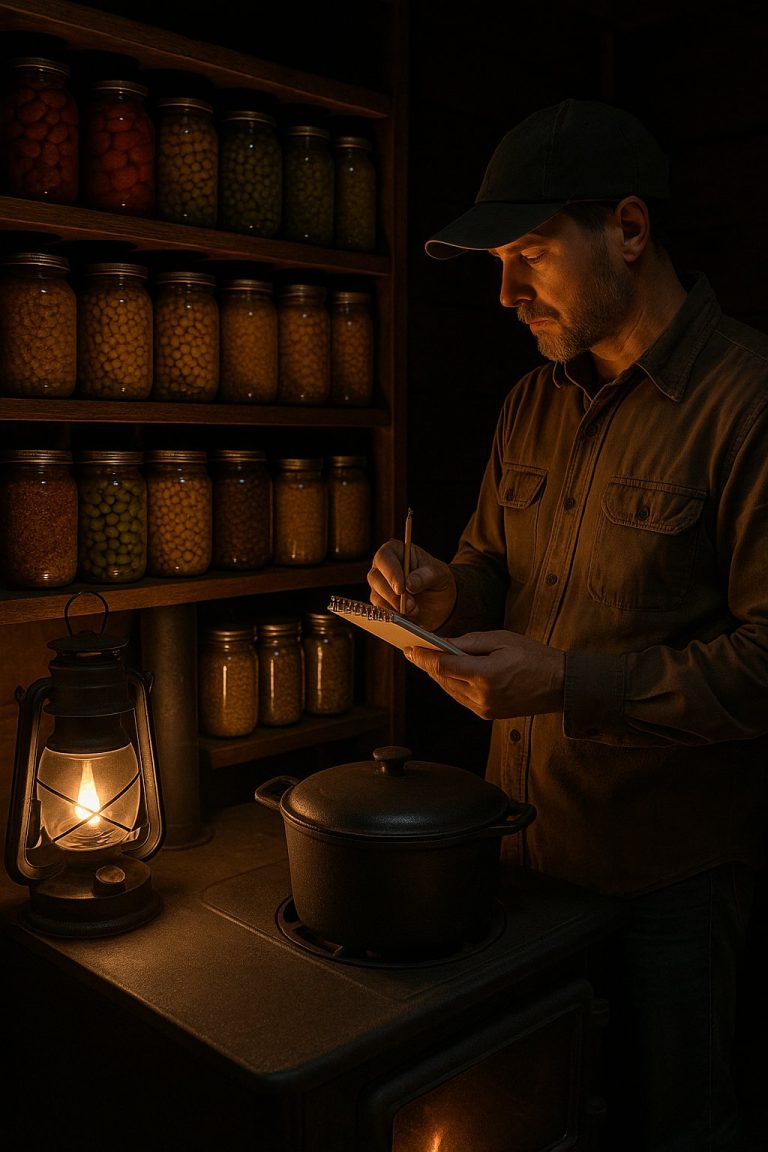
When it comes to long-term food storage and off-grid living, few projects are as practical and time-tested as the root cellar. Before refrigeration, generations of homesteaders relied on these underground storage rooms to keep fruits, vegetables, and preserves cool year-round. A properly built root cellar uses the earth’s natural insulation to maintain steady temperatures and humidity—perfect for storing potatoes, carrots, onions, apples, and canned goods.
Below are three proven methods to build your own root cellar, depending on your land and resources.
1. Digging Into a Hillside
If your property has a slope, this is the most efficient and traditional design.
A hillside root cellar takes advantage of the earth’s insulation, keeping it naturally cool in summer and above freezing in winter.

How to build it:
- Excavate a horizontal trench or small tunnel into the slope, large enough to stand and move comfortably inside.
- Line the walls with stone, brick, or concrete blocks for structural stability and moisture control.
- Add a solid roof, reinforced with timber or poured concrete, then cover it with soil for insulation.
- Install ventilation pipes—one low intake near the floor and one high exhaust vent near the ceiling—to regulate humidity and prevent mold.
- Use an insulated door facing north or shaded from direct sunlight to maintain cooler temperatures.
This method is highly durable and blends naturally into the landscape, making it ideal for long-term off-grid homesteads.
2. Burying a Container
If you don’t have a hillside, a buried container makes an excellent alternative.
Shipping containers, large culvert pipes, or concrete tanks can all be repurposed into underground storage.
How to build it:
- Choose a strong, watertight container—metal or concrete works best.
- Dig a pit deep enough to bury the container with at least 3 feet of soil above it.
- Add a gravel base and drainage pipe at the bottom to prevent flooding.
- Reinforce the structure with pressure-treated wood or concrete walls if using thin materials.
- Create an entryway with steps or a small vestibule and install ventilation vents for airflow.
This approach is faster to construct and less labor-intensive than a hillside dig, making it a great DIY project for flatter terrain.
3. Using an Existing Basement
If you’re in a colder region or live in a rural home with a basement, you can convert part of it into a root cellar with minimal work.
How to build it:
- Select a corner or small room farthest from any heat source.
- Insulate the dividing walls and door to separate it from the heated area.
- Drill vent holes for airflow—one low intake and one high exhaust to allow natural circulation.
- Keep the floor uninsulated and bare to let ground moisture regulate humidity.
- Add shelving for crates of produce, jars, and storage bins.
This is the simplest and most affordable option—perfect for urban preppers or anyone who wants cold storage without major excavation.
Final Thoughts
Whether you dig into a hillside, bury a container, or modify a basement, the key principles remain the same: cool, dark, and well-ventilated. The ideal conditions are temperatures between 34°F and 40°F (1–4°C) and humidity levels around 85–95%.
A root cellar is more than just a place to stash your harvest—it’s a cornerstone of true food independence. In an off-grid or grid-down world, it can mean the difference between thriving and struggling through the winter.