As spring turns to summer, late May is a critical time in the prepper garden. By now, the last frost is (mostly) behind us in most zones across Canada and the northern U.S., and it’s time to shift from planting preparation to full-on food production. For preppers, this isn’t just about fresh veggies—it’s about resilience, independence, and long-term food security.
Here’s what you should be doing in your garden in late May to ensure your survival crops thrive.
1. Finish Up Your Warm-Season Planting
If you haven’t already, now is your last call to direct-seed or transplant warm-season crops like:
- Tomatoes (indeterminate varieties for longer yields)
- Peppers
- Corn
- Cucumbers
- Zucchini
- Beans (especially pole beans that give more yield per square foot)
- Squash (summer and winter)
Start sweet potatoes and melons now if you’re in a warm enough zone (Zone 5 and up with good microclimates or row covers).
Prepper Tip: Stagger plantings to extend your harvest window and reduce the risk of a single-point failure due to pests or weather.
2. Establish Succession Planting Cycles
Preppers need steady yields, not one-time harvests. Plan now for staggered sowing every 1–2 weeks for fast-maturing crops like:
- Radishes
- Lettuce
- Spinach
- Arugula
- Green onions
- Bush beans
This will give you continuous fresh food and surplus for preserving—whether you freeze, can, or dehydrate.
3. Compost and Mulch Strategically
Feed your soil now so it can feed you later. Apply:
- Compost or worm castings to heavy feeders like tomatoes and corn.
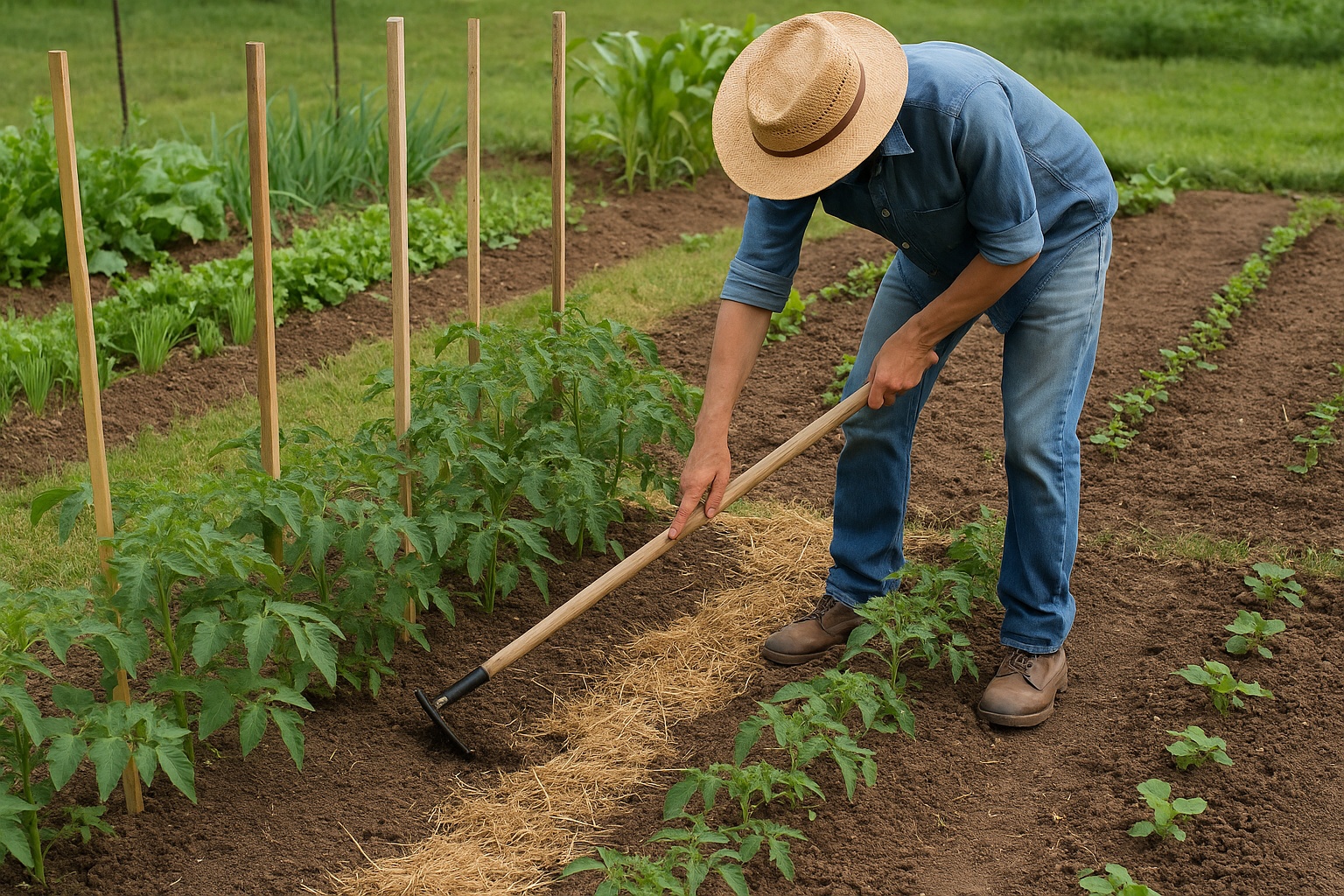
- Straw, wood chips, or grass clippings as mulch to retain moisture, regulate temperature, and reduce weeds.
Prepper Tip: Mulching also reduces watering needs—critical if you’re on a well or hauling water during emergencies.
4. Install Supports and Trellises
Get your infrastructure in place now before plants get too big:
- Trellises for cucumbers and pole beans
- Tomato cages or stakes
- Netting or fencing to deter deer, rabbits, and raccoons
Security Bonus: A dense, prickly perimeter of thorny berry bushes (raspberries, blackberries) does double duty as a food source and a deterrent.
5. Keep an Eye on Pests—and Fight Back Naturally
Late May brings an explosion of insect activity. Stay ahead of problems with:
- Companion planting (e.g., basil with tomatoes, marigolds near beans)
- Neem oil or insecticidal soap for aphids and mites
- Floating row covers to block cabbage moths and flea beetles
Start scouting now—early detection means easier intervention without chemicals.
6. Start the Preservation Pipeline
Even if you haven’t harvested much yet, prep your preservation setup:
- Clean and test your dehydrator, canner, or vacuum sealer
- Stock up on mason jars, lids, and food-safe storage
- Begin drying herbs like oregano, thyme, and mint as they become bushy
Prepper Tip: Freeze or dehydrate extra greens now—spinach, kale, and chard can be powdered for nutrient-dense shelf-stable food.
7. Build or Expand Raised Beds & Container Systems
If you’re short on time or space, use containers or raised beds for compact, high-yield crops. Great options include:
- Potatoes in grow bags
- Herbs in planters
- Salad greens in vertical towers
Diversifying your growing methods builds redundancy—key in prepping.
8. Plant Perennials and Medicinals
Think long-term resilience. Late May is still a good time to plant:
- Asparagus, rhubarb, and berry canes
- Medicinals like echinacea, comfrey, and yarrow
- Fruit trees—the sooner you plant, the sooner they produce
These become the backbone of a self-sufficient homestead and can thrive with minimal intervention.
Final Thoughts
Late May isn’t the time to ease off—it’s a time to double down. Every seed you plant now is an investment in your future security. The goal isn’t just a beautiful garden; it’s a productive system that feeds your family when stores are closed or shelves are empty.
So get your hands in the dirt, sharpen those pruners, and stay the course. A well-tended garden today is your survival insurance for tomorrow.
Stay alert, stay ready—and grow like your life depends on it.