Among all homestead abilities, starting seeds indoors stands apart as one of the most quietly powerful skills a Canadian prepper can develop. It requires little space, modest equipment, and no land ownership, yet it delivers disproportionate returns year after year. More importantly, it restores control at a time of year when most households are still entirely dependent on external systems.
Late winter is when this skill matters most. While snow still covers the ground and nights remain well below freezing, food production can already be underway inside the home. Those who understand how to start seeds correctly enter spring with momentum; those who do not are forced to react to shortages, delays, and inflated prices.
Why Seed Starting Is a Preparedness Skill
Seed starting is often framed as a gardening hobby, but that framing misses its value. From a preparedness perspective, this skill is about independence from retail timing and availability. Garden centres operate on profit-driven schedules, not regional microclimates or household needs. When demand spikes—as it has repeatedly in recent years—selection narrows and prices rise quickly.
By starting seeds yourself, you decide what grows, when it grows, and how much you produce. This principle aligns directly with long-term food resilience planning discussed in:
👉 https://canadianpreppersnetwork.com/food-security-in-canada/
Seeds are compact, inexpensive, and store for years. The skill to turn them into healthy plants is what converts stored potential into real calories.
Timing: The Skill Most People Get Wrong
In Canada, seed starting is less about enthusiasm and more about restraint. Starting too late eliminates the advantage. Starting too early without understanding light and growth rates leads to weak, stressed plants.
The skill lies in matching crops to realistic timelines. Onions, leeks, brassicas, and certain herbs tolerate early indoor starts well, while others quickly outgrow their containers if rushed. Learning this rhythm is what separates productive growers from frustrated ones.
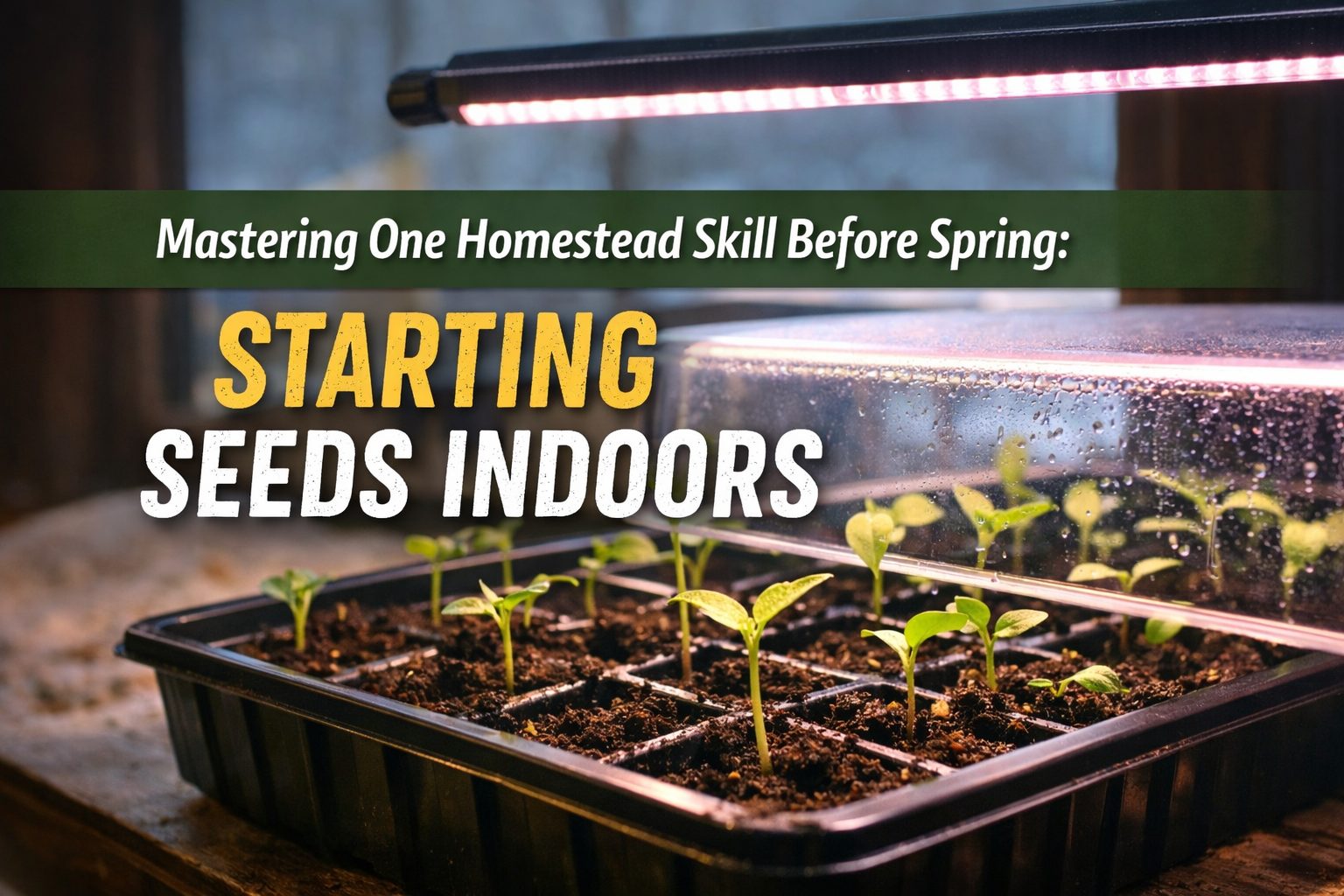
A simple seed-starting tray with humidity dome provides the controlled environment needed to practise this skill consistently without unnecessary complexity:
👉 https://www.amazon.ca/dp/B08K8Q9XJ7?tag=canadpreppn01a-20
Light: The Real Limiting Factor in Canadian Homes
Most seed-starting failures are blamed on soil or seeds, but the real issue is almost always light deficiency. Canadian winter daylight is simply not strong enough for seedlings, even on south-facing windowsills.
Understanding light is central to mastering this skill. Seedlings require long, consistent exposure close to the light source. Without it, plants stretch, weaken, and fail once transplanted.
A modest LED grow light designed for seedlings dramatically increases success rates while consuming very little power:
👉 https://www.amazon.ca/dp/B07NN6SVG6?tag=canadpreppn01a-20
This is not about building an indoor farm. It is about giving plants the strength to survive once they leave the controlled indoor environment.
Soil Discipline and Early Plant Health
Another overlooked element of seed starting is soil selection. Seedlings do not need rich compost early on; they need clean structure and drainage. Using a sterile seed-starting mix reduces disease and loss, especially in cooler indoor environments.
As plants develop true leaves, the grower gradually introduces nutrients and airflow. This measured approach mirrors broader preparedness principles: apply resources deliberately, not excessively. The same thinking appears in skill-based preparedness discussed here:
👉 https://canadianpreppersnetwork.com/building-self-reliance-skills/
Why This One Skill Scales Under Stress
Seed starting is powerful because it scales quietly. One tray becomes several. Several trays become enough to supply a family, supplement neighbours, or recover quickly from crop failure. In years marked by economic pressure, transportation delays, or poor growing conditions, this skill creates flexibility where others experience constraint.
Seeds also function as trade goods. The ability to turn stored seeds into healthy transplants has value well beyond your own garden. This scalability is why seed starting features prominently in long-term preparedness planning outlined in Acres of Preparedness: Planning the Last Safe Place:
👉 https://amzn.to/4iLrm9Y
Final Thoughts
You do not need acreage, greenhouses, or ideal conditions to practise meaningful homestead skills. You need one skill, applied at the right season, that compounds over time.
Starting seeds indoors before spring arrives is one of those skills. It replaces dependence with timing, uncertainty with planning, and hesitation with quiet capability—exactly what preparedness is meant to achieve.