If there is one homestead skill that consistently separates resilient households from everyone else, it is pressure canning.
Not gardening.
Not stockpiling dry goods.
Not owning a freezer full of meat.
Pressure canning is the skill that converts perishable food into shelf-stable, power-independent security. In a Canadian climate—where winter outages, fuel constraints, and long supply lines are part of normal life—it quietly underpins every other food strategy.
This is not about aesthetic jars or novelty preservation.
This is about protein, calories, and complete meals that remain safe when systems fail.
Why Pressure Canning Sits Above Other Food Skills
Most food preservation methods are conditional. Freezing requires power. Dehydration removes critical fats and limits meal variety. Store-bought preserved food depends entirely on commercial supply chains.
Pressure canning stands apart because once the jar seals correctly, the food is finished. It requires no maintenance, no electricity, and no ongoing inputs.
A shelf of pressure-canned meat or stew represents:
- Months of nutrition immune to blackouts
- Zero generator run-time
- No daily cooking fuel requirement
- Immediate edibility in emergencies
In preparedness terms, it is one of the few food skills that reduces risk instead of shifting it elsewhere.
Understanding the Real Risk: Why Pressure Matters
Pressure canning exists for one reason: low-acid foods can kill you if preserved incorrectly.
Foods such as meat, vegetables, stocks, and mixed meals can support Clostridium botulinum. This organism produces a toxin that is:
- Odourless
- Tasteless
- Invisible
- Lethal in extremely small amounts
Boiling water cannot destroy botulism spores. Only temperatures above boiling—achieved under pressure—make these foods safe for long-term storage.
This is why pressure canning is not forgiving. It is also why method matters more than confidence.
What Pressure Canning Allows You to Preserve
When done correctly, pressure canning opens preservation options no other method can safely touch.
This includes:
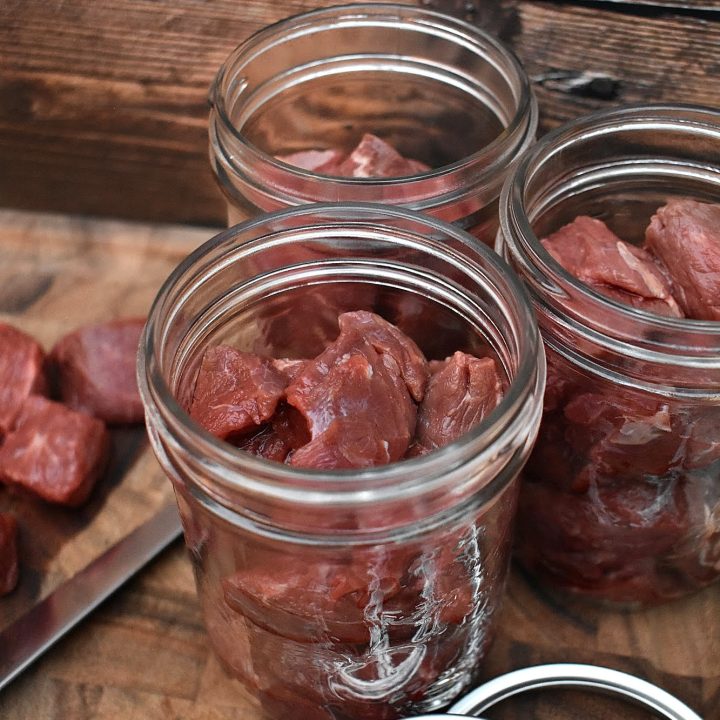
- Beef, pork, poultry, and wild game
- Bone broth, stock, and rendered soups
- Complete meals such as chili and stews
- Low-acid vegetables including carrots, beans, and potatoes
For Canadian preppers, this means seasonal abundance—bulk meat purchases, fall harvests, hunting success—can be captured and stored without dependence on freezers.
Equipment That Actually Determines Success
Pressure canning does not require a large toolset, but the wrong equipment introduces risk.
A proven, field-tested choice for Canadian households is the Presto 23-Quart Pressure Canner, which supports efficient batch processing and maintains stable pressure during long runs.
Amazon.ca affiliate link: https://amzn.to/3S9Zp0M
The size matters. Smaller units increase processing time, fuel use, and operator fatigue—especially when preserving meat.
Essential supporting items include:
- Mason jars (wide-mouth preferred for meats and meals)
- New lids for every batch
- Jar lifter and canning funnel
- A consistent heat source (electric or propane)
Anything beyond this improves convenience, not safety.
The One Reference That Keeps This Skill Honest
Pressure canning is not a place for experimentation or folk wisdom. Processing times, pressures, and jar sizes must be validated, not assumed.
The USDA Guide to Home Canning is the primary safety authority for pressure canning low-acid foods. Its recommendations are based on laboratory testing, not tradition or popularity.
For CPN Gold Members, the USDA guide is available alongside the CD3WD technical library, providing offline access to the same standards used by extension services and public health agencies.
In practical use, the guide functions as:
- A training manual when learning the skill
- A verification source for unfamiliar foods
- A shared standard in group or retreat environments
Prepared households don’t memorize the guide—they consult it consistently.
Canadian Conditions: Winter, Altitude, and Timing
Canada adds layers of complexity that make pressure canning even more valuable.
Winter power outages are common, and many households rely heavily on chest freezers. Pressure canning allows families to shift food out of freezers before winter, reducing generator dependency and spoilage risk.
Altitude also matters. Even modest elevation changes affect pressure requirements. Ignoring altitude adjustments is one of the most common—and dangerous—errors new canners make.
This is where validated tables matter more than online recipes.
Related seasonal context:
https://canadianpreppersnetwork.com/preparing-for-extended-power-outages/
Common Failure Points (And Why They Happen)
Most pressure-canning failures are not mechanical. They are behavioural.
The most frequent issues include:
- Rushing venting or cool-down steps
- Guessing processing times
- Using untested recipes
- Reusing compromised lids
- Deviating from jar size requirements
Prepared households treat pressure canning like ammunition reloading or medical dosing: process-driven, repeatable, and disciplined.
Once habits are established, the skill becomes routine rather than intimidating.
Why Pressure Canning Scales in Group and Retreat Settings
In multi-family households or retreat environments, pressure canning becomes a force multiplier.
It enables:
- Centralized protein processing
- Long-term meal storage
- Reduced daily cooking labour
- Predictable ration planning
One trained individual can preserve food for dozens of people, which is why pressure canning appears repeatedly throughout the CD3WD manuals included with CPN Gold Membership. It functions without grid power, resupply, or modern infrastructure.
Skill Before Crisis
Pressure canning is not a skill you want to learn during an emergency. The learning curve includes mistakes, inefficiencies, and confidence-building repetition.
Households that practice now gain:
- Familiarity with equipment
- Confidence in safe procedures
- A steadily growing shelf of preserved food
By the time pressure canning is needed, it should already be boring and automatic.
Final Thought
Pressure canning is not exciting.
It is not fashionable.
It is quietly decisive.
When power fails, fuel runs thin, and winter stretches long, the household that mastered this one skill eats safely while others improvise.
Tomorrow’s topic rotates forward.
This skill supports all of them.