
Community Preparedness Supplies Canada: Buying Guide
Preparedness is not only gear.
It is people.
A household can have food, water, radios, tools, medical supplies, and security plans, but still fall apart if the people involved cannot think clearly, cooperate, rest, communicate, resolve conflict, or maintain morale when stress goes high.
That matters during short emergencies. It matters even more during long outages, evacuations, economic strain, civil disruption, supply shortages, rural isolation, or any post-collapse scenario where normal support systems are gone or badly weakened.
Mental resilience is not positive thinking. Community building is not social media networking. Both are practical survival systems.
A prepared household needs structure. A prepared group needs rules, communication, records, shared work systems, conflict management, training, recreation, and morale support. A retreat or preparedness group that cannot organize itself will waste time, burn energy, repeat mistakes, and eventually fracture under pressure.
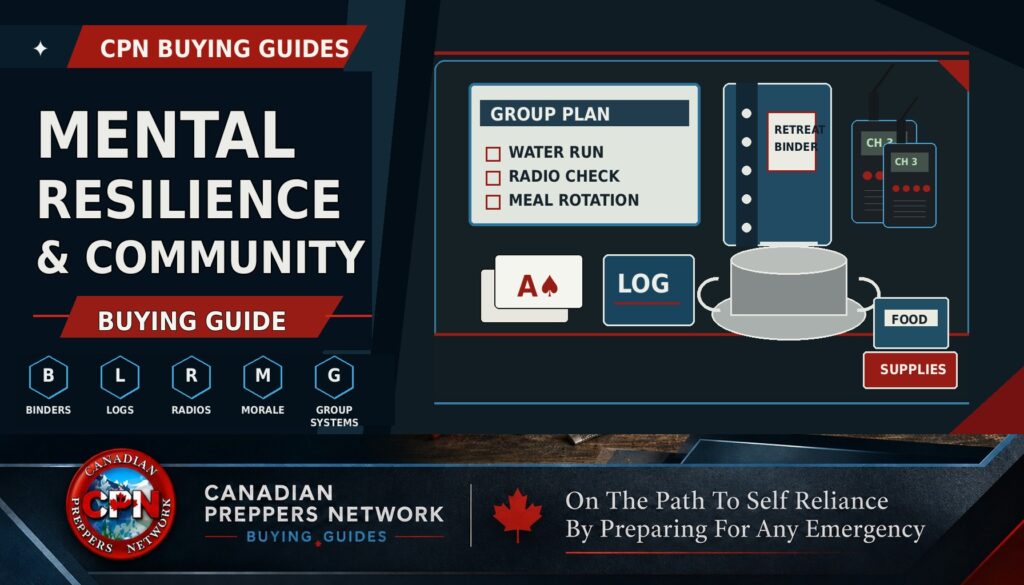
This buying guide focuses on practical supplies for mental resilience and community preparedness: printed references, planning binders, notebooks, low-tech communication tools, board games, comfort items, group cooking gear, administrative supplies, barter organization, meeting tools, and systems that help people function together when conditions get hard.
Start Here: Core Mental Resilience and Community Supplies
If you are building this category from scratch, start with the tools that help people plan, communicate, record, organize, and decompress.
These categories build the foundation: records, communication, planning, morale, shared work, and group organization.
Printed References and Offline Knowledge
When the internet is gone, your saved tabs mean nothing.
Printed references are not exciting, but they are one of the most important long-term resilience tools a household or group can own. In a serious disruption, people need information they can access without power, Wi-Fi, cloud storage, subscriptions, or a working phone.
Printed references can cover first aid, food preservation, gardening, repair, wild edibles, knots, radio basics, water treatment, animal care, maps, local contacts, and household procedures. A serious preparedness group should also print its own custom information: contact lists, maps, duty schedules, local resources, inventory lists, radio plans, medical notes, security routines, and repair procedures.
The goal is not to collect books for decoration. The goal is to keep critical knowledge accessible when memory is unreliable and digital systems are down.
Planning Binders, Records, and Group Administration
Groups fail when nobody knows what has been decided.
A household can sometimes run on memory. A group cannot. Once more than a few people are involved, written systems become necessary. Who owns what? Who checks the generator? Who has medical training? Which radio channel is used? Who is responsible for water? Which supplies are communal? What gets used first? What needs replacing?
A planning binder gives the group a central place for information. Use it for contact lists, maps, medical information, inventory, work assignments, meeting notes, repair logs, radio plans, duty rosters, training records, and emergency procedures.
For a retreat, this becomes even more important. Shared resources create shared responsibility. Without records, people argue over memory, assumptions, and blame.
Notebooks, Logs, and Written Communication
Paper is still a communications tool.
During a long emergency, written notes can prevent confusion. A notebook can track patrols, chores, repairs, medical symptoms, radio messages, visitors, fuel use, food inventory, water hauling, garden tasks, animal care, and decisions made during group meetings.
Waterproof notebooks are especially useful in vehicles, barns, workshops, camps, retreats, and outdoor work areas. Clipboards make paper usable in working conditions. Permanent markers, pencils, grease pencils, and index cards help create quick labels, notes, signs, and instructions.
The point is simple: if it matters, write it down.
Message Boards and Shared Task Systems
People need to see the plan.
A shared message board can do more for group stability than another gadget. In a blackout, retreat, neighbourhood response, or group household, people need to know what is happening without asking the same questions all day.
A dry erase board, chalkboard, corkboard, or wall map can track jobs, meals, radio schedules, security watches, water runs, firewood, repairs, medical updates, and supply issues. A visible task board reduces confusion and prevents one person from becoming the only information hub.
For grid-down use, keep markers, chalk, paper, tape, magnets, push pins, and backup boards. A task system that relies on an app is not a task system when the phones die.
Low-Tech Communication and Group Contact Tools
Communication does not stop when phones fail.
A resilient group should have more than one way to pass information. Radios matter, but so do printed contact lists, call trees, message boards, whistles, signal mirrors, flags, route notes, and weatherproof drop boxes.
For households and retreats, a basic communications kit should include two-way radios, charging plans, spare batteries, written radio channels, laminated contact cards, notebooks, and visible signs. For larger groups, assign communication roles before a crisis, not during one.
Low-tech systems also matter for people who are not comfortable with radios. A written message left in the right place can be more reliable than a device nobody knows how to use.
Morale, Recreation, and Stress Relief
Morale is not luxury.
When people are tired, cold, bored, frightened, hungry, or stuck inside for days, behaviour changes. Arguments grow. Children get restless. Adults get short-tempered. Small problems feel larger. Good morale supplies do not make hardship disappear, but they help people endure it.
Board games, cards, puzzles, books, journals, simple crafts, music, notebooks, and comfort items give people something to do that is not doom-scrolling or waiting in silence. For children, this is especially important. For adults, structured downtime can prevent burnout.
In a long emergency, recreation is part of discipline. People need sleep, rotation, privacy, humour, and small normal routines.
Group Cooking, Meals, and Shared Comfort
Food is more than calories.
Shared meals create routine, calm, and cooperation. A hot drink, soup pot, bread, stew, or group breakfast can reset the mood of an exhausted household or retreat. In stressful conditions, regular meals help anchor the day.
Group cooking supplies should include large pots, ladles, serving utensils, camp cookware, insulated drink containers, dish tubs, wash basins, drying racks, reusable plates, and cleaning supplies. For long-term grid-down use, simple durable gear beats fragile convenience items.
If a group cannot feed people in an orderly way, stress rises fast.
Conflict Reduction and Decision Support
Conflict is predictable.
In a long emergency, people will disagree about work, food, security, children, pets, noise, privacy, leadership, risk, and fairness. A good group does not pretend conflict will never happen. It builds systems before tempers are hot.
Useful supplies are simple: meeting notebooks, printed rules, decision logs, duty rosters, chore charts, private note forms, pencils, clipboards, and a visible schedule. These tools do not solve every problem, but they reduce confusion and make expectations clear.
For retreat groups, written agreements matter. Who can stay? What resources are shared? What are the work expectations? What happens if someone refuses duties? What are the quiet hours? Where are tools returned? Who makes final decisions during an emergency?
If those questions are not answered before stress hits, they will be answered badly during stress.
Barter, Inventory, and Resource Tracking
In a serious disruption, supplies become relationships.
A group that tracks food, fuel, batteries, medicine, tools, animal feed, water containers, and trade goods will make better decisions than a group guessing from memory.
Barter should not be romanticized. It can create tension, risk, and unfair expectations. But record keeping still matters. If items are shared, traded, borrowed, loaned, repaired, or consumed, write it down.
Use inventory notebooks, labels, bins, tags, small parts organizers, lockable storage boxes, and simple forms. Keep communal supplies separate from personal supplies where possible. Clear labels reduce conflict.
Training, Practice, and Skill Rotation
Skills fade when they are not used.
A preparedness group should practise before it needs to perform. That can mean radio practice, fire drills, first aid refreshers, meal preparation, water hauling, night lighting routines, garden work days, security walks, map reading, tool maintenance, and emergency cooking.
Supplies that support training include manuals, notebooks, checklists, timers, whistles, radios, whiteboards, printed forms, and simple training aids. Keep training practical. The goal is not theatre. The goal is to make useful tasks feel normal before conditions get ugly.
A group that practises together will work better under pressure.
What To Buy First
For a practical mental resilience and community preparedness setup, start with tools that improve organization, communication, and morale.
Buy first:
- Emergency binder
- Waterproof notebook
- Clipboards
- Permanent markers
- Dry erase board
- Printed preparedness references
- Playing cards
- Board games
- Two-way radio multi pack
- Inventory notebook
Then expand into:
- Wall maps
- Laminating sheets
- Weatherproof document box
- Group cooking supplies
- Reusable plates and bowls
- Dish tubs
- Chore chart
- Dry erase calendar
- Storage bins
- Label maker
- Lockable storage box
- Training supplies
- Crafts, puzzles, and journals
This order builds the system logically. First you create records, communication, and basic morale. Then you add group systems, shared cooking, inventory control, conflict reduction, and training support.
Related CPN Reading
Mental Resilience & Community Building in Canada
Final Buying Advice
Preparedness fails when people fail.
That does not mean people are weak. It means stress, fatigue, fear, boredom, confusion, and conflict are real forces. A serious prepper plan has to account for them.
Buy the notebooks. Print the references. Set up the message board. Build the binder. Store the games. Practise the routines. Write down the rules. Label the supplies. Feed people on a schedule. Give people useful work and real rest.
Gear keeps the body alive.
Structure keeps the group from falling apart.
Amazon Disclosure:
As an Amazon Associate, Canadian Preppers Network may earn from qualifying purchases made through links in this guide. This does not change the price you pay, but it helps support the site.