
Home Security Supplies Canada: Complete Buying Guide
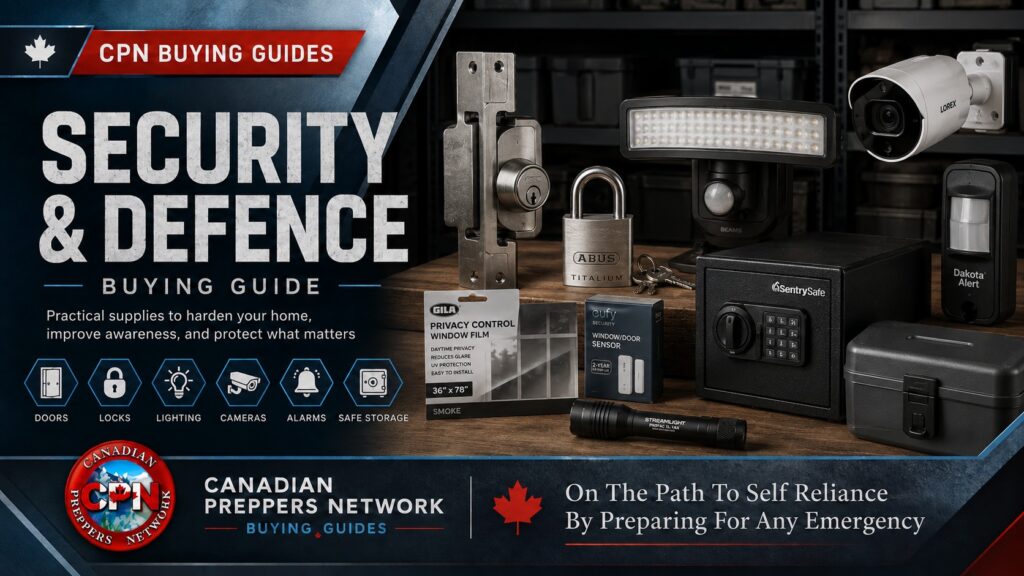
Preparedness security is not about fantasy.
It is about reducing vulnerability before trouble starts. A home does not become secure because someone bought one dramatic item and called the job done. Real security is built in layers: stronger doors, better locks, good lighting, clear visibility, controlled access, early warning, safe storage, and habits that make the property less attractive as a target.
For Canadian preppers, that matters because emergencies can change behaviour. Power outages, storms, evacuations, fuel shortages, local unrest, theft, and supply disruptions can all expose weak points that were easy to ignore during normal times.
This buying guide focuses on practical, legal, household-level security supplies. The goal is not to turn your home into a fortress. The goal is to make forced entry harder, improve awareness, protect valuables, and buy time to respond appropriately.
Start Here: Core Security and Home Hardening Supplies
If you are building a home security plan from scratch, start with the items that protect obvious weak points and improve awareness around the property.
These six categories build the foundation: stronger entry points, better visibility, earlier warning, and safer storage for important items.
Best First Upgrade: Door Reinforcement
Most home security begins at the doors.
A weak door, short screws, poor strike plate, hollow-core exterior door, loose hinges, or cheap deadbolt can make a house much easier to enter than most people realize. Door reinforcement is not glamorous, but it is one of the most practical upgrades a household can make.
Start with the main entry doors, especially the front door, back door, basement door, garage entry door, and any side entrance hidden from the street. A stronger strike plate, longer screws into the framing, hinge reinforcement, and a quality deadbolt all help turn a weak entry point into a more difficult one.
The goal is delay. The more noise, effort, and time required to force entry, the less attractive the house becomes and the more time the household has to react.
Best For Basic Access Control: Locks and Key Management
Locks are not just about keeping strangers out. They are also about controlling who has access.
Many households have old keys floating around with former tenants, contractors, neighbours, relatives, renters, or previous owners. Outbuildings, sheds, gates, trailers, fuel storage areas, and garages are often secured with cheap padlocks or not secured properly at all.
Good lock discipline matters. That means quality deadbolts, keyed-alike systems where appropriate, secure padlocks, key boxes used carefully, and a record of who has access to what.
For a prepper household, access control also includes keeping sensitive supplies out of sight. Food storage, fuel, tools, communications gear, generators, and emergency equipment should not be obvious to every delivery driver, casual visitor, or passerby.
Best For Visibility: Motion Lights and Outdoor Lighting
Darkness helps trespassers.
Motion sensor lights are one of the simplest security improvements for a home, cottage, retreat, farm, or rural driveway. They make movement more visible, discourage people from approaching unnoticed, and help the homeowner see what is happening without walking into the dark.
Focus on entrances first: front door, back door, garage, side gate, basement walkout, driveway, shed, barn, and fuel storage area. Solar motion lights can be useful where wiring is inconvenient, but hardwired or battery-backed options may be more reliable depending on the location.
Lighting should be practical, not obnoxious. The goal is to remove hiding places and improve awareness without blinding neighbours or creating obvious glare that makes cameras less useful.
Best For Awareness: Cameras and Motion Sensors
Security cameras do not physically stop an intruder, but they can improve awareness, document activity, and help a household understand what is happening around the property.
For preparedness use, cameras are most useful when they cover practical areas: doors, driveway, garage, shed, side yard, fuel storage, livestock area, and approaches to the home. A camera watching an empty wall is decoration. A camera watching the driveway, back door, or shed door is useful.
The key buying questions are simple. Does it work in the dark? Does it need Wi-Fi? Does it need a subscription? Can it record locally? How is it powered? Can it survive Canadian weather? Can you still use it during a power outage?
For rural or retreat properties, driveway alarms and standalone motion sensors may be more useful than cameras alone. They provide early warning when a vehicle or person enters an area that is normally quiet.
Best For Windows: Film, Locks, and Alarms
Windows are often overlooked until they become the weak point.
Window security does not have to mean bars on every window. For most households, the practical upgrades are window locks, security film, glass break alarms, window sensors, curtains, and better habits about what can be seen from outside.
Security film can help hold glass together longer if it is struck. It does not make glass invincible, but it can increase the effort and time required to get through. Window alarms and sensors can also provide warning when a window is opened or disturbed.
Visibility matters too. If valuable tools, food storage, radios, generators, firearms, cash boxes, or high-value supplies are visible from outside, the house is advertising itself. Curtains, blinds, storage discipline, and careful lighting reduce that exposure.
Best For Securing Valuables: Safes and Lockable Storage
A home safe is not just for cash.
Important documents, backup drives, passports, insurance papers, keys, small valuables, precious metals, sensitive records, and other critical items should not be scattered around the house. During a theft, fire, evacuation, or family emergency, organization matters.
A small safe is better than nothing, but it should be chosen realistically. Fire resistance, water resistance, size, weight, mounting options, lock type, and location all matter. A lightweight safe sitting loose in a closet can be carried away. A better safe is hidden, secured, and used consistently.
Lockable cabinets and storage boxes are also useful for tools, supplies, medications, documents, electronics, and items that should not be accessible to casual visitors or children.
Best For Outbuildings, Sheds, and Garages
Sheds and garages often contain the most useful theft targets: tools, generators, fuel cans, extension cords, batteries, chainsaws, bikes, propane tanks, ladders, garden equipment, and emergency supplies.
Outbuildings need their own security plan. A strong house does not help much if the shed gives away your fuel, tools, or backup power equipment before you ever need them.
Upgrade hasps, padlocks, hinges, lighting, cameras, and visibility. Do not leave ladders or tools outside where they can be used to access the house. Keep high-value items covered, locked, or moved out of obvious view.
Best For Perimeter Awareness: Signs, Alarms, and Low-Tech Deterrents
A good security plan lets you know something is happening before the problem reaches the door.
Driveway alarms, gate alarms, motion lights, cameras, dogs, gravel paths, trimmed brush, and clear sightlines can all improve awareness. Rural properties especially benefit from early warning because approaches are often longer and emergency response may be slower.
Not every security measure has to be electronic. Simple low-tech changes can help: keep bushes trimmed near windows, remove hiding places near doors, lock gates, improve address visibility for emergency responders, and make entry routes more visible.
The goal is not paranoia. The goal is to avoid being surprised.
Best For Emergency Organization: Bins, Labels, and Concealment
Security is also about not advertising what you have.
A disorganized garage full of visible preparedness supplies can create risk. So can leaving fuel cans, generators, food buckets, tools, radios, and expensive equipment in obvious places. Organization and concealment are part of practical security.
Opaque bins, labels, shelving, lockable cabinets, and inventory systems help keep supplies accessible to the household but less obvious to everyone else. The goal is not to hide everything from yourself. The goal is to make supplies orderly, protected, and discreet.
What To Buy First
For a practical home security plan, start with the items that harden entry points and improve awareness.
Buy first:
- Door reinforcement kit
- Quality deadbolt
- Motion sensor outdoor lights
- Carbon monoxide and smoke alarms if missing
- Outdoor security camera or driveway alarm
- Home safe for critical documents
- Window locks or sensors for weak windows
Then expand into:
- Window security film
- Additional cameras
- Shed and garage locks
- Lockable storage cabinets
- Gate alarms
- Perimeter lighting
- Opaque storage bins and labels
This order builds the system logically. First you secure the obvious weak points. Then you improve warning and visibility. Then you protect valuables and reduce what outsiders can see.
Related CPN Reading
Final Buying Advice
Do not build a security plan around fantasy.
Start with the house you actually live in. Look at the doors, windows, garage, shed, driveway, lighting, locks, storage habits, and visibility from the street. Fix the weak points first.
The best security upgrades are often boring: longer screws, better locks, motion lights, cameras, safes, trimmed bushes, hidden storage, and doors that take longer to force open.
That is the point.
Good security is not about looking aggressive. It is about making your home harder to target, harder to enter, and easier to monitor.
Amazon Disclosure:
As an Amazon Associate, Canadian Preppers Network may earn from qualifying purchases made through links in this guide. This does not change the price you pay, but it helps support the site.