
First Aid Supplies Canada: Complete Buying Guide
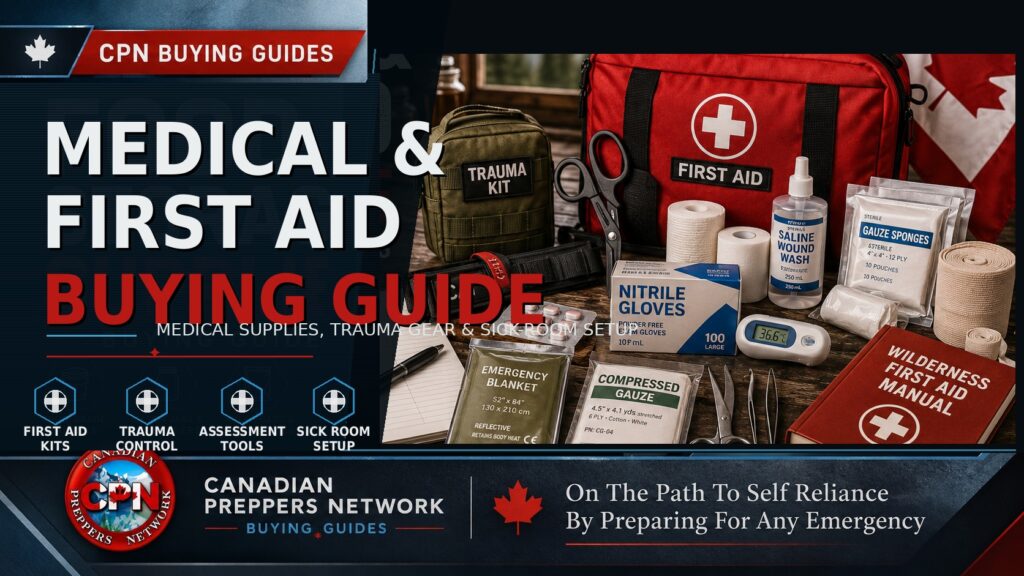
A first aid kit is a starting point, not a medical plan.
Most households have a small kit somewhere in the house, usually filled with a few bandages, old ointment, dull scissors, expired wipes, and random pain relievers. That may be enough for a scraped knuckle, but it is not enough for a serious power outage, winter storm, workshop injury, rural accident, evacuation, supply disruption, or long-term emergency where outside help may be delayed.
Medical preparedness is about time, organization, and capability.
You are not trying to replace doctors, nurses, paramedics, or hospitals. You are trying to keep small problems from becoming bigger ones, handle common injuries properly, organize supplies before stress hits, and buy time until proper care is available.
For Canadian preppers, this matters even more in rural areas, during winter weather, on homesteads, at retreats, during long power outages, and anywhere emergency response may be delayed by distance, road conditions, overloaded systems, or a broader collapse of normal services.
This buying guide focuses on practical household medical supplies: everyday first aid, wound care, trauma supplies, manual assessment tools, sick-room setup, patient movement, dental care, eye protection, medication organization, storage, and reference material.
Start Here: Core Medical and First Aid Supplies
If you are building your medical preparedness shelf from scratch, start with the supplies that cover the widest range of household problems.
These categories build the foundation: basic treatment, bleeding control, infection control, assessment, manual fallback tools, illness management, and organization.
Everyday First Aid and Wound Care
Most medical problems in a household are not dramatic. They are cuts, scrapes, burns, punctures, blisters, sore joints, and minor wounds that become bigger problems when they are ignored, contaminated, or poorly treated.
A pre-made first aid kit is a good starting point, but most kits need to be improved. Add more of the supplies people actually use: sterile gauze, non-stick pads, medical tape, adhesive bandages, saline wound wash, antiseptic wipes, burn dressings, blister pads, elastic wraps, tweezers, scissors, and gloves.
For a prepper household, one kit is usually not enough. Keep one in the home, one in the vehicle, one in the workshop or garage, and one in the retreat, cabin, trailer, barn, or outbuilding if those apply.
The goal is not to own a pretty red case. The goal is to have enough clean, usable supplies to handle common problems without digging through junk drawers under stress.
Trauma and Bleeding Control
A serious medical kit should not stop at minor cuts.
Storm cleanup, chainsaw work, vehicle accidents, workshop injuries, farm accidents, hunting accidents, and violent emergencies can create injuries where ordinary bandages are not enough. This is especially important for rural properties, retreats, homesteads, remote job sites, and any situation where ambulance response may be delayed.
A trauma kit is different from a basic first aid kit. It should include pressure dressings, hemostatic gauze, compressed gauze, trauma shears, nitrile gloves, emergency blankets, wound packing gauze, and quality tourniquets from reputable sources.
Tourniquets, chest seals, and other trauma supplies require training and practice. They should not be treated as decorations or confidence boosters. But they do belong in a serious preparedness medical system because some emergencies need more than gauze and tape.
For a household, retreat, or group, keep trauma supplies clearly labelled and separate from the everyday bandage box.
Advanced Emergency Supplies for Trained Users
Some supplies are not everyday household first aid items, but they may belong in a serious rural, retreat, farm, hunting, workshop, or long-term grid-down medical setup.
Chest seals, advanced dressings, splints, suture kits, sterile instruments, wound closure strips, skin staplers, and irrigation supplies all require judgement, cleanliness, and training. For most households, wound closure strips and sterile dressings are more realistic than suturing. Suture materials may be useful where trained people are present, but they should be stored as advanced supplies, not beginner solutions.
A good advanced kit does not replace medical care. It buys time when medical care is delayed or unavailable.
Sterile Forceps and Medical Instruments
Assessment Tools: Digital and Manual
You cannot manage illness or injury well if you cannot measure basic signs.
A thermometer should be in every household medical kit. Fever, hypothermia risk, and illness tracking all require temperature awareness. Digital thermometers are fast and convenient, but a long-term grid-down medical shelf should also include a non-digital backup thermometer. Batteries fail. Displays break. Chargers disappear. A manual fallback matters.
The same logic applies to blood pressure tools. Digital blood pressure monitors are convenient, but a manual blood pressure cuff and stethoscope are worth considering for trained users because they do not depend on batteries.
A pulse oximeter can be useful in certain illness situations, but it is still an electronic tool. Treat it as part of the convenient layer, not the only layer.
Keep a medical log book with these supplies. Written notes on temperature, symptoms, fluids, medications, times, and changes in condition can be extremely useful when stress is high or when outside medical help becomes available.
Splints, Wraps, and Injury Support
Sprains, strains, falls, twisted ankles, sore wrists, and minor joint injuries are common in emergencies.
People slip on ice, carry heavy water containers, split firewood, shovel snow, move supplies, climb ladders, work in the dark, and do tasks they are not used to doing. A medical kit should include basic support and immobilization supplies.
Elastic bandages, triangular bandages, instant cold packs, finger splints, SAM-style splints, and athletic tape can help stabilize injuries until proper care is available. These supplies are useful in homes, vehicles, workshops, barns, retreats, and wilderness kits.
Burns, Cold Exposure, and Temperature Stress
Canadian preparedness includes both winter exposure and household burn risks.
Burns can happen from wood stoves, camp stoves, candles, propane appliances, hot water, pressure canning, kitchen work, generators, and emergency cooking. Cold exposure can happen during winter outages, vehicle breakdowns, outdoor work, and evacuation conditions.
A medical shelf should include burn dressings, sterile gauze, cold packs, emergency blankets, instant hand warmers, and basic supplies for protecting skin from cold and wind. This overlaps with the Shelter & Heat guide, but it belongs in the medical guide too because exposure injuries can become serious quickly.
For serious burns, frostbite, hypothermia, or heat illness, seek proper medical care as soon as possible.
Illness, Isolation, and Sick-Room Supplies
In a disruption, ordinary illness can become a major household problem.
A cold, flu, stomach bug, fever, cough, or respiratory illness is harder to manage when pharmacies are closed, roads are bad, power is out, or the household is already under stress. A sick room gives one ill person a dedicated space where supplies are close at hand and the rest of the home is easier to protect.
The room does not need to be complicated. A spare bedroom is ideal, but a den, basement room, or sectioned-off area can work if it is warm, ventilated, and easy to clean. Keep the sick person’s bedding, towels, dishes, waste, and hygiene supplies separate where possible.
A sick room also needs a practical way to place and move the patient. A spare bed works, but it may not always be available or ideal. Folding cots, camp cots, mattress protectors, spare bedding, patient transfer sheets, and basic stretcher-style transport aids can make a home-care area more flexible. For retreats, rural properties, farms, and group preparedness setups, a folding stretcher or emergency carry sheet can also help move an injured or ill person from a vehicle, outbuilding, barn, workshop, or field location to a cleaner care area.
Comfort matters, but so does access. The caregiver needs room to reach the patient, change bedding, clean surfaces, record symptoms, and keep supplies close without turning the whole house into a mess.
A sick-room bin should include gloves, masks, disinfecting wipes, tissues, electrolyte supplies, thermometer, non-digital thermometer, wash basin, small trash bags, medical log book, waterproof mattress protector, hand sanitizer, and basic comfort items.
For grid-down planning, include non-electric backups: printed medical references, paper log sheets, extra blankets, a wash basin, a non-digital thermometer, and a flashlight or lantern.
The goal is not to create a hospital room. The goal is to keep illness contained, supplies organized, and care consistent.
Waterproof Mattress Protectors
Dental, Eye Care, and Personal Protection
Dental and eye problems can make a bad situation much worse.
A lost filling, broken tooth, toothache, mouth injury, or damaged dental appliance can make eating, sleeping, and working difficult. A dental emergency kit is not a replacement for a dentist, but it can help manage temporary problems until proper care is available.
Eyes are just as important. Smoke, dust, debris, chemicals, cleaning supplies, power tools, wind, firewood work, repairs, and outdoor labour can all create eye problems. Keep safety glasses, protective goggles, saline eye wash, eye pads, and backup contact lens supplies where appropriate.
For retreats, farms, workshops, and rural households, dental and eye supplies deserve a dedicated place on the medical shelf.
Temporary Dental Filling Material
Medication, Records, and Continuity
Medication preparedness is mostly about organization and continuity.
Every household should know what medications are used, where they are stored, when refills are needed, and what special storage requirements exist. Keep a written medication list in your emergency binder. Include names, dosages, prescribing doctors, pharmacy information, allergies, and emergency contacts.
Do not leave important medical information trapped only inside a phone.
Pill organizers, medication lock boxes, labels, small pouches, printed medication lists, and waterproof labels can reduce confusion, especially for households with seniors, children, multiple prescriptions, or rotating caregivers.
Storage, Labelling, and Reference Material
A disorganized medical shelf is a liability.
If someone is bleeding, feverish, burned, or injured, you do not want to dig through junk drawers and half-empty boxes. Medical supplies should be grouped, labelled, and easy to access.
Use medical cases, first aid bags, clear bins, labelled pouches, waterproof cases, inventory notebooks, and printed references. Separate everyday wound care, trauma supplies, sick-room supplies, medication records, dental care, eye care, and vehicle kits.
Supplies are not enough. A household with a wall full of medical gear but no training is still vulnerable. Take a first aid course, CPR course, wilderness first aid course, bleeding-control course, or local emergency care training where available.
Keep reference books with the supplies, not buried on a bookshelf.
What To Buy First
For a practical household medical setup, start with the supplies you are most likely to use and the organization needed to find them quickly.
Buy first:
- First aid kit
- Nitrile gloves
- Sterile gauze pads
- Non-stick wound pads
- Medical tape
- Adhesive bandages
- Saline wound wash
- Digital thermometer
- Non-digital thermometer
- Elastic bandages
- Medical storage case
- Trauma shears
- Emergency pressure dressing
Then expand into:
- Bleeding control kit
- Tourniquets
- Hemostatic gauze
- Chest seals
- Burn dressings
- Instant cold packs
- SAM splint
- Manual blood pressure cuff
- Stethoscope
- Blood pressure monitor
- Pulse oximeter
- Dental emergency kit
- Eye wash supplies
- Medication organizer
- Sick-room setup supplies
- Folding cot
- Portable stretcher or emergency carry sheet
- Patient transfer sheet
- Extra bedding for sick-room setup
- Wash basin
- Waterproof mattress protector
- Medical log book
- Extra gloves, masks, and disinfecting supplies
- Wound closure strips
- Suture materials for trained users
- First aid reference book
This order builds the system logically. First you cover common injuries. Then you improve assessment. Then you add trauma supplies, manual tools, illness support, patient movement, dental care, eye care, sick-room capability, and reference material.
Related CPN Reading
Final Buying Advice
Do not build a medical shelf that only looks prepared.
Build one that can actually be used under stress.
Organize it. Label it. Check expiry dates. Replace what gets used. Keep gloves and wound care easy to reach. Keep trauma supplies separate and clearly marked. Keep sick-room supplies together so illness does not spread through the house unnecessarily. Keep printed medical information outside the phone. Include manual backups where practical because batteries, screens, and chargers eventually fail.
Make sure everyone in the household knows where the supplies are.
The goal is not to play doctor.
The goal is to handle common problems well, reduce avoidable complications, and buy time when outside help is delayed or unavailable.
Amazon Disclosure:
As an Amazon Associate, Canadian Preppers Network may earn from qualifying purchases made through links in this guide. This does not change the price you pay, but it helps support the site.