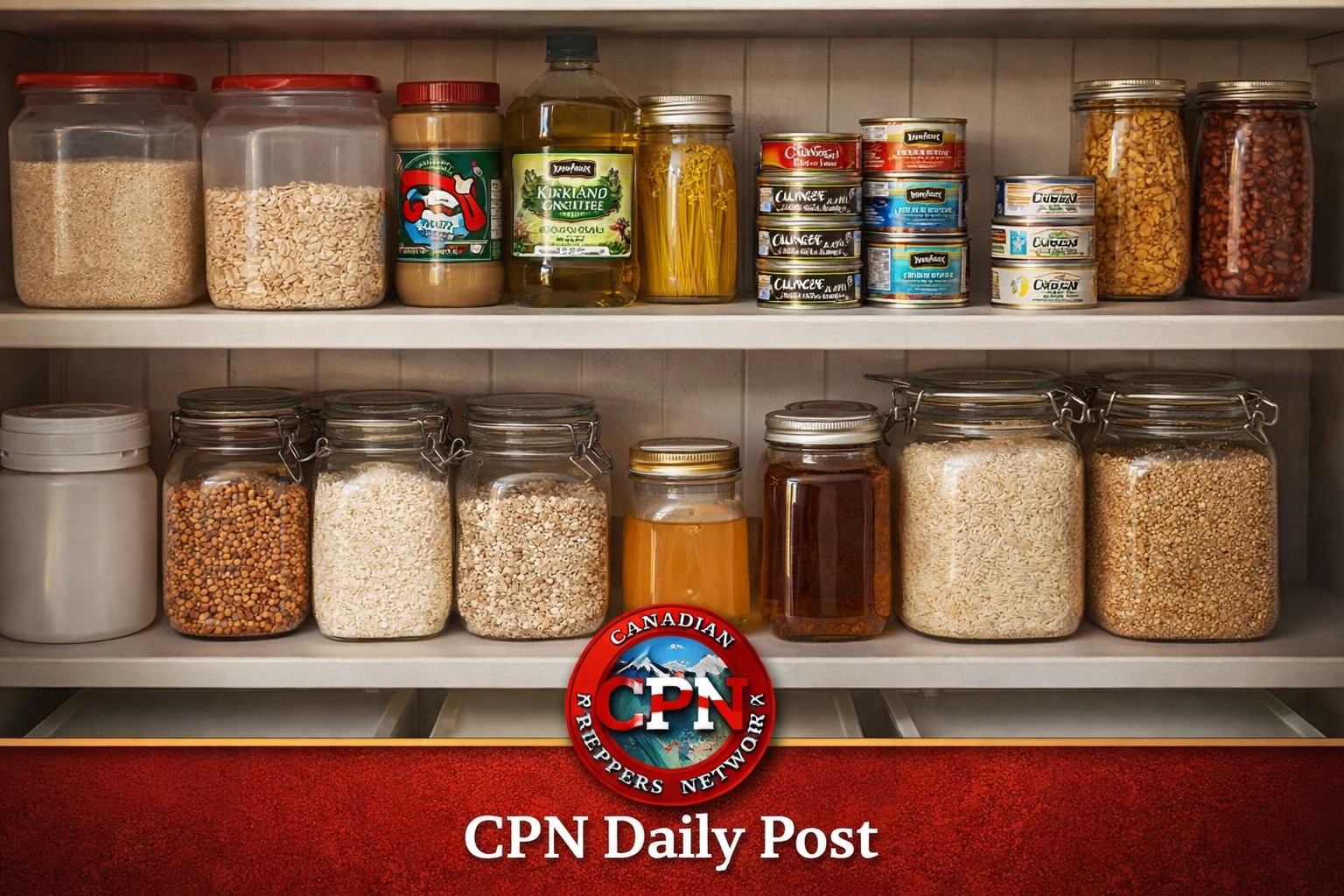
Walk through any grocery store in Canada and you’ll see it—rows of everyday items most people barely think about. They’re cheap, familiar, and easy to overlook.
But in a disruption—whether it’s a winter storm, supply chain interruption, or something longer-term—these same “normal” foods become the backbone of real preparedness.
This isn’t about exotic freeze-dried meals or expensive prepper kits. It’s about recognizing what already works—and using it intentionally.
1. Peanut Butter
Peanut butter is one of the most efficient survival foods you can buy. It’s calorie-dense, packed with fats and protein, requires no cooking, and has a long shelf life.
A single jar can provide thousands of calories with zero preparation.
👉 https://www.amazon.ca/s?k=peanut+butter&tag=canadianprep-20
2. Rolled Oats
Oats are cheap, filling, and incredibly versatile. You can cook them, soak them overnight, or even eat them raw in a pinch.
They also store well and stretch easily when supplies are tight.
👉 https://www.amazon.ca/s?k=rolled+oats&tag=canadianprep-20
For long-term planning, rotating oats regularly is one of the simplest ways to build a deep pantry.
https://canadianpreppersnetwork.com/how-to-build-a-30-day-food-supply-in-canada-without-overspending/
3. Canned Tuna and Salmon
Shelf-stable protein is where most food plans fall apart. Canned fish solves that problem.
It requires no refrigeration, no cooking, and delivers protein, fats, and essential nutrients like omega-3s.
👉 https://www.amazon.ca/s?k=canned+tuna+salmon&tag=canadianprep-20
4. Dry Lentils
Lentils cook faster than most dried beans and don’t require soaking. That makes them ideal when fuel or time is limited.
They’re also one of the cheapest protein sources available.
👉 https://www.amazon.ca/s?k=dry+lentils&tag=canadianprep-20
5. White Rice
Rice is a cornerstone survival food for a reason. It stores for years when kept dry, is easy to prepare, and pairs with almost anything.
The mistake most people make is storing it without anything to go with it. Rice is a base—not a complete solution.
👉 https://www.amazon.ca/s?k=white+rice&tag=canadianprep-20
6. Cooking Oil
This is where most preppers fall short.
Oil is pure calories—something your body will desperately need in a prolonged situation. It also makes otherwise bland foods edible and helps with cooking efficiency.
Without fats, your food plan is incomplete.
👉 https://www.amazon.ca/s?k=cooking+oil&tag=canadianprep-20
7. Pasta
Pasta is cheap, compact, and widely accepted by every household member. It cooks quickly and pairs with almost anything—from canned goods to simple oils and spices.
It’s not glamorous, but it works.
👉 https://www.amazon.ca/s?k=pasta&tag=canadianprep-20
8. Powdered Milk
Fresh milk disappears fast in any disruption. Powdered milk fills that gap.
It supports nutrition, especially for families with kids, and can be used in cooking, baking, or drinking.
👉 https://www.amazon.ca/s?k=powdered+milk&tag=canadianprep-20
9. Honey
Honey never spoils. Let that sink in.
It’s a natural sweetener, a quick energy source, and even has basic medicinal uses. It can also be used for preserving and flavouring otherwise bland foods.
👉 https://www.amazon.ca/s?k=raw+honey&tag=canadianprep-20
10. Salt
Salt is not optional—it’s essential.
Beyond flavour, it’s critical for electrolyte balance and food preservation. In a long-term scenario, salt becomes a trade good as much as a necessity.
👉 https://www.amazon.ca/s?k=table+salt&tag=canadianprep-20
The Quiet Advantage
None of these items look like “survival food.”
That’s the point.
They’re affordable, available, and already part of most households. When you build your food supply around items you actually use, rotation becomes effortless—and waste disappears.
Preparedness isn’t about buying different food.
It’s about seeing ordinary food differently.
If you want to go deeper into building a layered, practical system that works in real Canadian conditions, start here:
https://canadianpreppersnetwork.com/how-to-build-a-30-day-food-supply-in-canada-without-overspending/
📦 Recommended Reading
🟫 Acres of Preparedness: Planning the Last Safe Place
A grounded, practical look at building long-term self-reliance without relying on fragile systems.