A three-day outage can outlast a one-night backup
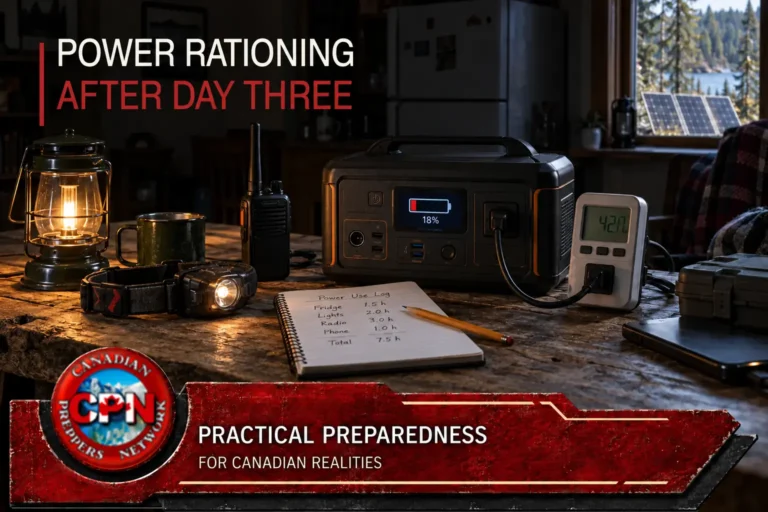
The April 2023 ice storm cut power to more than a million Hydro-Québec customers. Two days after the storm’s peak, service had been restored to 77 per cent of affected homes; the remaining outages took longer. After the May 2022 derecho, Hydro Ottawa reported that many customers were without power for days. Those are useful reminders of what “backup power” has to mean: a medical plan must work beyond the first night. Hydro-Québec’s storm report and Hydro Ottawa’s outage account document the scale and duration.
A household can have a full first-aid kit and still be medically unprepared. If someone relies on a powered device, refrigerated medication or an internet connection to manage a condition, the important question is not simply, “Do we have a battery?” It is: How long can this person safely continue their care when the power stays off?
Start with the person, then trace the dependencies
Make a separate outage plan for each person with an ongoing medical need. List every part of their care that depends on something outside the household:
- Electricity: a powered medical device, charging equipment or refrigeration.
- Supplies: medication, batteries, sensors, tubing or other items that are used up.
- Communications: an app, internet connection, remote monitoring service or a phone needed to reach a care provider.
- Transport: appointments, treatments or access to a pharmacy.
- Another person: someone who knows how to operate the equipment or recognize a problem.
A device’s internal battery is only one part of that chain. A charged device may keep working while its disposable supplies run out. A well-stocked cupboard may offer little help if essential medication has been stored incorrectly. Canada’s power-outage guidance calls for a plan covering electrically powered devices, refrigerated medicines and devices that rely on the internet.
Measure the backup in hours, not reassuring labels
“Has battery backup” tells you very little. Find the device’s power requirements in its manual, then ask its manufacturer or medical-equipment supplier which backup power sources are approved for it. Record the expected operating time under the settings actually used, the time needed to recharge and the point at which a low-power warning appears.
Next, test the parts of the arrangement that can safely be tested. Does the backup start as expected? Can the intended caregiver connect it? Is the charger where everyone thinks it is? A plan that depends on an unfamiliar cable buried in a storage bin is a fragile plan.
A fuel generator can extend your options, but it needs fuel, maintenance, safe outdoor placement and a suitable connection to the equipment. A prolonged outage can also interrupt fuel purchases. The arrangement may involve more than one approved power source and a destination with reliable power. The exact choice depends on the medical equipment and the person using it.
For a device essential to life or immediate health, work out the backup and evacuation threshold with the treating team. Do not assume a utility company can restore one address before the wider area.
Refrigerated medicine needs its own plan
The kitchen refrigerator is easy to overlook because it normally works without attention. Once power fails, a medication’s storage requirements still apply. Those requirements differ by product and by whether it has been opened or is in use.
Insulin is one example where improvisation can cause harm: excess heat can reduce effectiveness, while freezing can also damage it. Diabetes Canada provides emergency-planning resources, and the CDC advises keeping insulin cool without freezing it during an outage. Do not apply a food-safety time limit to medication. Check the specific product instructions and ask a pharmacist what to do if its storage conditions are breached.
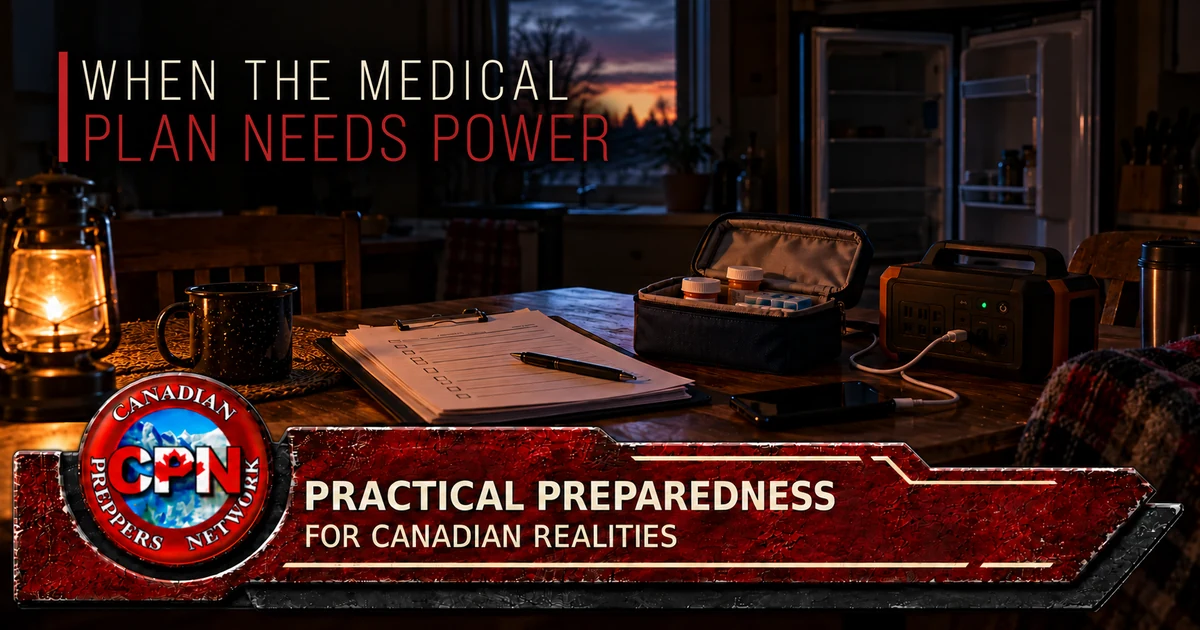
Before an outage, identify a suitable container, a way to monitor its temperature where required and a place that can maintain the correct conditions if your home cannot. Keep the medication identified and accessible so an evacuation does not turn into a hurried search through the fridge.
Set a decision point before conditions deteriorate
The most useful line in a medical outage plan is: “If this happens, we leave or seek help.” Write it with the relevant clinician rather than deciding under pressure.
That line might be tied to remaining device runtime, loss of a required treatment, a storage-temperature problem or the loss of safe transport. It should account for weather and travel time. Waiting until the final battery warning leaves no room for a road closure, a flat vehicle battery or a receiving location that has also lost power.
Record two possible destinations and how you would contact them. Put a paper copy of the plan, medication list, equipment details and key phone numbers with the supplies. Give a copy to a trusted support person. Federal accessibility guidance recommends alternate power for medical equipment, sharing the emergency plan with a support network and reviewing it regularly.
Run a tabletop test this week
You do not need to shut off a medical device to expose weak points. Sit down with the person who uses it and walk through this scenario:
The power has been out for six hours. The utility gives no restoration time. Mobile service is unreliable, and the nearest open pharmacy is an hour away.
Can everyone find the equipment instructions? How much approved backup runtime remains? Which supplies will run out first? Who calls the care team? Where will the person go if the outage lasts through tomorrow—and what if, as in the Canadian outages above, it lasts several days?
Write down every answer you cannot give confidently. Those gaps are the real shopping and planning list. Buy equipment only after you know what the care plan and device require.
A medical backup plan is complete when the person using it and another trusted adult know what works, for how long and what they will do when that time is nearly up. Which dependency would fail first in your household: power, refrigeration, supplies, communications or transport?
Related Reading
- Medical & First Aid in Canada — the CPN hub for medical planning, training and supplies.
- Energy Production & Blackout Power Buying Guide — match backup power to the loads you actually need to run.
- Medical Records — organize information that may need to travel with the patient.