Designing a Garden That Produces Calories, Scales Under Stress, and Survives Bad Years
For most Canadians, gardening is recreational. For preppers, it’s infrastructure.
The difference matters. A recreational garden produces food when conditions are good. A food-security garden is designed to produce reliably, even when weather, labour, inputs, or supply chains are working against you. That requires planning well beyond seed catalogs and spring enthusiasm.
A preparedness garden is built around calories, storage life, and redundancy, not aesthetics.

Calories Are the Constraint Everyone Avoids
The uncomfortable truth is that most backyard gardens produce very little usable energy. A season of greens, tomatoes, and herbs may feel productive but contributes almost nothing to caloric independence.
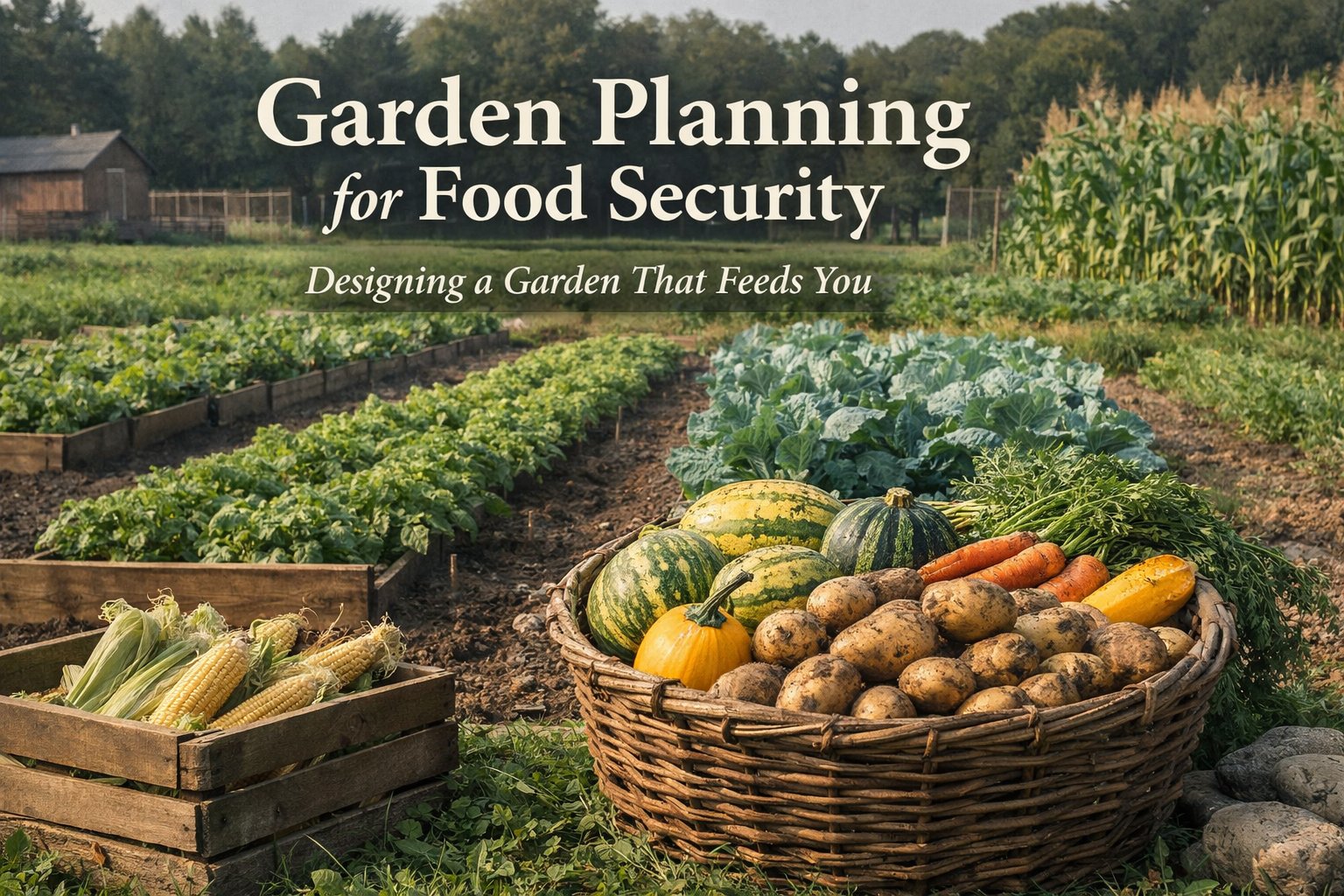
Food security starts by prioritizing crops that deliver bulk nutrition per square foot and can be stored without refrigeration:
- Potatoes and other storage roots
- Dry beans and peas
- Winter squash
- Storage onions and cabbage
- Grain corn (where space allows)
These crops are not exciting, but they are efficient. Potatoes alone can produce 2–4 million calories per acre, and they store for months with no electricity. Dry beans deliver both calories and protein while improving soil fertility through nitrogen fixation.
This calorie-first approach is foundational in Acres of Preparedness, where gardens are designed backward from caloric requirements instead of forward from crop preferences.
👉 https://canadianpreppersnetwork.com/acres-of-preparedness/
Garden Size: Square Feet Per Adult, Not “Beds”
Preparedness planning fails when garden size is guessed instead of calculated.
As a realistic planning framework for Canadian conditions:
- 800–1,200 sq ft per adult provides meaningful supplementation
- 1,500–2,000 sq ft per adult supports partial self-reliance
- Beyond that, land use becomes strategic rather than supplemental
These numbers assume calorie crops dominate the space, not salad greens. Raised beds are useful for poor soil or mobility issues, but once gardens exceed a few hundred square feet, in-ground rows become more efficient in both labour and yield.
This scale transition — from “garden” to “food system” — is discussed further in:
👉 https://canadianpreppersnetwork.com/long-term-food-production-for-preppers/
Layout Is a Force Multiplier
Good soil helps. Good layout multiplies effort.
A food-security garden is laid out for:
- Straight rows or standardized bed widths
- Easy access with carts or wheelbarrows
- Predictable crop rotation zones
- Expansion without redesign
Wide, curving beds look nice but waste space and complicate rotation. Rectangular grids simplify planning and make it easier to scale up quickly if conditions deteriorate.
Layout also affects labour efficiency, which becomes critical if injury, illness, or manpower loss occurs.
Crop Rotation Without Fertilizer Dependence
Rotation isn’t ideology — it’s insurance.
When fertilizers, pesticides, or replacement soil inputs aren’t guaranteed, rotation becomes the primary defense against declining yields. A simple four-group rotation is both effective and easy to manage:
- Root crops (potatoes, carrots, beets)
- Legumes (beans, peas)
- Leaf crops (cabbage, brassicas, greens)
- Fruit crops (squash, tomatoes, corn)
Each year, crops move forward one section. Pest cycles break naturally, nutrient demand balances out, and soil structure improves without purchased inputs.
A Canada-specific rotation breakdown is covered here:
👉 https://canadianpreppersnetwork.com/garden-rotation-for-long-term-food-security/
Seed Strategy: Planning for the Second and Third Year
Most gardens are planned as if next year’s seeds will always be available.
Preparedness gardens assume they won’t be.
Hybrid seeds produce strong first-year results but force annual resupply. Open-pollinated and heirloom varieties allow seed saving, local adaptation, and long-term independence. Over multiple seasons, saved seed begins to outperform store-bought stock in your specific climate.
Seed storage matters just as much as seed selection. Airtight containers, desiccants, and darkness dramatically extend viability. A practical option available on Amazon.ca is the VIVOSUN Seed Storage Organizer, which seals well and protects against moisture:
👉 https://www.amazon.ca/dp/B08L5X6Z9H?tag=canadpreppn01a-20
Seed saving fundamentals are covered in depth here:
👉 https://canadianpreppersnetwork.com/seed-saving-for-preppers/
Planning Preservation Before the First Plant Goes In
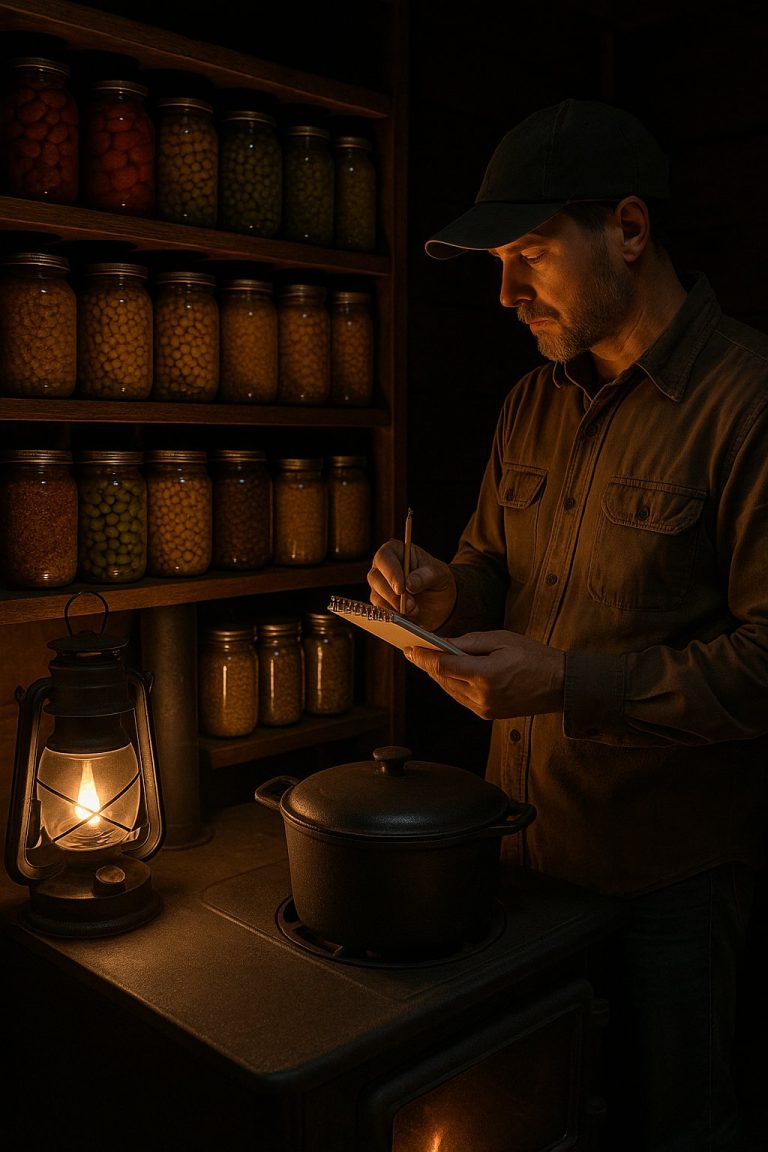
A common failure point is producing food without a plan to keep it.
Every crop decision should already be paired with a preservation method:
- Potatoes require cellar or cool storage
- Storage onions require curing and airflow
- Paste tomatoes make sense if you can or dehydrate
- Dry beans are chosen specifically for shelf storage
If preservation isn’t considered in advance, surplus becomes waste or rushed processing under poor conditions.
Root cellar planning for Canadian climates is covered here:
👉 https://canadianpreppersnetwork.com/root-cellar-basics-for-canadians/
Staggered Planting and Labour Management
Planting everything at once creates harvest spikes that overwhelm processing capacity.
Staggering sowing by 1–2 weeks:
- Extends fresh food availability
- Reduces spoilage
- Smooths labour demand
This approach is especially effective for beans, carrots, lettuce, and greens, and it provides valuable data about which planting windows perform best in abnormal weather years.
In bad seasons, timing matters more than yield potential.
Tool and Input Planning
A food-security garden assumes limited access to replacements.
Hand tools, spare handles, fencing materials, and irrigation backups should already be staged. Water access in particular becomes a choke point during drought years or municipal restrictions.
This ties directly into broader CPN water-planning coverage:
👉 https://canadianpreppersnetwork.com/emergency-water-planning-for-homes/
Final Thought
A preparedness garden is not a hobby — it’s a system.
When properly planned, it:
- Produces real calories
- Scales under pressure
- Continues working when inputs disappear
Gardens fail not because people stop caring, but because they never planned past the first good year.
Plan for calories. Plan for storage. Plan for bad seasons.
Everything else is optional.