How to Communicate During an Emergency
How communication is compromised
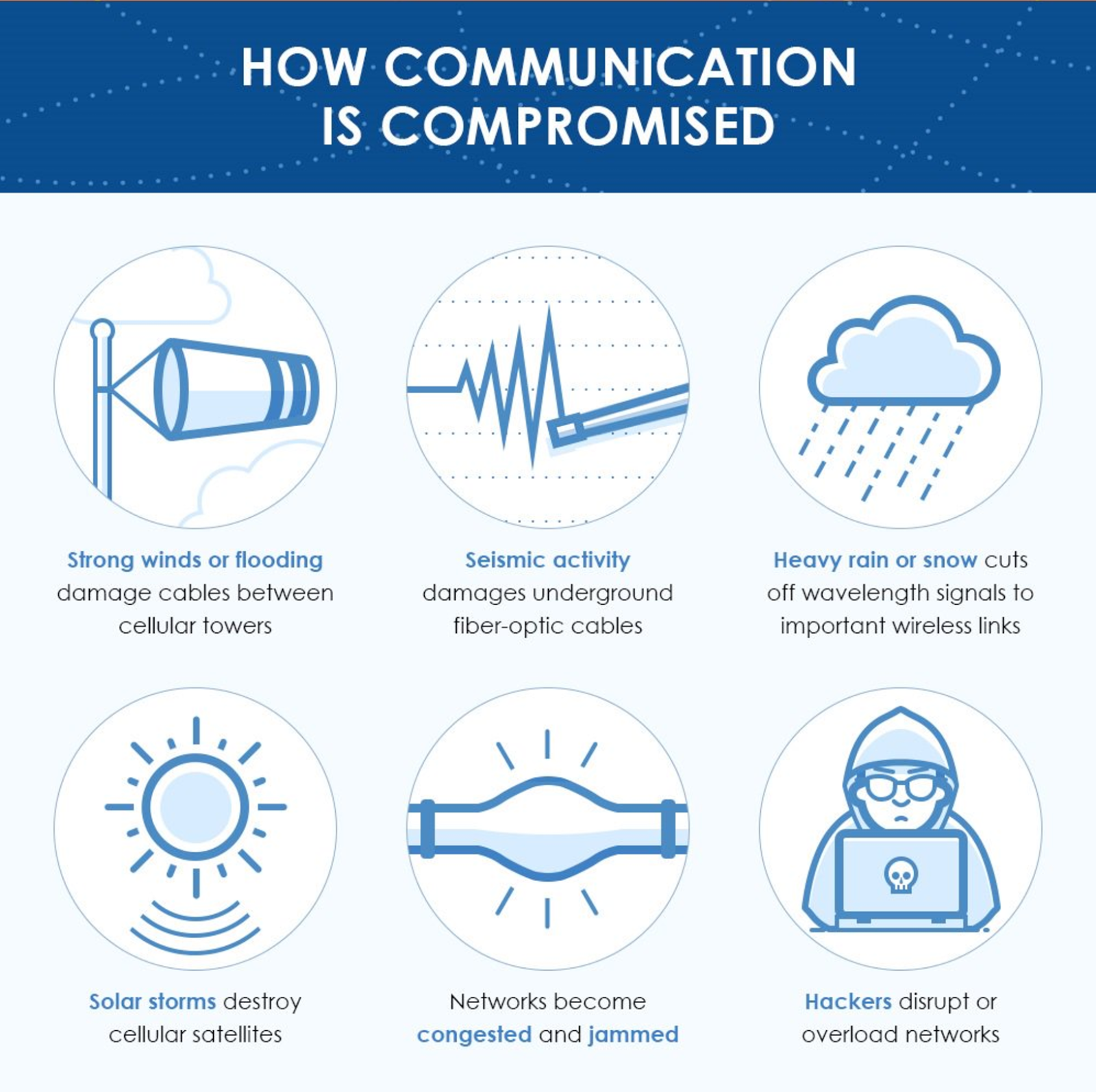
● Strong winds or flooding damage cables between cellular towers
● Seismic activity damages underground fiber-optic cables
● Heavy rain or snow cuts off wavelength signals to important wireless links
● Solar storms destroy cellular satellites
● Networks become congested and jammed
● Hackers disrupt or overload networks
Make sure you’re prepared before a disaster strikes
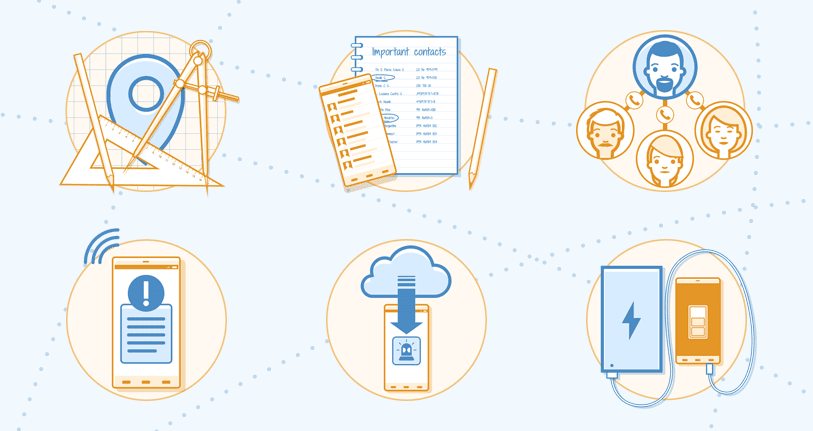
● Create a family emergency plan – Make sure your family knows what to do and where to go during a catastrophic event.
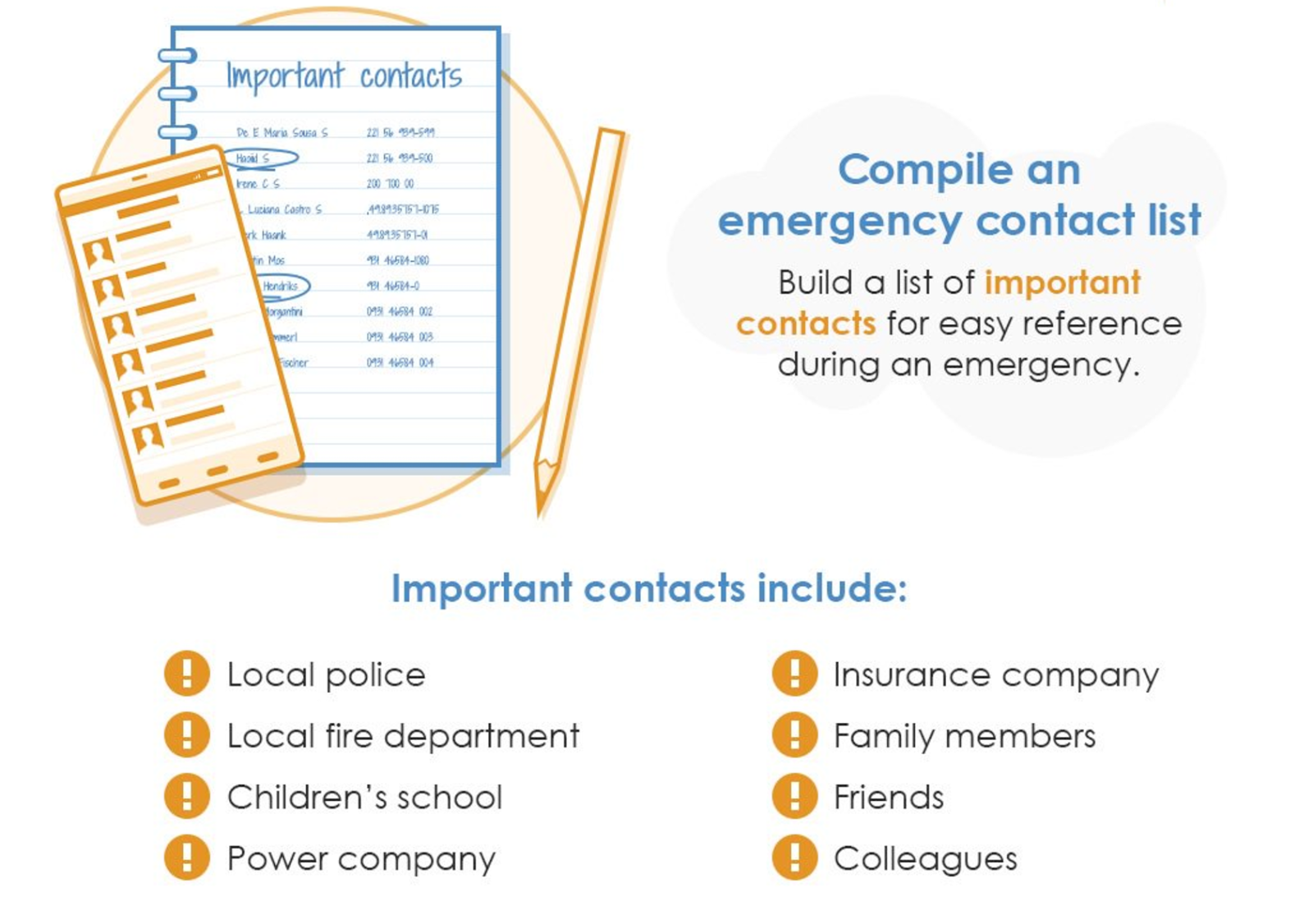
● Compile an emergency contact list – Build a list of important contacts for easy reference during an emergency.
○ Important contacts include:
■ Local police
■ Local fire department
■ Children’s school
■ Power company
■ Insurance company
■ Family members
■ Friends
■ Colleagues
● Establish a calling tree – Designate someone that everyone calls. They will be the central hub for information.
● Subscribe to local text alerts – Subscribe to local alerts to receive text updates about your area.
● Download helpful apps – Download apps specifically designed for emergency situations.
○ Helpful apps include:
■ Red Cross
■ Weather Network
■ Environment Canada
● Purchase backup charging options – Ensure you have backup charging options for your phone in case the power goes out.
Options for communication during a disaster
Amateur Radio Service (Ham) – An amateur radio service for non-commercial purposes. Ham radios have multiple frequency bands, including: HF, VHF, and UHF—with multiple modulation types, including: AM, FM, and SSB.
● Pros – greater power and more availability of repeaters
● Cons – requires licensing and testing
Family Radio Service (FRS) – Personal radio service that is essentially an improved walkie-talkie system. FRS radios use UHF and FM.
● Pros – entire family can have their own radio and no license required
● Cons – limited range (~1 mile) and restricted by line-of-sight
General Mobile Radio Service (GMRS) – Land-mobile radio service designed for short-distance, two-way communication similar to FRS. GMRS radios use UHF, FM, and have 23 available channels.
● Pros – higher power level and can use repeater to greatly improve range
● Cons – interference from limited channels
Citizen Band (CB) – A system of short-distance radio communications where users share channels. CB radios HF, AM, and SSB.
● Pros – unaffected by cell towers or satellites and no license required
● Cons – limited range and not many people using CB

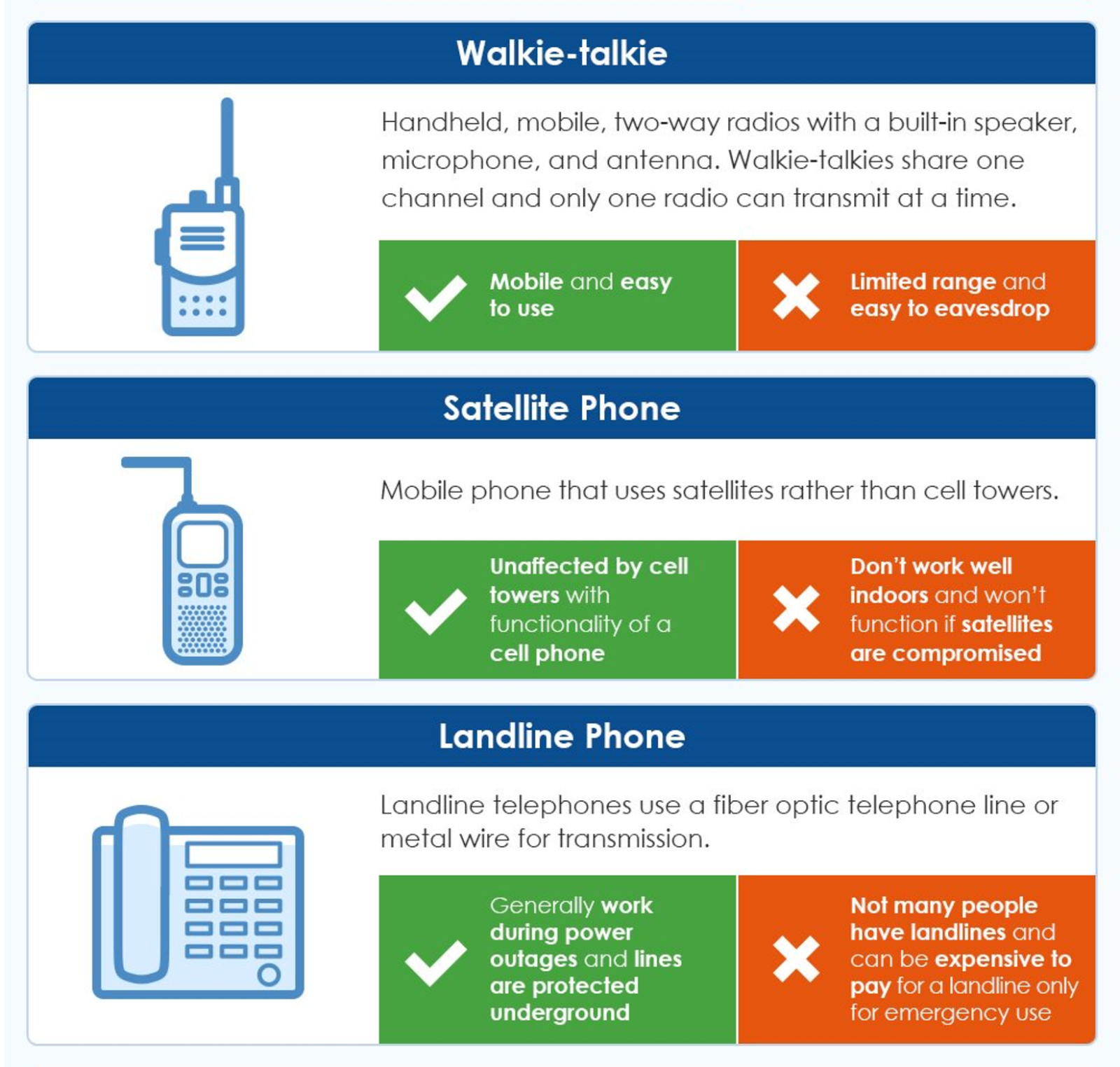
Walkie-talkie – Handheld, mobile, two-way radios with a built-in speaker, microphone, and antenna. Walkie-talkies share one channel and only one radio can transmit at a time.
● Pros – mobile and easy to use
● Cons – limited range and easy to eavesdrop
Satellite Phone – Mobile phone that uses satellites rather than cell towers.
● Pros – unaffected by cell towers with functionality of a cell phone
● Cons – don’t work well indoors and won’t function if satellites are compromised
Landline Phone – Landline telephones use a fiber optic telephone line or metal wire for transmission.
● Pros – generally work during power outages and lines are protected underground
● Cons – not many people have landlines and can be expensive to pay for a landline only for emergency use
Social Media/Mobile Apps – Social sites or apps often have messenger and chat functions that can be used to communicate.
● Pros – more access to real-time news/events and location features can help track loved ones
● Cons – requires internet access and internet capable device
Email – Electronic mail messages sent via the internet on a computer, tablet, or smartphone.
● Pros – less congestion than cell service and doesn’t rely on cell towers
● Cons – requires internet connectivity and internet capable device
Cell Phone/Smartphone – Handheld mobile devices capable of calling and text messaging other phones as long as cell towers are intact.
● Pros – everyone has one and can reach people directly
● Cons – dependent on power grid and cell towers and network congestion can cause issues
Sponsored posts MAY have been paid for as an advertisement.