Gear failure rarely happens at a convenient time. A torn pack strap, broken snowshoe frame, or cracked axe handle can quickly turn a manageable situation into a serious problem—especially if you’re deep in the bush.
For preppers, the lesson is simple. Equipment matters, but knowing how to repair it when supplies run out matters more.
For centuries, Indigenous travelers and northern woodsmen relied on the forest itself to repair equipment. Roots became cordage. Bark became containers and patches. Resin became glue. Wood became splints and structural supports.

But harvesting those materials safely and efficiently requires a few basic tools.
Harvesting Spruce Roots for Cordage
Spruce roots are one of the strongest natural cordage materials in the boreal forest. They grow just below the surface and can often be pulled out in long sections.
A sturdy knife or small digging tool makes harvesting much easier. Many bushcrafters prefer a strong fixed-blade knife designed for wood processing and carving tasks.
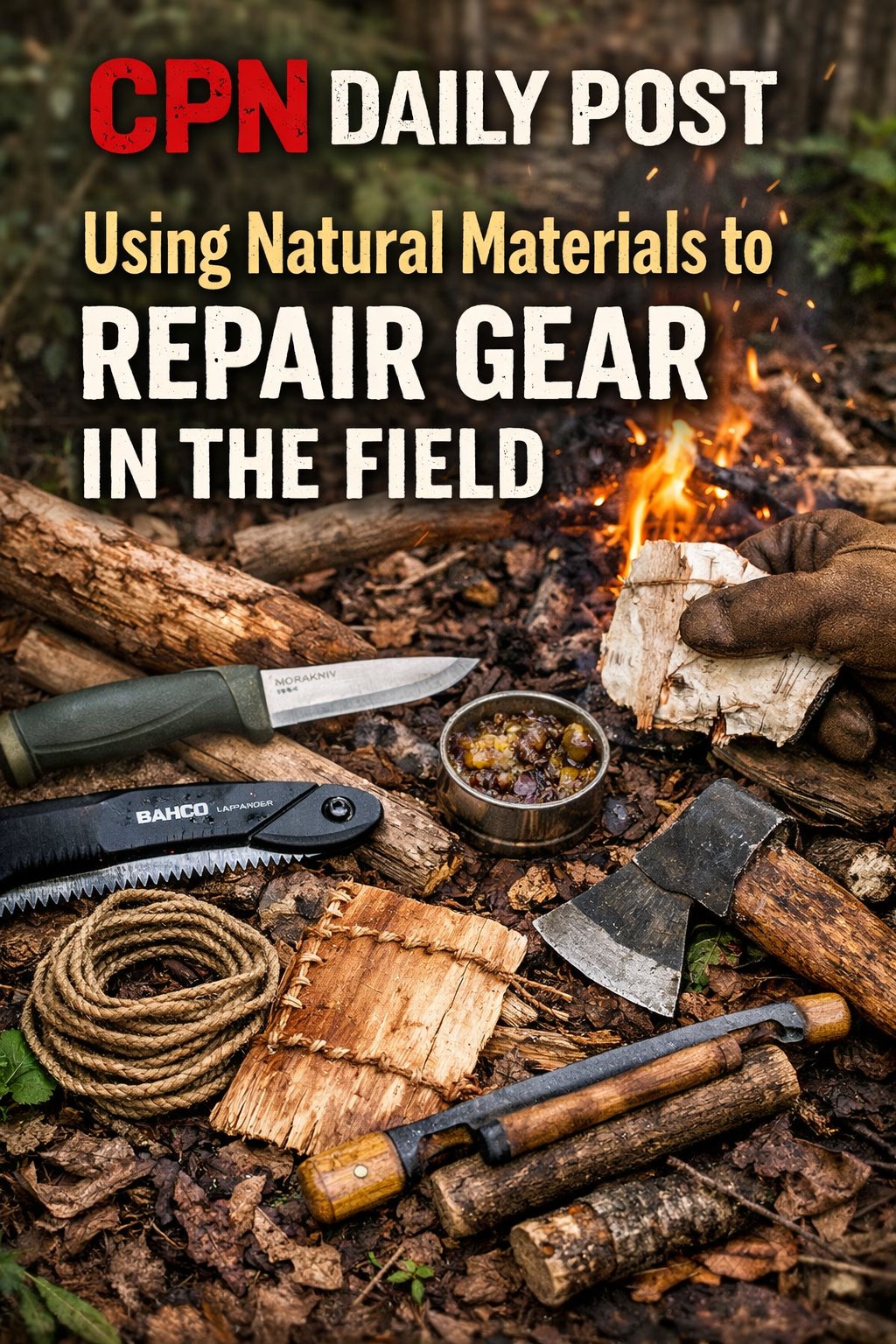
A reliable example is a Morakniv Companion Fixed Blade Knife, which has become one of the most widely used bushcraft knives because it handles carving, cutting roots, and stripping bark extremely well.
https://www.amazon.ca/s?k=morakniv+companion+knife&tag=canadianprep-20
Once harvested, the outer bark of the root is peeled away and the root can be soaked briefly to increase flexibility before use.
When it dries, the root tightens and becomes extremely strong—perfect for repairing broken gear or building lashings.
Removing Birch Bark Without Damaging the Tree
Birch bark is incredibly useful in wilderness repairs. It can patch torn gear, reinforce packs, or even form emergency containers.
Harvesting bark requires careful cuts so the tree is not permanently damaged. A sharp knife works, but a compact folding saw can make clean controlled cuts when removing larger sheets.
A common bushcraft tool for this is the Bahco Laplander Folding Saw, which is light, durable, and widely used for woodcraft tasks.
https://www.amazon.ca/s?k=Bahco+Laplander+folding+saw&tag=canadianprep-20
With controlled cuts, bark can be removed in sheets and later shaped or stitched using natural cordage.
Processing Plant Fibers Into Cordage
Plants like cedar bark, basswood, and nettle fibers can be twisted into usable rope or lashings.
Processing these fibers often requires splitting stems, shaving bark, and separating strands. A small carving knife or bushcraft knife is ideal for this work.
Many preppers also carry a small bushcraft carving knife specifically for fine wood and fiber processing tasks.
https://www.amazon.ca/s?k=bushcraft+carving+knife&tag=canadianprep-20
These fibers can then be twisted using the reverse-wrap technique to create usable cordage for repairs.
Cutting Wood Splints for Structural Repairs
When equipment breaks—such as a trekking pole or pack frame—straight wood splints can reinforce the damaged section.
A folding saw makes gathering these splints far easier than trying to snap branches by hand.
Compact outdoor saws designed for bushcraft are perfect for this kind of work.
https://www.amazon.ca/s?k=folding+camp+saw&tag=canadianprep-20
Straight green sticks placed along the damaged section and lashed tightly can stabilize broken gear long enough to reach safety.
Collecting Tree Resin for Natural Glue
Pine and spruce resin can be turned into an extremely effective natural adhesive.
Resin is typically collected from hardened deposits on tree trunks. A knife or small scraper can lift the resin from bark without damaging the tree.
Once melted near a fire and mixed with powdered charcoal, the resulting pitch glue can seal cracks, reinforce bindings, and repair wooden tools.
Tools That Support Wilderness Repair Skills
Natural repair materials are everywhere in the Canadian wilderness—but harvesting them efficiently is much easier with a few well-chosen tools.
Bushcraft knives, folding saws, and carving tools allow you to process roots, bark, wood, and fibers quickly and safely.
For preppers, these tools do more than support camping skills. They allow you to keep repairing and maintaining equipment long after replacement parts are unavailable.
Because in a long emergency, gear doesn’t last forever.
Skills do.