When disaster strikes, water becomes your most critical resource—far more important than food or fuel. The average human can only survive three days without water, and in an emergency, clean water can quickly become scarce. Whether it’s a power outage, natural disaster, or a full-scale grid collapse, preppers need a dependable strategy for collecting, treating, and storing water.
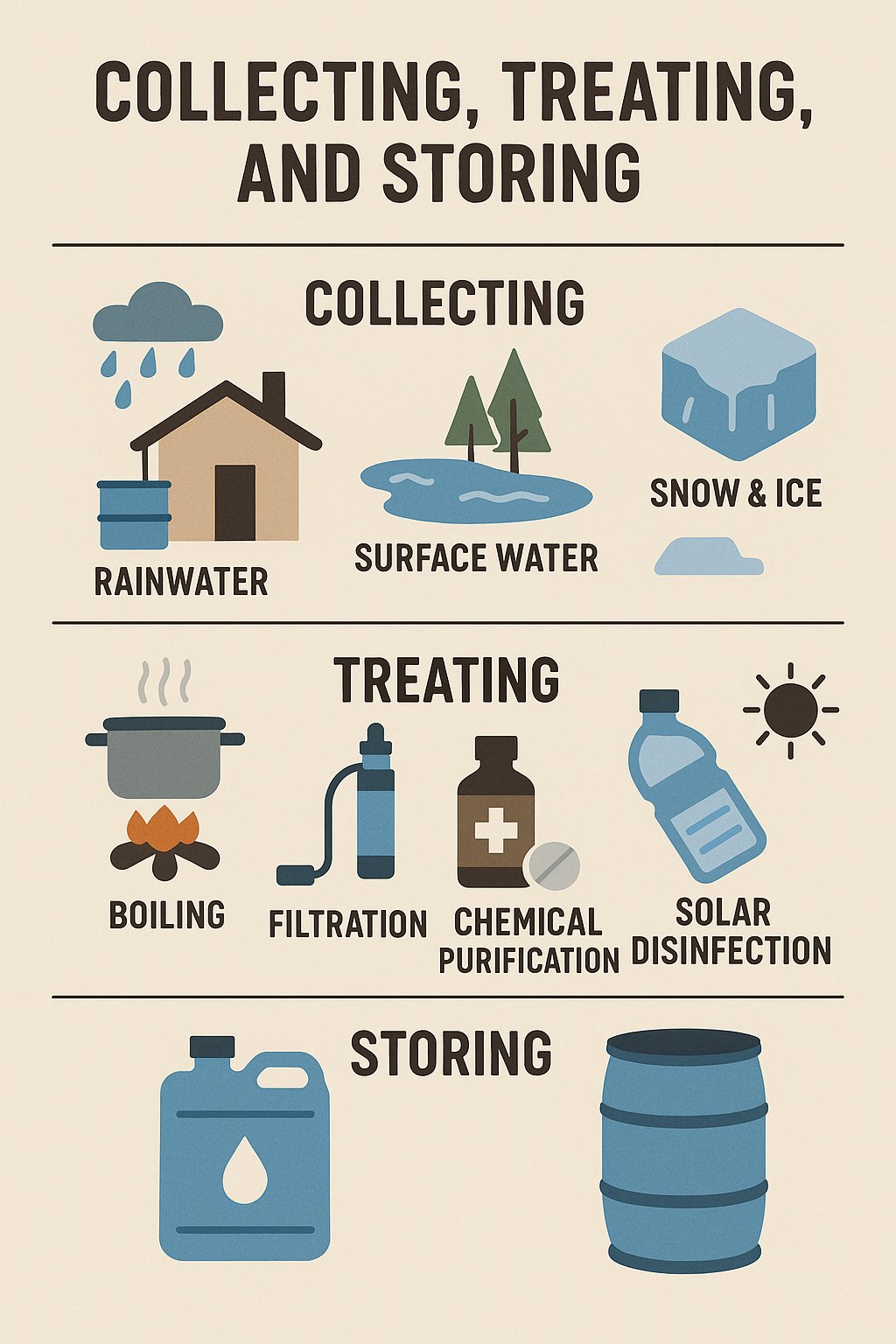
1. Collecting Water: Sources You Can Depend On
Rainwater Harvesting
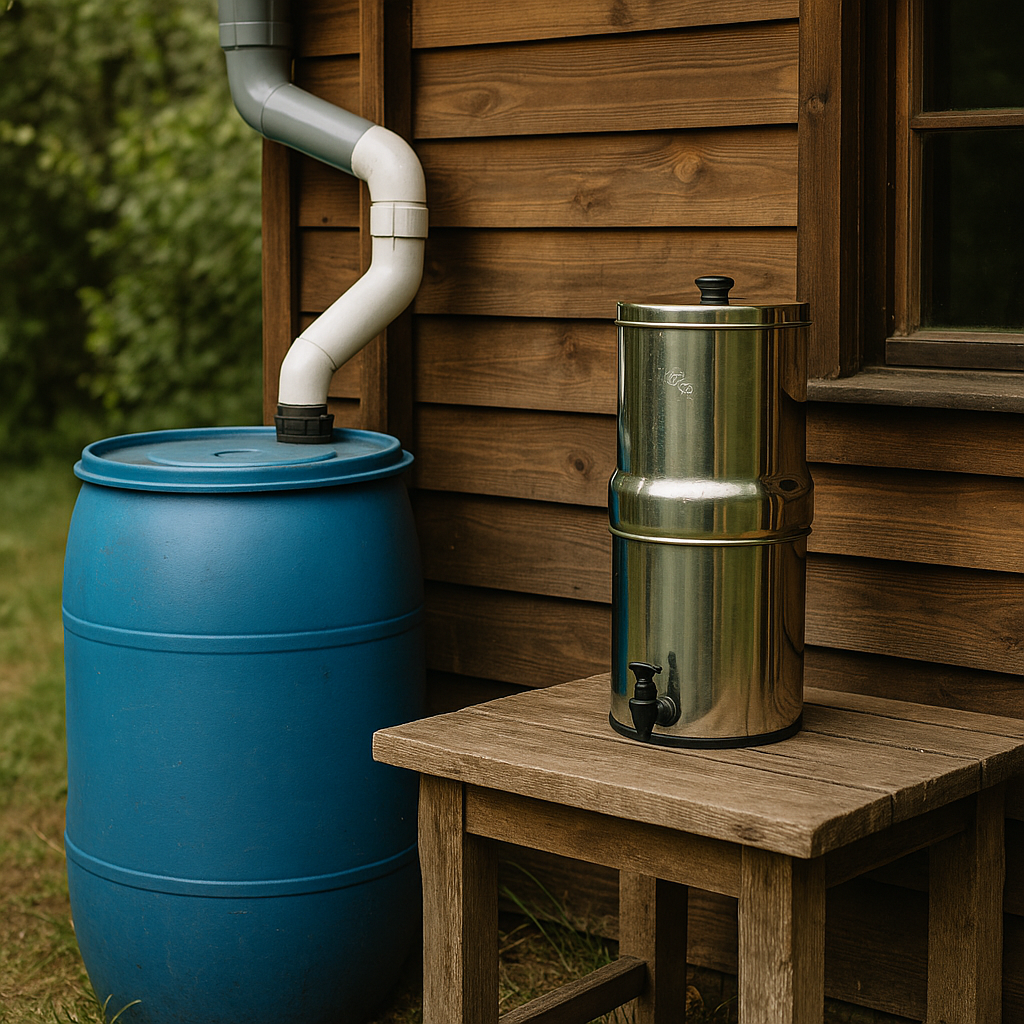
Rainwater is a renewable source of relatively clean water. Set up a collection system using rain gutters and food-grade barrels or IBC totes. Install mesh screens to keep out debris and insects.
Tips:
- Avoid collecting from asphalt shingles (can leach chemicals).
- Always pre-filter rainwater through cloth or sand.
Surface Water
Streams, rivers, ponds, and lakes are all viable sources in a pinch. However, these are not safe to drink untreated and often harbor bacteria, parasites, and chemicals.
Tip: Identify nearby sources now, and mark them on a map. Scout out backup sources in case your primary one dries up.
Snow and Ice
Melting snow and ice can provide water in winter, but it must be boiled or treated. Never eat snow directly—it lowers your core temperature.
Unconventional Sources
- Water heaters: Can contain 30–50 gallons of potable water.
- Toilet tanks (not the bowl): Clean water, unless treated with cleaning tablets.
- Condensation traps: Solar stills or tarps can help extract moisture from the ground or air.
2. Treating Water: Make It Safe to Drink
Even seemingly clean water can contain invisible threats. Here are the main treatment methods every prepper should master:
Boiling
- Brings water to a rolling boil for 1–3 minutes.
- Kills bacteria, viruses, and protozoa.
- Requires fuel, so it’s not always practical long-term.
Filtration
- Use portable filters like LifeStraw, Sawyer Mini, or Berkey systems.
- Filters remove bacteria and protozoa, but not always viruses or chemicals.
Chemical Purification
- Household bleach: 8 drops per gallon of clear water (double for cloudy), wait 30 minutes.
- Water purification tablets: Iodine or chlorine dioxide. Easy to store and carry.
- Tip: Store bleach in small, rotating quantities. It breaks down after 6–12 months.
Solar Disinfection (SODIS)
- Fill clear PET plastic bottles with water and leave in direct sunlight for 6–8 hours.
- UV rays kill most pathogens.
- Works best in sunny climates with clear water.
Distillation
- Removes salts and heavy metals.
- Can be built from basic components, but it’s fuel-intensive.
3. Storing Water: Long-Term and Short-Term Strategies
Short-Term Storage
- Store at least 1 gallon per person per day for drinking and minimal hygiene.
- Use food-grade containers (HDPE #2 plastic, glass, or stainless steel).
- Keep containers cool, dark, and out of sunlight to prevent algae growth.
Long-Term Storage
- Use 55-gallon drums or 275-gallon IBC totes.
- Add water preservatives (like sodium hypochlorite) to extend shelf life up to 5 years.
- Rotate stored water every 6–12 months if not chemically treated.
Hidden Storage Tips
- Stash smaller water containers in closets, under beds, or inside furniture.
- Freeze jugs of water—helps preserve freezer food and provides emergency drinking water when thawed.
Final Thoughts
Water is your lifeline. Collecting, treating, and storing water properly can mean the difference between life and death in an emergency. Don’t wait for a crisis to figure it out—practice now, test your equipment, and rotate your stockpile regularly.
Remember: Two is one, one is none. Always have a backup method for both water collection and purification. When the taps go dry, you’ll be glad you planned ahead.