
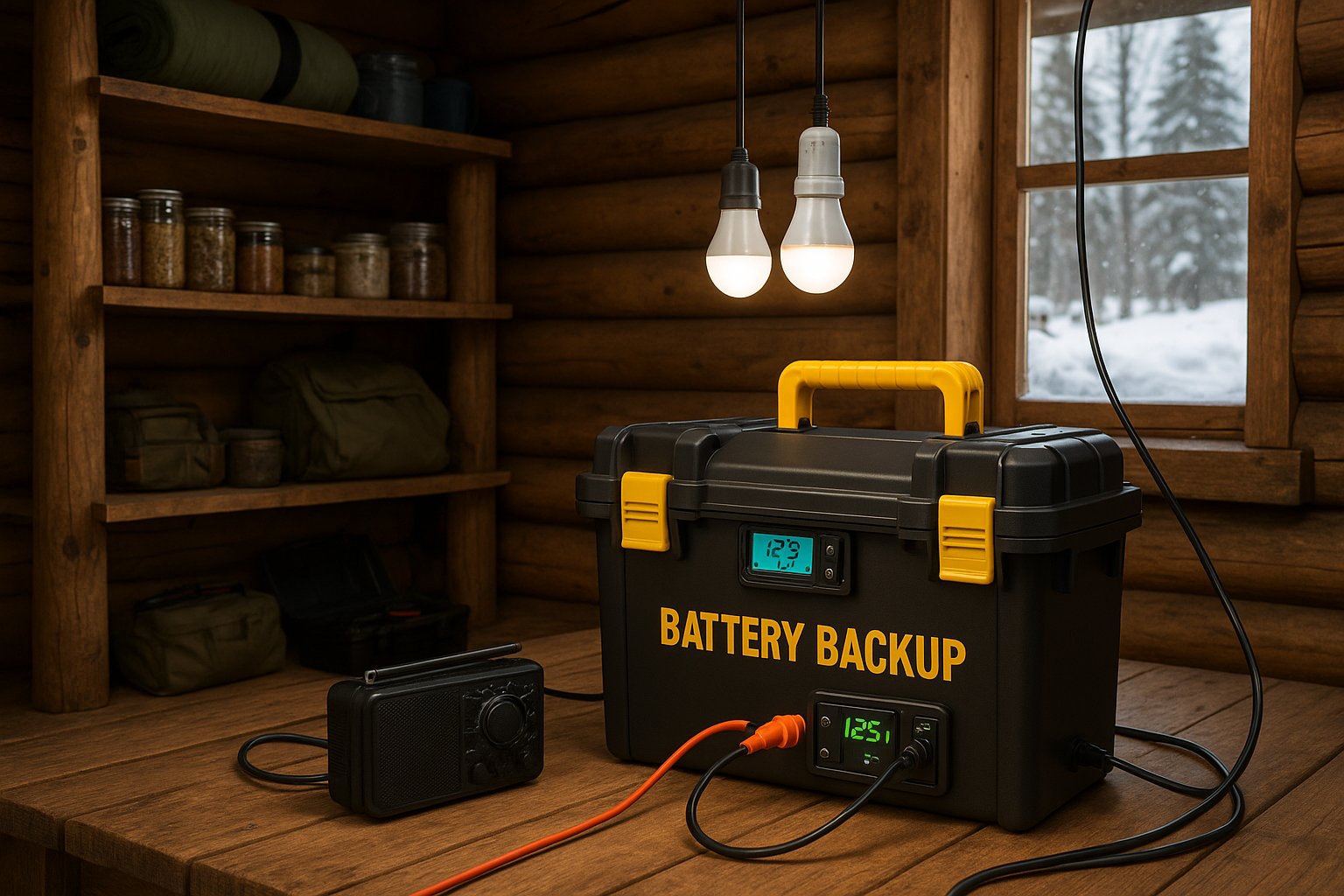
Portable power station sizing begins with the loads you actually need to run. Whether the outage is caused by a storm, cyberattack or longer disruption, a properly sized battery backup can keep communications, lighting, refrigeration and essential medical equipment operating.
These portable power stations range from DIY ammo can builds to high-end lithium solar generators. But no matter your budget or build preference, the key is choosing the right size and capacity for your needs.
In this post, we’ll break down how to calculate the right size battery box for your prepping setup, explain the difference between wattage and amp-hours (Ah), and offer practical tips for getting the most out of your backup power.
What Is a Battery Backup Box?
A battery backup box (also known as a power box, solar generator, or battery bank) is a self-contained unit that stores electricity for later use. Most include:
- A battery (lithium, AGM, or lead-acid)
- Power output ports (USB, 12V DC, AC inverter)
- Input for charging (AC wall, solar, car)
- Optional extras like voltmeters, fuses, or charge controllers
They’re ideal for powering essentials like:
- Radios and comms
- LED lights
- CPAP machines
- Laptops or tablets
- Phone chargers
- Small appliances (fridges, fans, etc.)
Wattage vs. Amp-Hours: What Do They Mean?
Before calculating how big your battery backup needs to be, let’s cover the two main terms you’ll see:
🔌 Wattage (W):
This is how much power a device uses. For example:
- LED light bulb = 10 watts
- Laptop charger = 60 watts
- Small fridge = 100–200 watts
Multiply watts by hours of use to get watt-hours (Wh), which is how much energy you need to store.
Example:
60-watt laptop × 5 hours = 300 watt-hours
🔋 Amp-Hours (Ah):
This is how much charge a battery can store. To convert between watt-hours and amp-hours, use this formula:
Watt-hours (Wh) = Volts (V) × Amp-hours (Ah)
So, for a 12V battery:
- A 100Ah battery holds 1,200 Wh
- A 50Ah battery holds 600 Wh
Step-by-Step: How to Calculate What You Need
Let’s walk through a simple example. Say you want to power the following for 12 hours during an outage:
| Device | Watts | Hours Used | Total Watt-Hours |
|---|---|---|---|
| LED Light | 10 | 6 | 60 |
| Radio | 15 | 4 | 60 |
| Laptop Charger | 60 | 3 | 180 |
| Phone Charger | 10 | 4 | 40 |
| Mini Fridge | 100 | 4 (on/off) | 400 |
| TOTAL | 740 Wh |
So you’d need at least 740 Wh of battery capacity. But batteries aren’t 100% efficient, and you don’t want to fully drain them.
Add 25–30% for safety:
740 Wh × 1.3 = 962 Wh
In Amp-Hours:
If you’re using a 12V system:
962 Wh ÷ 12V = 80.1 Ah
So you’d want a battery box with at least 100Ah at 12V to cover your needs with a margin.
Choosing the Right Battery Type
| Battery Type | Pros | Cons |
|---|---|---|
| AGM Lead-Acid | Inexpensive, widely available | Heavy, can’t deep cycle regularly |
| Lithium (LiFePO₄) | Lightweight, longer lifespan, deep cycle capable | Higher cost upfront |
For preppers, LiFePO₄ batteries are worth the investment if your budget allows. They’re safer, last thousands of cycles, and weigh much less.
Build or Buy?
🔧 DIY Battery Box
- Cost-effective
- Fully customizable
- Great if you’re handy
🛒 Prebuilt Solar Generators
- Plug-and-play convenience
- Built-in inverter and ports
- Examples: Jackery, Bluetti, EcoFlow
You can even hybridize—build a big 12V battery bank and pair it with a small inverter or solar charge controller.
Pro Tips for Preppers
- Size up your system if you want to add more devices later.
- Test your setup during a planned “grid down” weekend.
- Use solar panels to recharge during extended outages.
- Include fuses and voltage meters for safety and monitoring.
- Store your battery box in a climate-controlled area to extend lifespan.
Final Thoughts
A well-sized battery backup box is one of the smartest investments a prepper can make. Whether you’re off-grid, riding out a blackout, or bugging in after a disaster, having power for your essential devices gives you a serious edge.
Calculate your needs, plan for a safety margin, and build (or buy) with redundancy in mind. Your future self will thank you.
Want help building your own battery box or choosing a prebuilt model? Drop a comment below or check out my recommended gear list.
Stay powered. Stay prepared. ⚡🔋


