When disaster strikes, whether it’s a natural catastrophe, civil unrest, or long-term grid failure, the ability to handle medical emergencies can mean the difference between life and death. As preppers, we understand the importance of self-reliance—but too often, we focus on food, water, and defense while overlooking comprehensive medical preparedness.
Building a complete medical kit isn’t just about throwing some band-aids and painkillers into a bag. It requires thoughtful planning, the right gear, proper storage, and some basic training. Here’s what every serious prepper should include in their medical kit, broken down by category, with suggested quantities for a group of 4–6 people over a 6–12 month period.
1. Trauma Care Essentials
(Expect rare use, but critical when needed.)
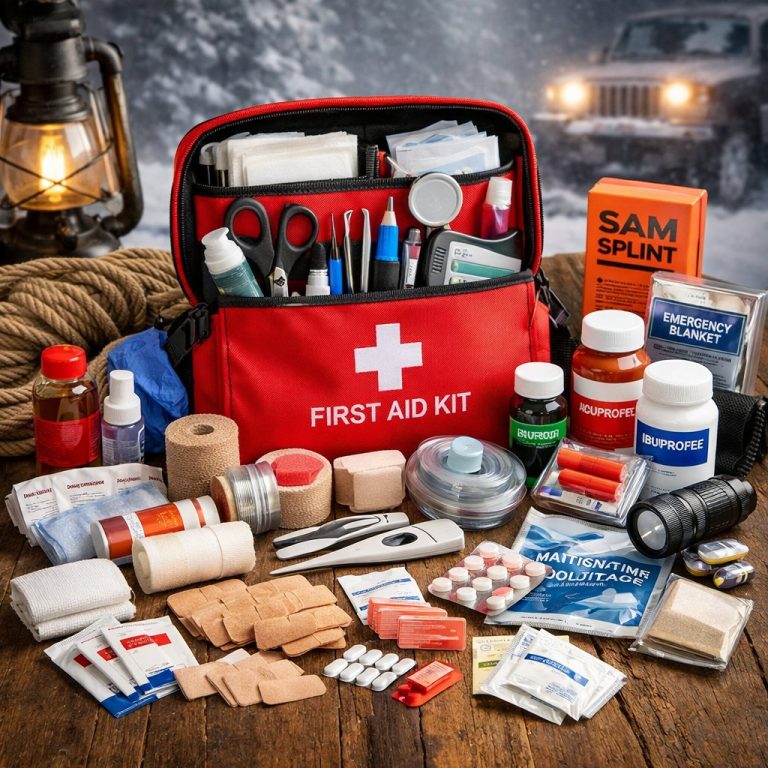
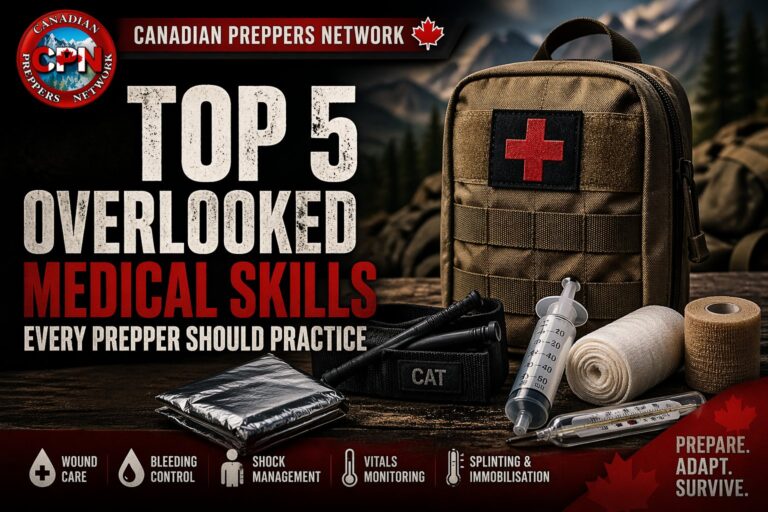
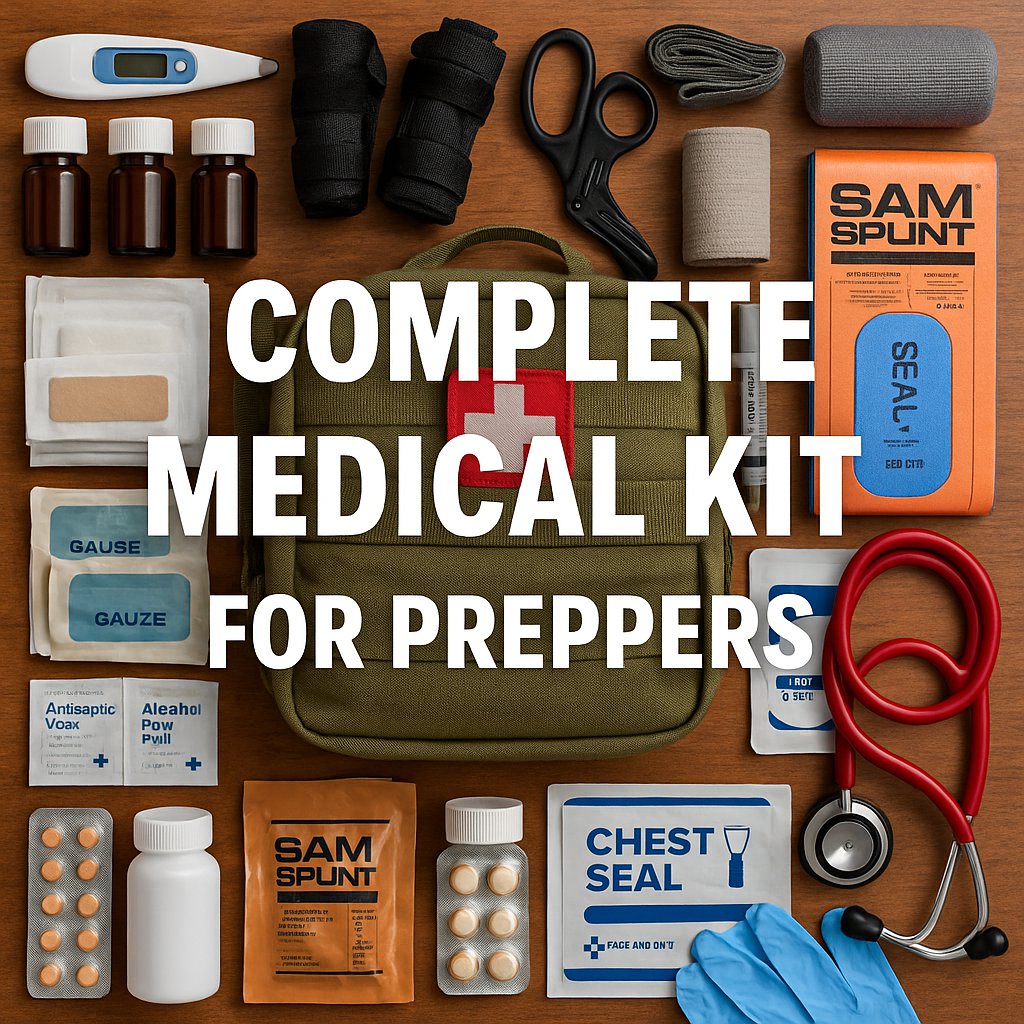
- Tourniquets (CAT or SOFTT-W) – 4 to 6
- Israeli Bandages / Compression Dressings – 6 to 8
- Hemostatic Gauze (QuikClot, Celox, etc.) – 4 to 6
- Chest Seals (2-packs = 1 application) – 3 to 4 twin packs
- Nasal Airways (multiple sizes) – 4
- SAM Splints (36″) – 2 to 3
- Trauma Shears – 2 (plus 1 backup)
- Pressure Bandages (non-Israeli) – 6 to 10
- Elastic Wraps (ACE-style) – 6
2. General First Aid Supplies
(High-use items. These go fast.)
- Adhesive Bandages (various sizes) – 500+
- Sterile Gauze Pads (4×4, 2×2) – 200–300
- Rolled Gauze (3″, 4″) – 40 to 50 rolls
- Medical Tape (1″ & 2″) – 8 to 10 rolls
- Alcohol Prep Pads – 200–300
- Antiseptic Wipes (benzalkonium/iodine) – 200
- Hydrogen Peroxide / Povidone-Iodine – 4–6 bottles each
- Burn Gel Packets – 20+
- Cold Packs (instant-use) – 10 to 15
- Elastic Bandages (wraps) – 8 to 10
- Eye Wash (saline bottles) – 4
- Tweezers – 3 (including 1 high-quality surgical-grade pair)
3. Medications
Over-the-Counter (per person for 6–12 months):
- Ibuprofen (200mg) – 400–600 tablets
- Acetaminophen (500mg) – 400–600 tablets
- Aspirin (81mg and 325mg) – 300+ each
- Diphenhydramine (Benadryl) – 100–150 tablets
- Loratadine (or non-drowsy antihistamine) – 90–120 tablets
- Loperamide (Imodium) – 50–100 tablets
- Antacids (Tums, chewable or tablets) – 200+
- Electrolyte Packets / Powder – 100–200
- Multivitamins – 1-year supply per person
- Cough Syrup or Capsules – 4–6 bottles
Antibiotics (consult a medical provider):
- Amoxicillin 500mg – 60–100 capsules
- Ciprofloxacin 500mg – 40–60 tablets
- Doxycycline 100mg – 60 tablets
- Metronidazole – 30–40 tablets
4. Infection Control & Sanitation
- Nitrile Gloves (non-sterile) – 200–300 pairs
- Sterile Gloves (individually packaged) – 50–100 pairs
- Surgical Masks (N95 or similar) – 50–100
- Face Shields or Goggles – 2–3
- Hand Sanitizer (alcohol-based) – 2–4 liters
- Soap Bars (antibacterial) – 20+
- Bleach (unscented) – 2–3 gallons (or calcium hypochlorite)
- Biohazard Waste Bags – 25+
- Paper Towels / Sterile Wipes – As many as feasible
5. Medical Tools & Equipment
- Thermometer (digital) – 2 (with backup batteries)
- Thermometer (mercury/alcohol backup) – 1
- Pulse Oximeter – 1
- Blood Pressure Cuff + Stethoscope – 1 set
- Headlamps / Penlights – 2 to 4
- Suture Kits (pre-packed) – 4 to 6 (with training)
- Medical Reference Book – 1–2
- Notebooks + Pencils for Records – Several
6. Dental Emergency Supplies
- Dental Mirror + Pick Set – 1
- Temporary Filling Material (Dentemp, etc.) – 5–10 kits
- Clove Oil – 2 bottles
- Tooth Extraction Tools (w/ training) – 1 basic kit
- Oral Pain Relievers (gels, tablets) – Multiple tubes
- Dental Floss – 10–20 packs
7. Storage & Redundancy
- Two kits:
- Primary (full-size, for base or homestead)
- Field kit (compact version for patrols, hunting, bug-out scenarios)
- Vacuum-sealed trauma packs
- Waterproof containers for medications
- Color-coded pouches (trauma, meds, hygiene, etc.)
- Desiccants and oxygen absorbers in med containers
- Extra electronics in a Faraday cage
- Inventory and rotate supplies every 6 months
Final Thoughts
Having a complete medical kit is about more than gear—it’s about training, mindset, and readiness. Take a basic first aid and CPR class. Learn how to use a tourniquet properly. Practice wound dressing. In a crisis, panic kills—preparation saves.
Your medical kit is one of the most crucial parts of your prepper gear. It won’t just serve you in SHTF scenarios—it could save a life tomorrow, in your own backyard.
Gear Up and Stay Ready.