In preparedness circles we spend a lot of time discussing equipment — trauma kits, tourniquets, splints, chest seals. But equipment without training is false security. Real capability comes from skill under stress.
That is why the Remote First Aid course offered by the Canadian Red Cross deserves serious consideration from the Canadian preparedness community.
What Makes Remote First Aid Different
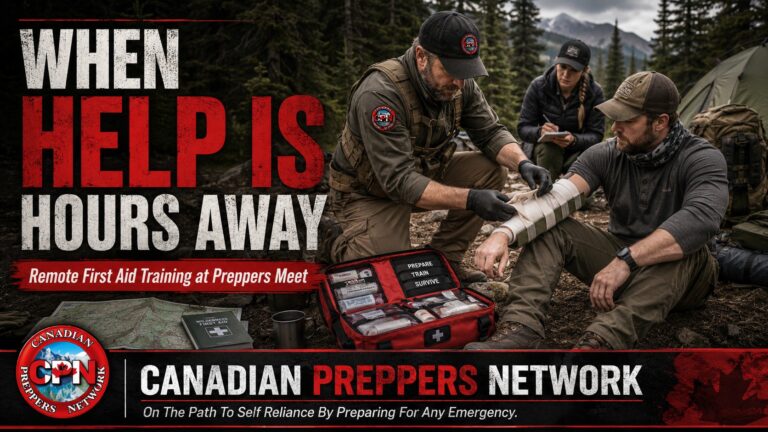
Standard first aid assumes an urban environment where EMS arrives quickly. Remote First Aid assumes the opposite: you are hours from definitive care, weather may complicate evacuation, and you may need to monitor a patient for extended periods.
For rural Canadians — especially those in Central Ontario, cottage country, northern communities, or backcountry settings — this is not theory. It is reality.
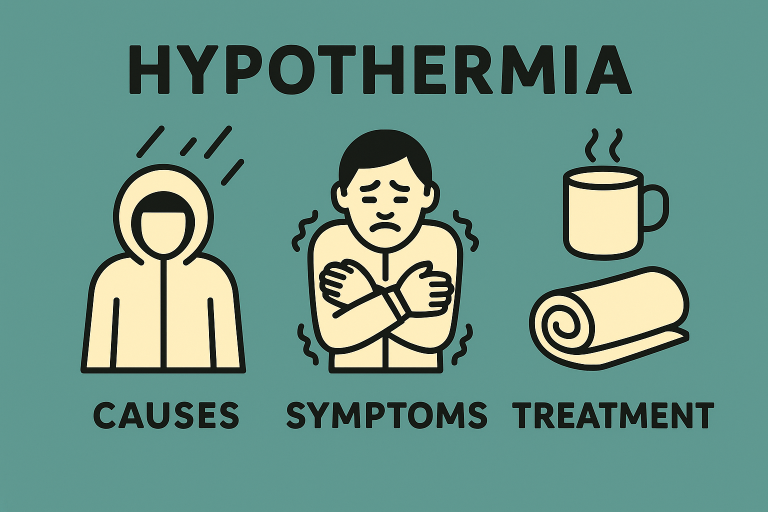
Remote First Aid focuses on structured patient assessment, ongoing monitoring, severe bleeding control, hypothermia management, improvised splinting, wound irrigation, and extended decision-making. It trains you to think in hours, not minutes.
That mindset shift alone is invaluable.
Why This Matters Right Now
We’ve already seen increasing strain on emergency systems. Winter storms delay ambulances. Highway closures isolate communities. Wildfire evacuations overwhelm hospitals. Rural EMS shortages stretch response times.
Preparedness is not about replacing hospitals. It is about stabilizing a situation until higher care becomes available.
If you’ve read our article on building a comprehensive home kit in “Red Cross–Inspired First Aid Kit Standards for Canadian Households” (https://canadianpreppersnetwork.com/red-cross-first-aid-kit-standards/), you already understand the importance of proper equipment. But gear without training does not equal readiness.
Similarly, in “Winter Storm Preparedness: When You’re Snowed In” (https://canadianpreppersnetwork.com/winter-storm-preparedness-canada/), we emphasized communication and supply redundancy. Medical competence is the next logical layer.
Gear Should Support Skill — Not Replace It
A quality tourniquet like the North American Rescue CAT Tourniquet (Amazon.ca example: https://www.amazon.ca/dp/B003IR1O38?tag=canadianpreppers-20) is an excellent tool — but only if you know when and how to apply it correctly.
A pressure bandage such as the Israeli Emergency Bandage (https://www.amazon.ca/dp/B003DPVERM?tag=canadianpreppers-20) is valuable — but only if you understand wound packing, pressure sequencing, and shock management.
Even a simple splint like the SAM Splint (https://www.amazon.ca/dp/B0000C4M1A?tag=canadianpreppers-20) becomes exponentially more effective when you’ve practiced improvised immobilization under supervision.
Remote First Aid builds the confidence and muscle memory that turns equipment into actual capability.
The Rural Canadian Reality
In many parts of Ontario and across Canada, ambulance response times can exceed 30–60 minutes in bad weather. Cottage roads, logging roads, and winter conditions complicate access.
Remote First Aid is designed specifically for environments where you may need to:
- Monitor vital signs over time
- Prevent hypothermia in a trauma patient
- Manage bleeding while planning evacuation
- Make judgment calls about moving or sheltering in place
Preparedness means acknowledging geography.
A Strategic Recommendation for CPN Readers
Every preparedness-minded household should strongly consider having at least one adult certified in Remote First Aid. Larger preparedness groups should aim for two or more trained members to provide redundancy.
Pair that training with a properly structured kit, such as the layered approach we discussed in “Building a Tiered Canadian First Aid System” (https://canadianpreppersnetwork.com/tiered-first-aid-system-canada/), and you move from passive ownership to active capability.
Medical preparedness is not about collecting more gear. It is about increasing competence.
How This Connects to PreppersMeet
Preppers Meet has consistently emphasized skill-based preparedness over consumer-driven accumulation.
Integrating certified Remote First Aid training into the Preppers Meet ecosystem strengthens the entire network. When multiple attendees share standardized training, assessment language becomes consistent, medical roles can be assigned confidently, and evacuation decisions are made with structure rather than panic.
Preparedness in Canada is shifting from “What do you own?” to “What can you do?”
When EMS is delayed, the prepared are the first responders. Formal medical training is one of the most valuable skills you can bring to your household — and to your community.
To sign up for this Red Cross certified course at this year’s Preppers Meet