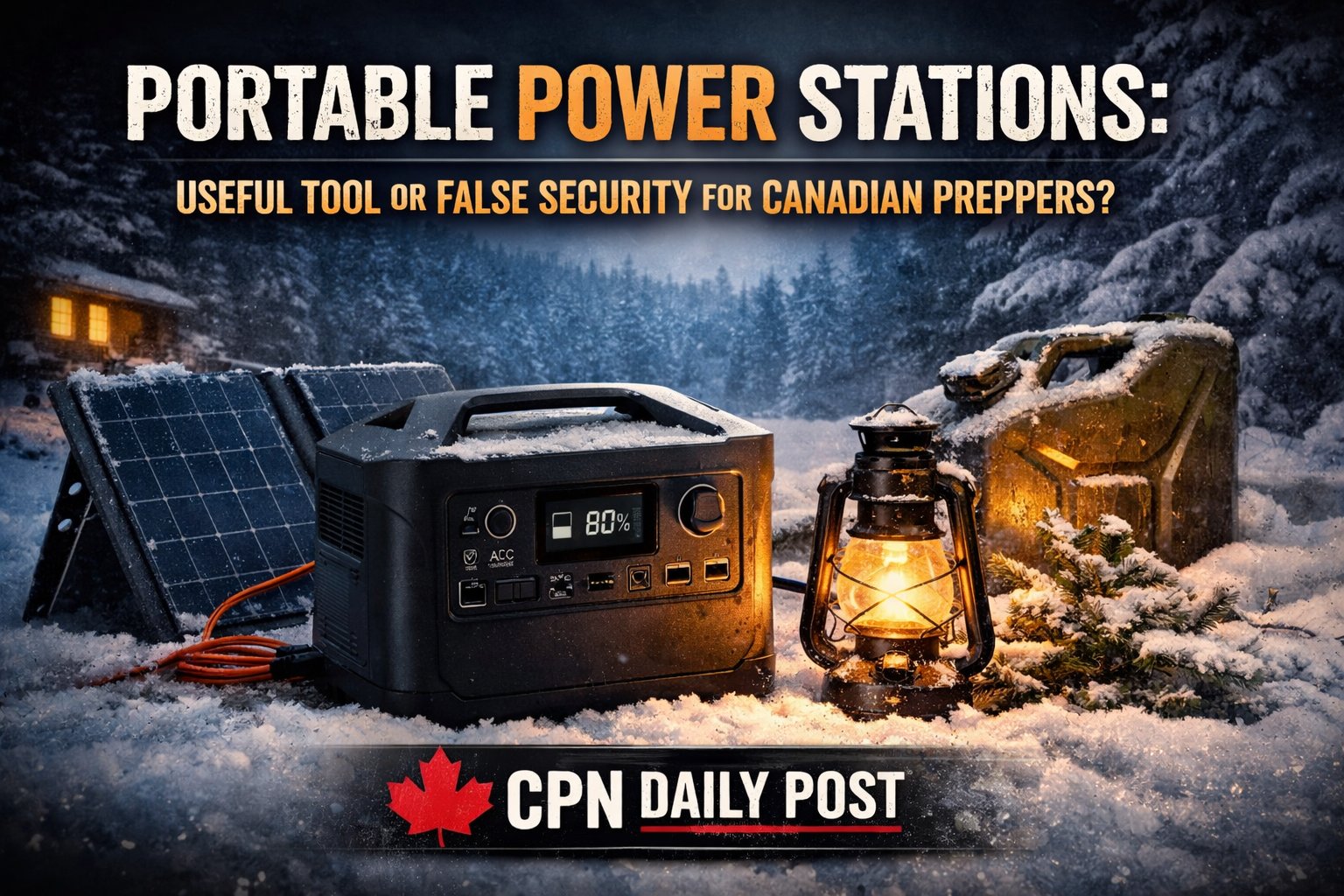
Over the last few years, portable power stations have exploded in popularity across Canada. From ice storm outages in Ontario to wildfire evacuations in the West, these sleek lithium battery boxes promise quiet, instant backup power without fuel, noise, or fumes.
But for serious preparedness planning, especially in a Canadian winter, the real question isn’t whether they work.
It’s whether they work long enough.
What They Actually Are
A portable power station is essentially a pre-assembled battery bank with a built-in inverter and charge controller. Most quality units now use LiFePO4 batteries, which offer longer cycle life and better safety than older lithium chemistries.
Major brands available through Amazon.ca include EcoFlow, Bluetti, Jackery, and Anker. A mid-range example would be something in the class of the EcoFlow Delta 2 or Bluetti AC200 series, typically in the 1,000–2,000Wh range.
For reference, here’s a common mid-sized unit Canadians often consider:
EcoFlow DELTA 2 Portable Power Station (1024Wh LiFePO4) –
https://www.amazon.ca/dp/B0B4NC9DND?tag=canadianpreppersnetwork-20
And a larger expandable option:
BLUETTI AC200MAX Power Station –
https://www.amazon.ca/dp/B09N9V9W7R?tag=canadianpreppersnetwork-20
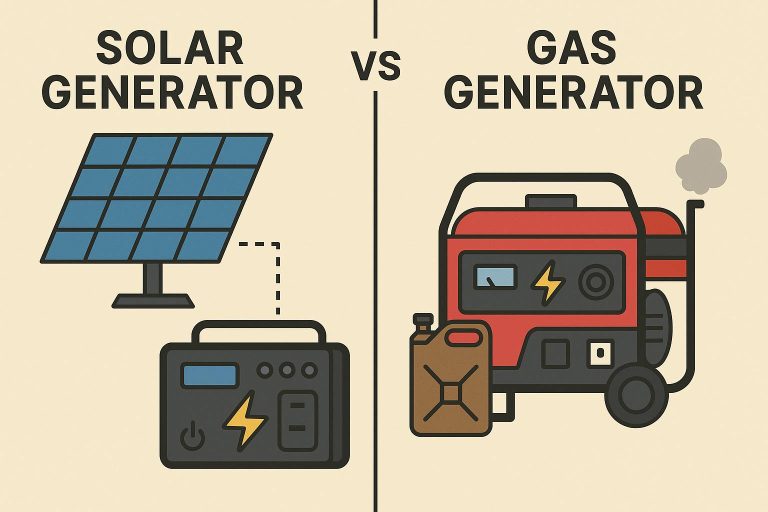
These are not generators. They do not create energy. They store it.
That distinction matters.
The Canadian Winter Reality
In summer, pairing a power station with 400–800 watts of solar panels can look impressive. In December in Central Ontario, that same panel array may produce only a fraction of its rated output.
Short daylight hours, heavy cloud cover, and snow accumulation reduce solar harvest dramatically. Even on a clear winter day, sun angles are low and output is compromised. If panels are snow-covered, they produce nothing until cleared.
Now consider the math. A modern refrigerator typically consumes 1 to 1.5 kWh per day. A 1,000Wh unit cannot realistically run that fridge for “a day and a half,” as marketing sometimes implies. In real-world conditions, after inverter losses and compressor cycling, you’re looking at roughly 12–18 hours.
Add a freezer and your runtime collapses even further.
This is why energy budgeting is critical — something we discussed in our Home Power Generation Guide:
https://canadianpreppersnetwork.com/home-power-generation-guide/
Without knowing your daily kilowatt-hour requirements, you’re guessing.
Cold Weather Limitations
LiFePO4 batteries perform well in many respects, but charging below 0°C is a problem. Most quality units include battery management systems that prevent charging when internal temperatures are too low. If your power station is stored in an unheated garage during a January outage, you may discover that solar input simply won’t engage until the battery warms.
Capacity also drops in extreme cold. While the unit will still discharge, usable output may be reduced.
In other words, winter resilience requires more planning than just buying the box.
Where Portable Power Stations Excel
None of this means they are useless. Far from it.
Portable power stations are exceptionally good at running low-draw critical loads quietly and cleanly. Communications gear, LED lighting, device charging, Starlink terminals, CPAP machines, and amateur radio setups draw relatively modest power.
If you’ve read our piece on Amateur Radio Emergency Nets in Canada, you already know how important reliable communications are during prolonged outages:
https://canadianpreppersnetwork.com/amateur-radio-emergency-nets-in-canada/
For that role, a 1,000–2,000Wh LiFePO4 unit is a strong strategic tool.
They are also ideal for silent overnight operation. Many preppers run a small inverter generator during the day to recharge batteries and then switch to silent battery power at night to reduce noise signature and fuel consumption.
A reliable inverter generator such as the Honda EU2200i class unit (widely available in Canada) or a comparable dual-fuel inverter model can complement a battery station effectively:
https://www.amazon.ca/dp/B07C3F2L7R?tag=canadianpreppersnetwork-20
That hybrid approach is far more resilient than relying on batteries alone.
The Recharge Problem
The central issue is not storage. It is replenishment.
Every watt-hour used must be replaced. If your only recharge plan is solar during a week of heavy cloud cover, you will eventually deplete the system. Vehicle charging works temporarily, but it consumes fuel and adds wear.
This is why serious off-grid systems incorporate multiple production sources. In our article on garden planning for food security, we emphasized redundancy in food systems. Energy systems require the same thinking:
https://canadianpreppersnetwork.com/garden-planning-for-food-security/
Layering matters.
The False Security Trap
The real danger of portable power stations is psychological. They are clean, modern, and easy to understand. Buying one feels like completing a preparedness milestone.
But preparedness is not about owning equipment. It is about managing systems.
If you cannot answer these three questions, the device may offer more comfort than capability:
How many kilowatt-hours per day does my household require in a grid-down scenario?
What is my guaranteed winter recharge plan?
How many consecutive sunless days can I survive before failure?
Without those answers, you are not energy independent. You are temporarily energy buffered.
Strategic Use for Canadian Preppers
For the Canadian Preppers Network audience, portable power stations belong in a layered energy ladder.
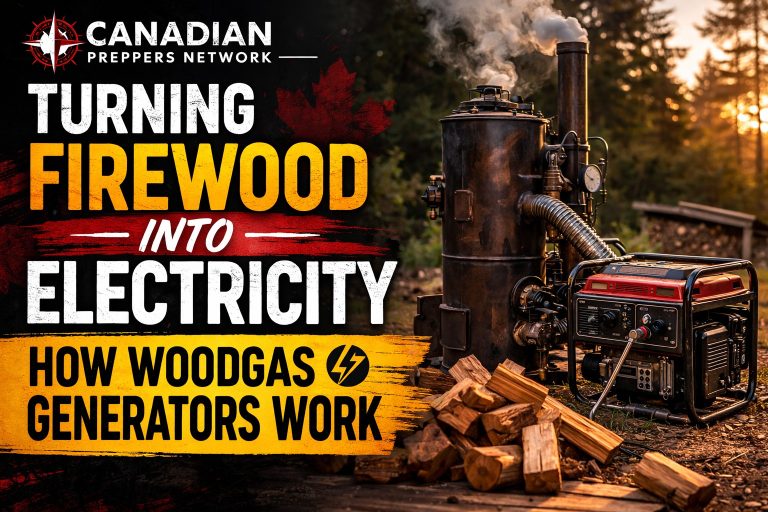
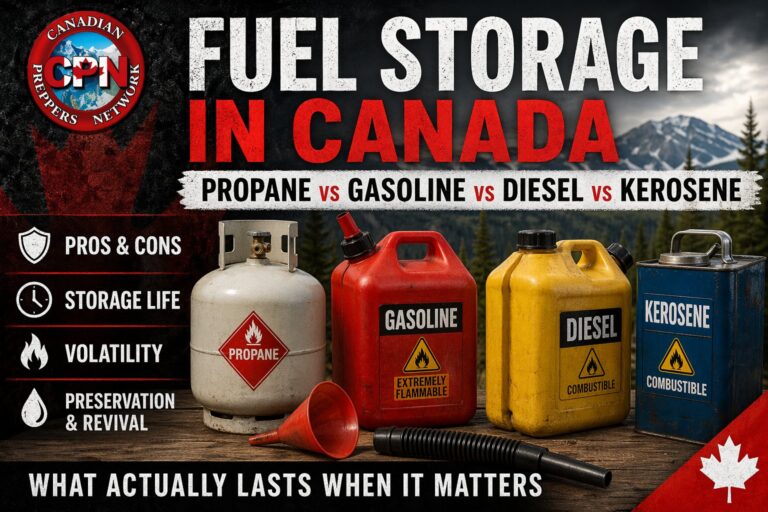
The grid remains your primary supply. A fuel-powered inverter generator provides short-term production. A portable LiFePO4 power station smooths and stores that production. Solar extends runtime when conditions allow. Wood heat removes electric heating demand entirely.
Each layer reduces dependence on the others.
Used this way, portable power stations are not false security. They are force multipliers.
Used alone, particularly in a Canadian winter, they are insufficient.
The difference is not the brand you buy. It is the strategy you build around it.