

Build a safe warm-room plan before a Canadian winter outage turns dangerous
The Canadian winter is no joke. When the power goes out in January or February, the temperature inside a home can become dangerously cold within hours. Knowing how to heat your home without electricity is therefore more than a comfort issue—it is a core part of Canadian winter preparedness.
The practical goal is not always to keep every room at its normal temperature. During a prolonged outage, most households are better served by creating one safe warm room, reducing heat loss and using a properly installed or manufacturer-approved backup heat source.
Start With a Warm-Room Plan
Choose the room before winter. Favour a smaller interior room with few windows, a door that can be closed, space for everyone to sleep and reasonable access to an approved heat source. Avoid a room with damaged wiring, blocked exits or combustible clutter.
Move blankets, sleeping bags, layered clothing, flashlights, medications, drinking water and a battery-powered carbon monoxide alarm into that room when an outage begins. Keep a fire extinguisher accessible and maintain a clear route to an exterior door.
Wood Stoves and Fireplaces
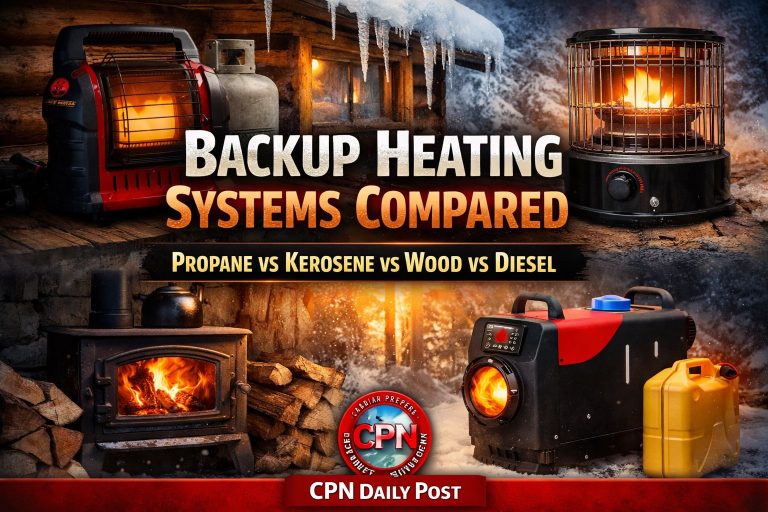
One of the most dependable off-grid heating methods is a properly installed wood stove. Wood stoves have been used for centuries because they can operate without electricity and heat a home effectively. Many models also have flat tops that can warm water or support limited cooking during a blackout.
For rural homes, especially those with an established firewood supply, a wood stove can be a strong long-term investment. The stove, chimney and clearances must meet applicable codes and manufacturer instructions. Have the chimney inspected and cleaned, burn seasoned wood, and never improvise a flue through a wall or window during an emergency.
Propane and Kerosene Heaters
In urban or suburban settings where a wood stove may not be practical, the original version of this article pointed to portable propane heaters such as the Mr. Heater Buddy, using one-pound or twenty-pound cylinders, and to kerosene heaters. Those references remain because many preparedness households own this equipment.
They require careful qualification. Canadian federal guidance warns against using unvented portable space heaters indoors. Product labelling, local fire rules and manufacturer instructions may also differ by model and jurisdiction. A heater advertised for indoor use is not permission to ignore required ventilation, clearance, fuel-connection or operating rules. Never sleep while a portable fuel-burning heater is operating unless the manufacturer explicitly permits that use.
Install certified carbon monoxide alarms with battery backup outside sleeping areas and in accordance with local requirements. A CO alarm is a last warning, not proof that combustion equipment is safe. If an alarm sounds, leave immediately, move to fresh air and call emergency services.
Keep the Heat You Already Have
Heat retention is just as important as heat production. Cover cold windows with heavy curtains, blankets or removable bubble-wrap insulation while keeping all material well away from heaters, candles and stove surfaces. Use draft snakes or rolled towels at doors and close unused rooms to concentrate warmth in a smaller space.
Do not block a fuel-burning appliance’s air supply, chimney or exterior exhaust vent. Snow and ice can obstruct vents during a storm, allowing carbon monoxide to accumulate indoors. Check accessible vents from outside when conditions allow.
Protect People Before the Building
Dress in layers, beginning with a dry thermal base layer and adding insulating and wind-resistant layers as needed. Wool blankets and sleeping bags rated for sub-zero temperatures can retain body heat through the night. A warm—not scalding—hot-water bottle can provide local comfort if water can be heated safely.
Keep clothing dry and watch children, older adults and anyone with medical conditions closely. Confusion, slurred speech, clumsiness, intense shivering that later stops, or unusual drowsiness can signal dangerous cold exposure. If the home cannot be kept safe, leave early for a known heated location rather than waiting until travel becomes impossible.
Protect Plumbing and Essential Systems
Open cabinet doors beneath sinks on exterior walls so warmer room air can circulate around pipes. Know where the main water shutoff is located. If the building will be abandoned or temperatures will remain below freezing for an extended period, follow qualified local guidance for shutting down and draining vulnerable plumbing.
A generator may power a furnace blower or boiler controls, but it must remain outdoors and well away from the building with exhaust directed away from openings. A generator connected to household wiring requires approved transfer equipment installed by a qualified electrician.
Never Bring Outdoor Cooking Equipment Inside
Never use barbecues, charcoal grills, camping stoves, generators or other outdoor fuel-burning equipment inside a home, garage, basement, crawlspace, shed or enclosed porch. Do not use a gas oven as a room heater. These shortcuts can produce lethal carbon monoxide and create serious fire hazards.
Candles and matches remain in the original checklist because they may already be part of household emergency supplies, but candles should be used sparingly, kept in stable holders and never left unattended. Battery lighting is the safer first choice.
Printable Heating Prep Kit Checklist
| Item | Quantity/Notes |
|---|---|
| Approved backup heater | Installed or operated exactly as directed; the original example was a Mr. Heater Buddy |
| Propane cylinders | One-pound or twenty-pound cylinders only where permitted for the selected heater and setup |
| Wool blankets | At least one per person |
| Thermal sleeping bags | Rated for expected indoor emergency temperatures |
| Thermal base layers | One dry full set per person |
| Window insulation | Enough for the designated warm room; keep away from heat sources |
| Heavy curtains or drapes | For heat retention with safe heater clearances |
| Carbon monoxide alarms | Certified units with battery backup outside sleeping areas |
| Smoke alarms | Tested, with spare batteries where applicable |
| Fire extinguisher | Correct type, inspected and accessible |
| Candles and matches/lighters | Secondary lighting only; use sparingly and never unattended |
| Portable kettle | Use only on a safe, approved cooking or heating surface |
Audit the Plan Before Winter
Use this checklist to audit your winter preparedness each fall. Test alarms, inspect heating equipment, confirm fuel storage rules, review the manufacturer’s instructions and make sure every household member knows the warm-room and evacuation plan.
For a comparison of fuel types and equipment limits, read Grid-Down Heating Options Compared. For the wider shelter plan, use CPN’s Shelter & Heat in Canada hub.
In Canada, where winter can stretch from October into April, preparing for heat loss is not optional. Build the system now: a safe heat source, a room that retains warmth, personal insulation, working alarms and a firm decision point for leaving the home.


One Comment