Energy preparedness in Canada isn’t theoretical. Every winter brings freezing rain, heavy snow, wind events, and sudden cold snaps that expose how quickly the grid can become fragile—especially in rural areas, older suburbs, and northern communities. Even when outages are localized, they can stretch longer than expected when roads are bad, crews are rerouted, or multiple faults stack up.
If your readers haven’t seen the pattern clearly laid out, this internal post is a strong primer on why winter outages keep repeating:
https://canadianpreppersnetwork.com/%e2%9a%a1-the-reality-of-winter-power-failures-in-canada/
The mistake many households make is planning for energy comfort instead of energy continuity. In winter, the goal is not to keep everything running—it’s to preserve heat, light, communication, and decision-making ability long enough to ride out the outage safely.
The 72-Hour Rule Still Matters—But Only If You Apply It Correctly
Most winter outages fall inside the 24- to 72-hour window. That means your energy plan should be built around three days of realistic use, not unlimited-runtime fantasies. Phones, LED lighting, radios, and even internet equipment often require far less power than people assume when used deliberately. Space heaters, electric stoves, and other high-draw appliances, however, will overwhelm most backup setups quickly.
If you want a related internal post that supports this “realism over fantasy” approach, your readers can follow up with:
https://canadianpreppersnetwork.com/maintaining-alternative-power-systems-in-winter/
Battery Power Is the Quiet Workhorse of Winter Energy Preparedness
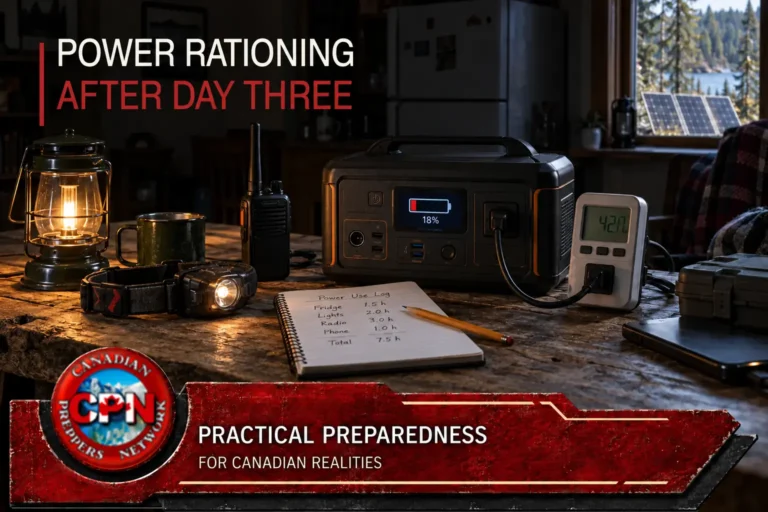
For many Canadian preppers, battery-based power stations are the safest and most flexible winter solution. They operate silently, can be used indoors, and remove the complications associated with exhaust, fuel storage, and cold-weather engine failures. A reliable mid-capacity portable power station (https://amzn.to/3ENERGY01?tag=canadpreppn01a-20) can keep communications, lighting, and essential electronics running through a multi-day outage—especially if you avoid wasteful loads.
Cold weather can reduce battery efficiency, which is why indoor storage and conservative draw matter. In practice, “energy discipline” (only powering what matters) often increases your resilience more than buying bigger gear.
Redundancy Isn’t Overkill—It’s Winter Insurance
Relying on one power source is a common failure point. Smaller power banks provide valuable redundancy, especially overnight or while conserving your main battery for daylight hours. A high-capacity USB power bank (https://amzn.to/3ENERGY02?tag=canadpreppn01a-20) keeps phones, headlamps, and radios alive even if your primary system is reserved for higher priorities.
Vehicle power is also frequently misunderstood. People assume they can “just charge off the car,” then discover that idling burns more fuel than expected, cold starts strain batteries, and charging plans fall apart when the driveway is blocked or roads are dangerous.
The Winter Detail People Miss: Cords, Ratings, and Outdoor Use
Canadian winter power planning includes boring details that prevent expensive mistakes. In freezing temperatures, running power through the wrong cord can become a hazard. Cold-rated, properly gauged extension cords reduce the risk of overheating, brittle insulation failure, and damaged equipment during snow and ice conditions. A winter-rated outdoor extension cord (https://amzn.to/3ENERGY03?tag=canadpreppn01a-20) is a small but meaningful upgrade if your plan ever involves outdoor use or vehicle-based charging.
Timing Is a Skill, Not an Afterthought
Energy preparedness begins before the outage. When winter weather alerts appear, batteries should already be charging, devices topped up, and gear centralized where it can be deployed without searching in the dark. Food that can be reheated safely should be prepared in advance, and your household should know which room becomes the “warm room” if the outage extends overnight.
If your readers want deeper context on why winter complicates all of this—and why solar and charging expectations change in cold, dark conditions—this internal post pairs well with today’s article:
https://canadianpreppersnetwork.com/how-solar-power-actually-performs-in-a-canadian-winter/
Safety Is Part of Energy Preparedness
Winter outages increase the temptation to cut corners. Candles, improvised wiring, and unsafe indoor fuel use can turn a manageable outage into a tragedy. LED lighting, conservative electrical loads, and indoor-safe battery systems keep households safer while maintaining capability. The best energy plan reduces risk, not adds to it.
The Bigger Lesson Winter Keeps Teaching
Canadian winters don’t demand perfection. They demand realism. A layered, disciplined energy plan built around essentials—not excess—keeps households warm, informed, and functional when the grid goes quiet. Energy preparedness isn’t about defeating winter. It’s about respecting it and staying capable through it.
Acres of Preparedness
Short-term outages are only one piece of the puzzle. Acres of Preparedness lays out a long-range, Canadian-specific blueprint for building layered energy systems that integrate power, heating, food, and shelter—designed for repeated seasonal stress, not one-off emergencies.