What Preppers Need to Know
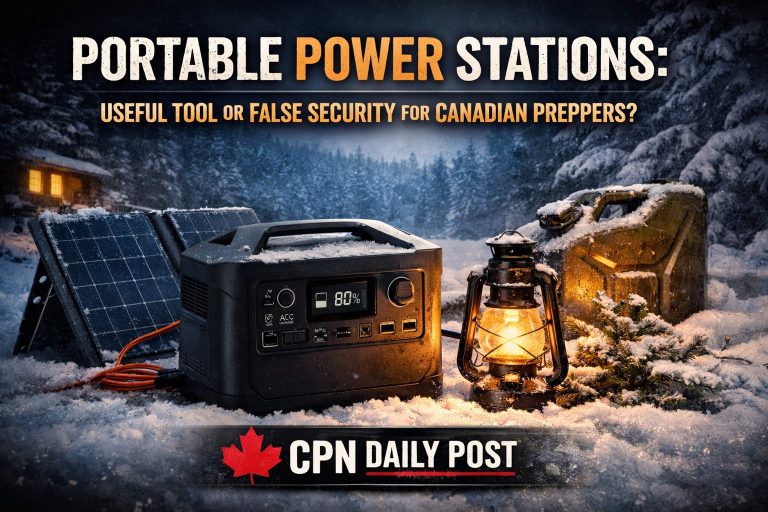
Winter in Canada is beautiful, brutal, and brutally honest about your off-grid solar setup. Panels that perform flawlessly in July suddenly produce a fraction of their rated output. Batteries that seem limitless in summer feel sluggish. And deep snow? That’s a whole challenge in itself.
For preppers relying on solar to power cabins, communications, heating systems, or a survival retreat, understanding true winter performance is critical.
Below is a practical, no-nonsense breakdown of what really happens when temperatures plunge and daylight disappears — and what you can do to stay powered.
1. Cold Helps Your Panels… but Winter Still Hurts Output
Most people assume cold weather makes solar worse. In reality:
- Solar panels are MORE efficient in low temperatures.
- But short daylight hours and low sun angle drastically reduce total production.
In Central Ontario, average January sunlight hours often provide only 15–25% of what you get in June.
What this means:
Your panels might be performing great per photon, but they’re simply not getting many photons.
2. Snow Load Can Drop Production to Zero
Even a thin layer of snow blocks sunlight.
- Panels mounted at steep winter angles (45–60°) shed snow much better.
- Ground mounts allow easier cleaning.
- Roof mounts are harder to access and accumulate snow frequently.
If snow isn’t cleared, your system can sit completely dead for days.
Prepper Tip:
Carry a telescoping soft-bristle brush dedicated to solar panel clearing. Do NOT use anything abrasive — it will scratch the glass.
3. Batteries Lose Capacity in the Cold
This hits most preppers harder than the panels do.
Lithium Iron Phosphate (LiFePO4)
- Can lose 20–30% usable capacity in freezing temps.
- Cannot safely charge below 0°C unless it has a built-in heater.
AGM/Lead-acid
- Significant capacity loss below –10°C.
- Efficiency drops dramatically.
Best Practice
Keep batteries indoors, in an insulated or heated battery box, or placed underground where temperatures remain stable.
4. Inverters and Charge Controllers Derate in Cold
Most off-grid systems quietly derate their output when temperatures are extreme.
Examples:
- Inverters may reduce wattage or shut down sub-zero.
- MPPT controllers may throttle charging to protect components.
Prepper Tip:
House your electronics in a temperature-controlled power shed or insulated compartment attached to your main structure.
5. Panels Make More Power on Clear, Cold Days
Here’s the upside:
On a sunny, frigid day with reflective snow, your panels can briefly exceed their rated output.
This is due to:
- Cold-boosted efficiency
- High surface albedo (snow reflecting extra light)
But this does not compensate for overall lack of daylight throughout December–February.
6. You Must Oversize Your Winter Solar
For Canadian winters, assume:
You will only get 10–25% of your summer output.
Most preppers dramatically undersize their systems because they plan around June numbers.
If your daily winter load is 3 kWh, size your array as if you need 12–20 kWh of summer panel capacity to cover the difference — OR plan for hybrid backup.
7. Winter Backup Is Not Optional
Even a perfectly designed winter solar system is vulnerable to:
- 3–5 days of heavy overcast
- Storms that block the sun
- Snow-covered panels
- Battery derating
Serious preppers should have:
- Propane or gas generator (with treated, stabilized fuel)
- Wind turbine (excellent in winter storms)
- Load-shedding plan (shut down non-essentials)
Redundancy saves lives.
8. Practical Winter Solar Tips for Preppers
- Install panels at steep winter angles, not summer angles.
- Use heated LiFePO4 batteries if possible.
- Mount panels where you can easily clear snow.
- Keep spare fuses, breakers, and an emergency inverter.
- Log your daily power usage to track trends.
Winter solar isn’t unreliable — it’s just unforgiving if you don’t plan for reality.
📘 Acres of Preparedness — Your Off-Grid Survival Blueprint 📘
If you’re dedicated to self-reliance and long-term readiness, Acres of Preparedness is the no-nonsense guide you need. It walks you through how to transform land into a resilient retreat — from food production and shelter to security and sustainability. Whether you’re planning for a short-term crisis or permanent off-grid living, this book lays the groundwork for real-world survival.
👉 Grab your copy here: Amazon link ➜