
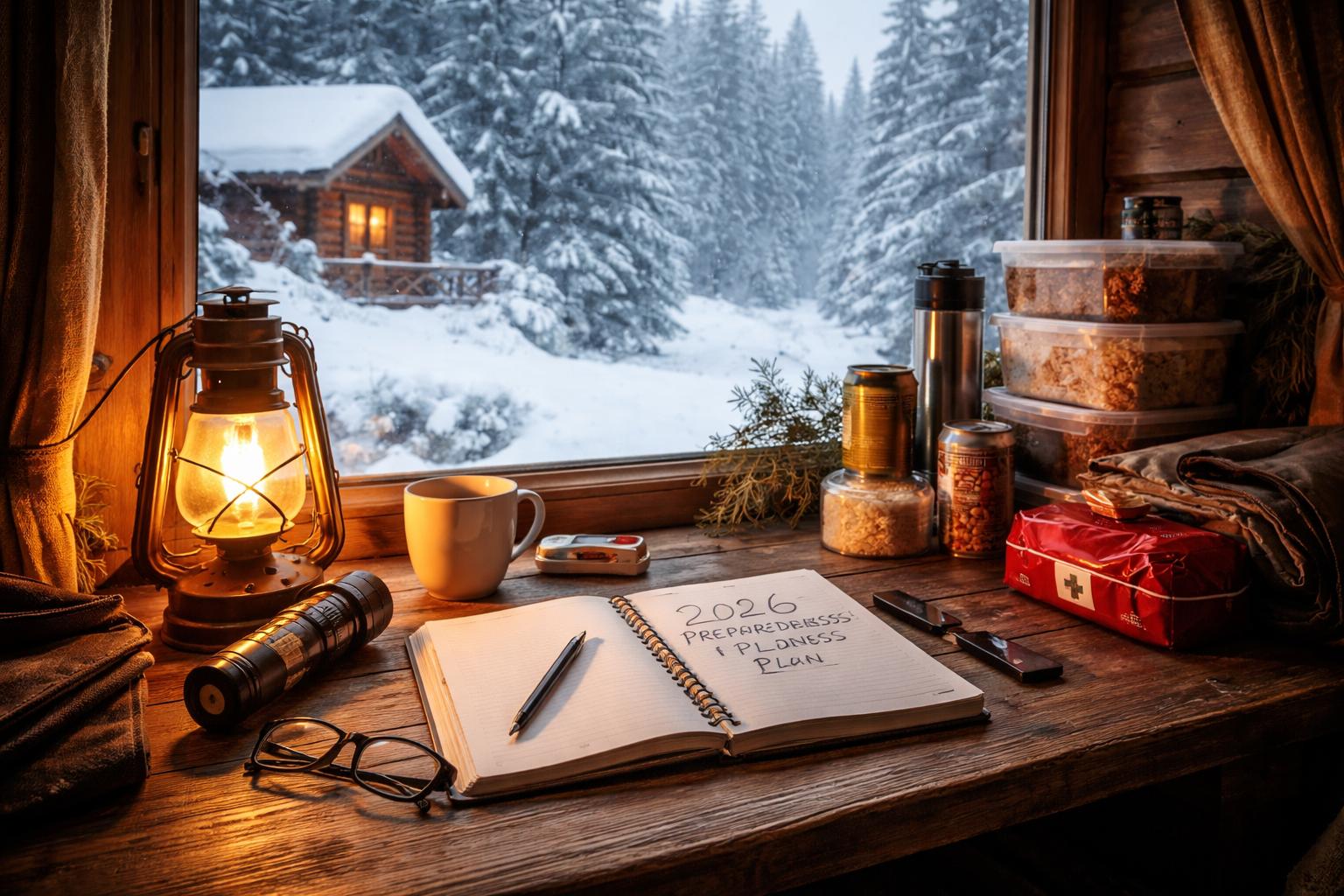
New Year’s Day is one of the few moments in the year when life naturally slows down. There are fewer demands, fewer interruptions, and—if we’re honest—fewer excuses. For those focused on preparedness, January 1st isn’t about predictions or fear. It’s about resetting systems while winter is actively testing them.
Preparedness built in theory often fails in practice. Preparedness reviewed during winter, however, reveals the truth quickly. Cold exposes weak batteries. Short daylight exposes lighting gaps. Storms expose communication and coordination problems. That’s why New Year’s Day is one of the most valuable preparedness days of the year.
Instead of vague resolutions, today is about quiet, deliberate improvement.
Step One: The Winter Reality Audit
Before reorganizing anything, sit down and write. Memory fades faster than people realize, especially once spring arrives and winter discomfort is forgotten.
Ask yourself:
- What supplies did we reach for repeatedly over the last 30–60 days?
- What equipment failed, underperformed, or caused frustration?
- What would have mattered most in a longer outage?
This is where a dedicated preparedness notebook becomes more than a convenience—it becomes a long-term planning tool. Many preppers prefer a rugged notebook that can live in a workshop, vehicle, or gear room without falling apart. A simple, durable option like this works well:
👉 https://amzn.to/4iLrm9Y
As you write, compare your current reality against what you planned to have in place. These internal reference articles provide a solid baseline for that comparison:
- Winter power failures in Canada:
https://canadianpreppersnetwork.com/%e2%9a%a1-the-reality-of-winter-power-failures-in-canada/ - Off-grid emergency power sources in winter:
https://canadianpreppersnetwork.com/off-grid-emergency-power-sources-during-winter-for-preppers/ - How solar actually performs in a Canadian winter:
https://canadianpreppersnetwork.com/how-solar-power-actually-performs-in-a-canadian-winter/
Most people don’t discover they lack power—they discover they lack planning around power.
Food Storage: Rotate for Reality, Not for Show
New Year’s Day is ideal for food rotation because you’re already eating from winter stores. This reveals what truly supports daily life under stress.
Focus on:
- Pulling expired or near-expired items into a “use now” zone
- Replacing foods you relied on heavily
- Removing items you stored but never touch
- Ensuring meals can be prepared with limited power
If you haven’t reviewed it recently, your grid-down food use article reinforces the mindset that matters most:
https://canadianpreppersnetwork.com/using-stored-food-in-a-grid-down-situation/
Small improvements here compound fast. Clear bins, consistent labeling, and stackable containers reduce waste and stress—especially during outages. Even inexpensive storage upgrades can dramatically improve access and rotation:
👉 https://amzn.to/4iLrm9Y
Looking forward, set one achievable food resilience goal per quarter rather than trying to overhaul everything at once. Your long-term food security resources are perfect references:
- Root cellar construction and use:
https://canadianpreppersnetwork.com/building-a-root-cellar-for-long-term-food-storage-a-preppers-guide/ - Preserving garden harvests:
https://canadianpreppersnetwork.com/harvesting-and-preserving-garden-produce-a-complete-preppers-guide-to-food-security/
Power and Lighting: January Is the Truth Test
January doesn’t tolerate assumptions. Batteries lose capacity. Solar output drops. Generators become harder to deploy quickly.
Today, test what you already own:
- Fully charge and test battery banks and power stations
- Replace weak rechargeable cells
- Confirm lighting coverage in every key area
- Stage headlamps and lanterns where they’re actually needed
Most households don’t suffer from a lack of power—they suffer from a lack of usable light at the right time. Headlamps, in particular, outperform handheld flashlights during winter outages because they keep hands free for cooking, repairs, and movement. A reliable headlamp or lantern setup is one of the best low-cost winter upgrades you can make:
👉 https://amzn.to/4iLrm9Y
Revisit your winter power layering strategy using your existing guides:
- Winter off-grid power layering:
https://canadianpreppersnetwork.com/off-grid-emergency-power-sources-during-winter-for-preppers/ - Solar performance expectations:
https://canadianpreppersnetwork.com/how-solar-power-actually-performs-in-a-canadian-winter/
Ask one critical question:
“If the power goes out at 2:00 a.m., what happens in the first 10 minutes?”
If that answer isn’t automatic, that’s your January project.
Communications: Quiet Improvements, Massive Payoff
Communication failures rarely feel urgent—until they suddenly are.
New Year’s Day is perfect for:
- Printing contact lists and frequencies
- Checking radio batteries and chargers
- Reviewing family or group communication plans
- Staging radios with simple reference sheets
Your prepper radio resources remain a strong foundation for readers who want to improve steadily without being overwhelmed:
- Prepper radios category:
https://canadianpreppersnetwork.com/category/prepper-radios/ - DIY UHF/VHF antenna guide:
https://canadianpreppersnetwork.com/diy-uhf-vhf-ham-radio-antennas-a-practical-guide/
Even a basic upgrade—like standardizing batteries across radios and flashlights—reduces failure points. Rechargeable battery kits and chargers simplify logistics during prolonged outages:
👉 https://amzn.to/4iLrm9Y
Security: Calm Readiness Beats Reactive Fear
Security preparedness isn’t about paranoia—it’s about visibility, awareness, and routine.
On New Year’s Day, focus on fundamentals:
- Replace dead exterior motion lights
- Improve entry lighting and visibility
- Review lock and lighting routines
- Ensure communications support security needs
Your perimeter and retreat security article provides a solid framework for thinking beyond basic locks:
- Prepper retreat security and perimeter defense:
https://canadianpreppersnetwork.com/prepper-retreat-security-and-perimeter-defense/
Often, the most effective security upgrade is simply better lighting and coordination, not new hardware.
A Simple, Sustainable 2026 Upgrade Plan
The most successful preppers don’t chase perfection—they pursue consistency.
Commit to one meaningful upgrade per month:
- January: Pantry rotation and lighting reset
- February: Water storage and filtration check
- March: Communications plan and printed references
- April: First-aid refresh and training goals
- May: Garden planning and seed storage
- June: Food preservation skills
- July: Fuel and transport readiness
- August: Home hardening and storm prep
- September: Heating redundancy
- October: Winter vehicle kits and home winterization
- November: Inventory audit and restock
- December: Review notes and tighten weak points
This approach builds resilience without burnout.
Recommended Reading for the Year Ahead
If you want a structured, long-term preparedness framework for 2026—especially focused on sustainability and real-world resilience—Acres of Preparedness is a strong foundation to build on:
👉 https://amzn.to/4iLrm9Y

