
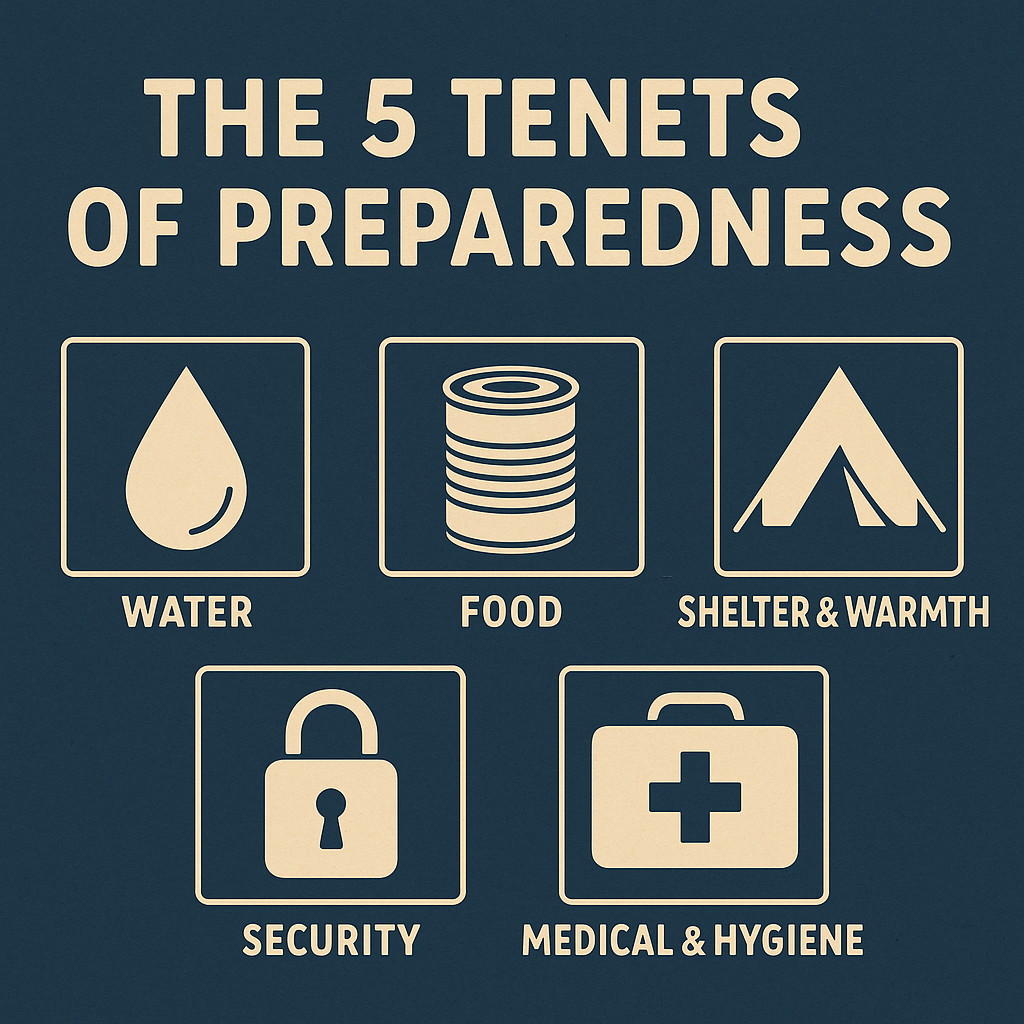
Water, food, shelter, security and medical readiness form one practical household system
The five tenets of preparedness give Canadian households a simple way to find weak points before an emergency does it for them. An ice storm, power-grid failure, wildfire evacuation or longer breakdown can affect several systems at once: water may stop flowing, stores may close, indoor temperatures may fall, communications may fail and ordinary medical help may be delayed.
The five tenets are water, food, shelter and warmth, security, and medical and hygiene. None stands alone. Stored food is less useful without safe water and a cooking method. A warm home is less secure if nobody can monitor the property. Medical supplies are limited if sanitation fails. The goal is not to collect random gear—it is to build a balanced system your household can actually use.
1. Water: The First Priority
Water deserves attention before almost everything else. Dehydration, contaminated water and the loss of sanitation can create problems quickly, especially during physical work, summer heat or illness.
Start with stored water. Keep at least four litres per person per day for a minimum of three to seven days, then build toward a longer reserve as space and container rotation allow. Sealed jugs, purpose-built barrels and water bricks all have a place. Store some water indoors so the entire supply does not freeze during a Canadian winter outage.
- Store: Label containers, protect them from light and chemicals, and rotate them on a schedule.
- Find and collect: Identify nearby rivers, lakes, rain runoff and other natural sources before an emergency, but never assume clear water is safe.
- Treat: Keep more than one method. Sawyer- and Berkey-style filters, purification tablets and boiling solve different problems. Use unscented household bleach only according to current public-health directions for the exact product concentration; never guess a dose.
- Move: Keep manageable containers for carrying water when a large barrel cannot be moved.
Melting clean snow or ice can extend a winter supply, but it requires fuel and produces less water than its volume suggests. Warm a small amount of liquid first, add snow gradually and treat the result when the source is uncertain. Build the complete plan with the Water Collection and Purification in Canada hub.
2. Food: Fuel for the Long Haul
Emergency food must provide calories, nutrition and morale without depending on a functioning store or freezer. Begin with foods your household already eats, then add shelf life and redundancy.
- Build a working pantry: Rotate canned goods, rice, pasta, beans and other dry staples through normal meals.
- Add convenient reserves: Freeze-dried meals can be useful, but they require water and may be costly as the foundation of a plan.
- Preserve seasonal food: Learn tested canning processes, dehydrating and vacuum sealing. Match the method to the food rather than treating every preservation technique as interchangeable.
- Cook off-grid: Propane stoves, rocket stoves and outdoor fire cooking provide alternatives. Never operate fuel-burning equipment indoors unless the appliance is specifically approved for that use and all ventilation and carbon-monoxide precautions are followed.
- Produce some food: A small survival garden and properly stored seeds build skill and reduce dependence, even if they cannot replace the pantry immediately.
Choose calorie-dense, shelf-stable foods that tolerate realistic storage conditions. Protect oils and soft packages from heat, oxygen, pests and physical damage. Test several grid-down meals now so fuel, cookware, water requirements and preparation times are known.
3. Shelter and Warmth: Protection From the Elements
In Canada, exposure can become serious long before hunger. Your home is normally the best primary shelter, but it needs a plan for heat loss, frozen plumbing, fire safety and evacuation.
- Prepare the home: Reduce drafts, identify a warm room, stock blankets and consider properly installed backup heat such as a wood stove or an approved propane heater.
- Protect people first: Layer wool or synthetic clothing, keep thermal socks and dry footwear available, and choose sleeping bags rated for the temperatures you may actually face, including -20°C or lower where appropriate.
- Prepare to leave: A quality tent, tarp or vehicle setup can support an evacuation when the house is no longer safe.
- Practise shelter skills: Learn tarp pitching, wind protection and emergency debris or snow shelters before cold, fatigue and darkness make learning harder.
Keep extra blankets, clothing and a fire-starting kit in the vehicle. Candles may provide limited light, but they create fire and carbon-monoxide risks and should never be burned inside a vehicle. Battery lighting is the safer first choice. More detailed cold-weather planning is available in Shelter and Heat in Canada.
4. Security: Protect People, Supplies and Options
Security begins with awareness, deterrence and reliable household routines—not confrontation. Blackouts, evacuations, supply shortages and civil disorder can increase opportunistic theft and expose weaknesses that were easy to ignore during normal conditions.
- Reinforce the home: Maintain solid doors, locks, lighting, window security and defensive landscaping that preserves visibility.
- Control information: Avoid advertising fuel, food, generators or an empty property. Decide what household information is shared and with whom.
- Improve situational awareness: Watch access points, establish check-in routines and identify changes before a problem reaches the door.
- Build trusted relationships: Reliable neighbours and preparedness groups can extend observation, skills and manpower.
- Train with lawful tools: Bear spray is intended for animal threats and must not be treated casually as a people-defence product. Archery equipment and legal firearms require safe training, storage and transport. Understand Canadian criminal law, applicable regulations and local bylaws before relying on any defensive tool.
A useful security plan includes de-escalation, a safe room, emergency contacts, exterior observation and clear triggers for sheltering or leaving. The objective is to avoid trouble and preserve options.
5. Medical and Hygiene: Health Is Survival
A small injury becomes more serious when roads are closed, clinics are overloaded or clean running water is unavailable. Medical preparedness therefore combines supplies, training, records, prescriptions and sanitation.
- Build practical kits: Include ordinary wound-care supplies, gloves, a non-digital thermometer and household medications. Tourniquets and wound-closure products require appropriate training and must not replace professional care when it is available.
- Train: Take recognized first-aid and wilderness or remote medical training suited to the delays your household may face.
- Plan prescriptions: Maintain an up-to-date medication list and discuss legal emergency refills with a pharmacist or prescriber. Fish antibiotics and unverified natural remedies are not safe substitutes for prescribed human medication.
- Prepare sanitation: Store soap, hand sanitizer, toilet paper, heavy garbage bags and a workable emergency toilet system.
- Prevent infection: Separate clean and dirty work areas and protect treated water, food and medical supplies from contamination.
Frozen pipes and long outages can remove both drinking water and the water needed for hygiene. Decide in advance how hands, dishes, waste and laundry will be managed. Use the Medical and First Aid in Canada hub to develop the next layer.
The Sixth Tenet: Knowledge and Skills
Many experienced preppers add a sixth tenet: knowledge. Gear breaks, gets lost or wears out, but practised skills stay with you. Bushcraft, gardening, food preservation, first aid, navigation, communications and safe tool use make every stored item more valuable.
Training also exposes bad assumptions. Carry the water container. Cook the pantry meal without grid power. Sleep in the backup shelter. Walk the evacuation route. Run the emergency toilet for a weekend. Each test reveals problems while failure is still cheap.
Audit the Five Tenets as One System
Rate each tenet from zero to three: zero means no plan; one means supplies exist but have not been tested; two means the household can manage a short disruption; three means supplies, skills, backups and maintenance are in place. Work on the lowest score first.
Preparedness is not panic and it is not a race to buy everything at once. Start with the five tenets of preparedness, correct the weakest area, test what you have and build steadily. Water, food, shelter, security and medical readiness form the foundation; knowledge connects them into a system that can withstand a real Canadian emergency.