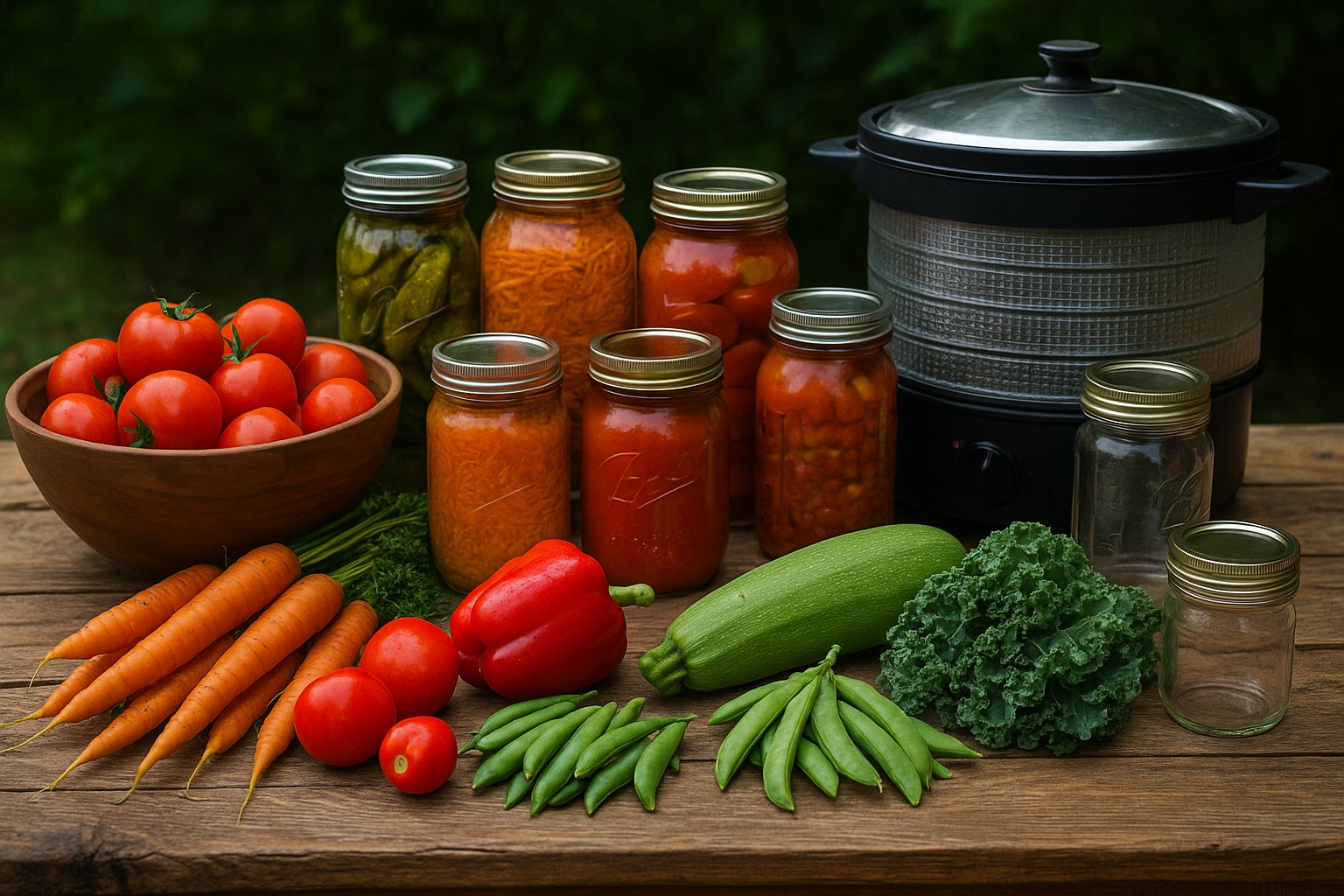
When you’ve put in the work to grow your own food, letting any of it go to waste is just not an option—especially for preppers. The ability to harvest, process, and preserve your garden’s bounty is what transforms seasonal abundance into year-round food security.
This comprehensive guide covers when and how to harvest common crops, and provides detailed preservation methods for everything from tomatoes and carrots to leafy greens and berries. Whether you’re off-grid, suburban, or somewhere in between, these skills will build your resilience one jar, bag, or bucket at a time.
🌾 Part 1: Harvest Timing—Getting It Just Right
Harvesting at the right moment ensures the best taste, nutrition, and shelf life. Below are tips for recognizing peak maturity:
| Crop | Harvest Timing |
|---|---|
| Tomatoes | Deep red, slightly soft; harvest just before fully ripe for longer storage |
| Beans (snap) | Pods are plump but not bulging or stringy |
| Potatoes | 2–3 weeks after vines die back; skin should not rub off easily |
| Carrots | After ~70 days; visible shoulders and vibrant color |
| Onions | Tops have fallen and browned; cure for 2 weeks before storage |
| Peppers | Firm and fully colored (red, orange, yellow, or green depending on variety) |
| Cucumbers | Bright green and firm; pick young to avoid bitterness |
| Squash (winter) | Deep color, hard rind, vine stem begins to dry |
| Kale/Chard | Harvest outer leaves when 8–10 inches long; continuous harvest possible |
| Herbs (basil, oregano, thyme) | Before flowering, ideally in early morning |
🛢️ Part 2: Preservation Methods by Produce Type
Here’s where we dive deep. Each crop has its ideal preservation method(s) depending on water content, acidity, and texture. Use this guide to determine the best ways to store your harvest long-term.
🥫 1. Tomatoes
Preserve by:
- Water bath canning: Ideal for crushed tomatoes, salsa, sauces. Add lemon juice to ensure acidity.
- Freezing: Core and freeze whole or chopped; peel easily after thawing.
- Dehydrating: Slice thinly for tomato “chips” or dry to make powder for soups and sauces.
- Fermentation: Make fermented ketchup or tomato relish for gut-healthy condiments.
Tip: Don’t refrigerate fresh tomatoes. It ruins flavor and texture.
🥕 2. Carrots
Preserve by:
- Cold storage: Leave unwashed, trim tops, and store in damp sand or sawdust in a root cellar or cool basement.
- Freezing: Peel, slice, blanch for 2–3 minutes, then freeze.
- Fermentation: Shred and ferment with garlic and ginger for a probiotic-rich slaw.
- Canning: Pressure-can sliced carrots for shelf-stable meals.
Shelf life: Up to 6 months in cold storage, 12+ months canned or frozen.
🧅 3. Onions & Garlic
Preserve by:
- Curing: Lay out in a well-ventilated area out of direct sun for 2–3 weeks.
- Braiding (softneck garlic): Hang in cool, dry place.
- Dehydrating: Chop and dry for flakes or powder.
- Freezing: Chop and freeze raw or sautéed in oil.
Tip: Never store onions and potatoes together—onions cause potatoes to sprout faster.
🫑 4. Peppers
Preserve by:
- Freezing: Slice or dice, no blanching needed.
- Dehydrating: Great for hot peppers—dry whole or sliced for flakes or powder.
- Fermentation: Use for hot sauce or fermented salsa.
- Canning: Pressure can pickled peppers or add to mixed vegetables.
Bonus: Smoked hot peppers (like chipotle) can be dried and stored in jars for unique flavoring.
🥒 5. Cucumbers
Preserve by:
- Pickling: Classic method using vinegar or lacto-fermentation. Store in fridge or water bath can.
- Fermentation: Traditional sour pickles require only water, salt, and time.
- Dehydrating: Make cucumber chips with sea salt or vinegar flavoring.
Shelf life: Fermented in the fridge = 6 months; canned = 1+ year.
🍓 6. Berries (strawberries, blueberries, raspberries)
Preserve by:
- Freezing: Lay flat on tray first, then bag.
- Jam/jelly: Water bath canning with pectin.
- Dehydrating: Whole or sliced into fruit leather.
- Fermentation: Create berry kvass or low-alcohol mead-style drinks.
Tip: Rinse only just before preserving or eating to avoid mold.
🥬 7. Leafy Greens (kale, spinach, Swiss chard)
Preserve by:
- Freezing: Blanch for 2 minutes, cool in ice bath, squeeze water out, then freeze.
- Dehydrating: Crumble into powder and use as soup thickener or smoothie boost.
- Fermentation: Try fermenting kale with garlic and red pepper for a spicy probiotic snack.
Shelf life: Up to 12 months frozen, 18+ months as powder.
🧄 8. Herbs
Preserve by:
- Air drying: Tie in bunches and hang upside down in a dry, shaded spot.
- Freezing: Chop and freeze in oil in ice cube trays.
- Dehydrating: Use a dehydrator on the lowest setting; store in airtight containers.
- Fermentation: Garlic, dill, and chives all work great in ferments and infused oils.
Bonus: Store dried herbs whole and crush when using for maximum flavor.
🥔 9. Potatoes
Preserve by:
- Cold storage: Best between 4–10°C with 90% humidity. Never store in fridge—converts starch to sugar.
- Canning: Pressure can in chunks for instant stews.
- Dehydrating: Cooked and shredded for homemade hash browns or mashed potato flakes.
Tip: Cure potatoes for 10–14 days in a cool, dark spot before storage.
🧬 Bonus: Save Your Seeds
Saving your own seeds adds another layer of self-reliance:
- Tomatoes: Scoop seeds, ferment for 2–3 days, then dry.
- Peppers: Air-dry on paper towels.
- Beans/peas: Allow to fully dry on the plant, then shell.
- Lettuce/brassicas: Let bolt and flower; collect mature seed pods.
Store seeds in paper envelopes in a glass jar with silica packets. Keep in a cool, dark place. Always label with variety and date.
🪓 Final Thoughts
Preserving your harvest is more than a homestead chore—it’s a strategic pillar of preparedness. Every jar of canned tomatoes, bag of frozen kale, or dried herb packet you store reduces your dependence on fragile supply chains.
As inflation, climate disruptions, and power instability continue to affect food access across North America, self-reliant food systems—even at the backyard scale—offer security, peace of mind, and nourishment.
So whether you’re urban, rural, or somewhere in between: grow it, harvest it, and preserve it. Your future self will thank you.