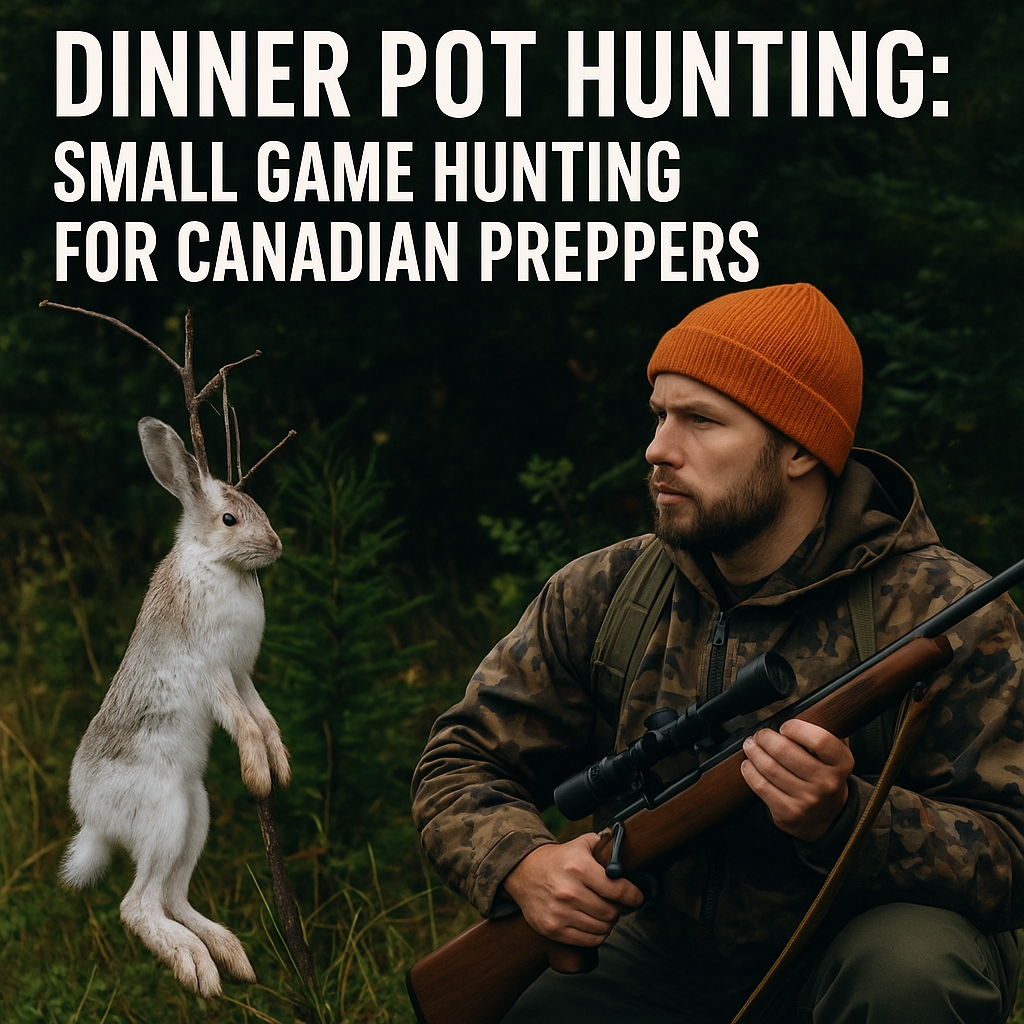
For Canadian preppers, self-reliance goes beyond freeze-dried food and rain barrels — it includes sourcing your own protein from the wild. While deer and moose get the glory, the true backbone of wild meat is in the underdog category: small and non-traditional game. Often called “dinner pot hunting,” this approach isn’t about trophies — it’s about calories, sustainability, and survival.
Why Small and Non-Traditional Game?
In a long-term crisis or off-grid scenario, big game is a one-time windfall — but small and often-overlooked species can feed you consistently. These include:
- Rabbits and hares
- Squirrels and grouse
- Raccoons and porcupines
- Beavers and muskrats
- Groundhogs, skunks (yes, they’re edible), and opossums
- Feral pigeons, starlings, and blackbirds
For many rural Canadians — and Indigenous communities — these animals have long been part of the food web. For preppers, they represent a dependable, renewable, and legal (when regulated properly) source of nutrition.
The Survival Advantage
- Availability: These species are common even near urban edges. Feral pigeons, for example, thrive in cities and barns.
- Year-Round Opportunity: Some animals like raccoons or porcupines can be hunted or trapped outside of traditional game seasons (with proper permissions).
- Ease of Harvest: Porcupines, for instance, are slow-moving and can be hunted with simple tools. They’re also active in winter.
- Low-Calorie Investment: Trapping raccoons or snaring rabbits requires less energy than tracking a deer.
- Reduced Attention: Hunting “undesirable” animals doesn’t attract the same scrutiny as rifle shots ringing out for moose.
Know Before You Hunt
When Legal and ethical concerns still apply:
- Check provincial hunting and trapping laws — especially for nuisance species, urban hunting, and protected birds.
- Obtain proper licenses (small game, trapping, and firearm where required).
- Always prioritize clean, humane kills and avoid overharvesting.
- Be cautious of contamination — urban or farm-fed animals like pigeons or raccoons may carry disease or heavy metals. Proper field dressing and cooking are essential.
How to Prepare Non-Traditional Game
Here’s a quick rundown on how to handle and cook some of these species:
- Raccoon: Dark, greasy meat. Best slow-cooked with strong seasoning. Remove glands and fat during dressing to improve flavor.
- Porcupine: Mild, pork-like flavor. Easy to skin (wear gloves) and roast. A reliable winter food.
- Beaver: Tastes like a fatty roast; the tail is a delicacy. Often slow-cooked or smoked. Must be fully cooked due to parasites.
- Muskrat: Cleaned properly, it’s tender and flavorful. Often stewed or braised. Some Indigenous recipes consider it a staple.
- Feral Pigeons: Small, dark meat birds. Great in stews or grilled. Pluck or skin and gut like a dove.
- Groundhogs and Skunks: Edible with careful cleaning. Groundhog is mild if young; skunk requires scent gland removal but has been historically eaten in survival settings.
Tools for the Job
A basic kit for dinner pot hunting includes:
- .22LR or Air Rifle: Quiet, efficient for small game.
- Game snares and traps: Ideal for passive harvesting.
- Field knife and game shears: For processing.
- Heavy gloves: Essential when dealing with porcupines, raccoons, or potential zoonotic diseases.
- Cooking pot and spices: A good stew covers a lot of wild flavors.
Preservation Options
Once harvested:
- Smoke or dry the meat into jerky.
- Pressure can for shelf-stable protein.
- Render fat (especially from raccoons or beavers) for cooking use.
- Freeze if energy allows — off-grid solar freezers are a growing prepper asset.
Closing Thoughts
Dinner pot hunting isn’t glamorous — but it’s real, practical, and potentially life-saving. Whether you’re bugging out in the bush or quietly supplementing your food stores, small and non-traditional game give you an edge. Knowing how to identify, harvest, and prepare these overlooked animals turns your environment into a walking pantry.
So the next time you’re in the woods or watching feral pigeons flap across a barn roof, think beyond the traditional hunt. The survival menu is wider — and wilder — than you might expect.