A number of developments this week highlight a trend preppers have been watching closely for years: increasing geopolitical tension, rising food costs, and continued pressure on energy markets. Individually these events may seem distant, but together they reinforce a central preparedness lesson—modern systems are tightly interconnected, and disruptions in one region can ripple across the globe.
Below are several stories worth paying attention to this week.
Middle East War Expands as Iran Conflict Escalates
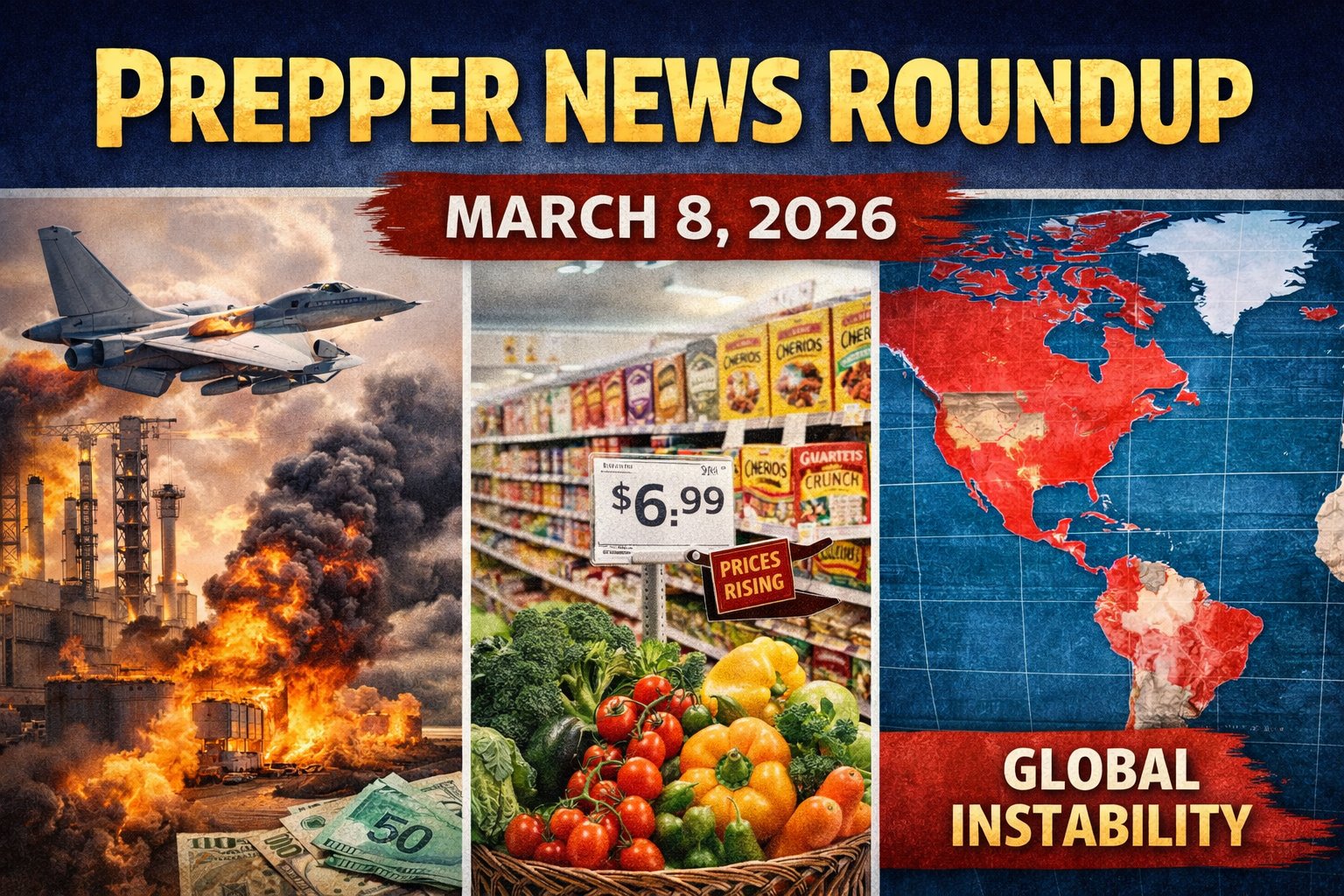
The most serious geopolitical development continues to be the escalating conflict involving Iran, the United States, and Israel. Airstrikes and retaliatory missile attacks have spread across the region, with Iranian missiles reportedly striking targets in several Gulf countries. The conflict has already resulted in hundreds of casualties and widespread damage to infrastructure.
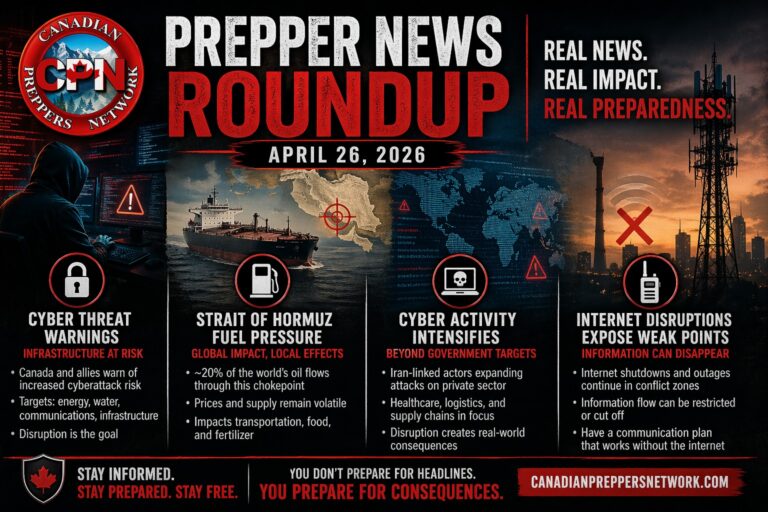
Fuel storage facilities and industrial sites in Iran have been targeted during the strikes, raising concerns about potential long-term disruptions to global energy markets. At the same time, the Strait of Hormuz—one of the world’s most important oil shipping routes—has become a focal point of concern for analysts watching the conflict closely.
Why this matters for preparedness is straightforward: roughly one-fifth of the world’s oil supply passes through the Strait of Hormuz. Any sustained disruption could quickly drive fuel prices higher worldwide.
For Canadians, that typically translates into rising transportation costs, increased heating fuel prices, and eventually higher food costs due to transportation expenses embedded in the supply chain.
Oil and Energy Prices Begin Reacting
Energy markets have already begun reacting to the growing instability in the Middle East. Analysts warn that geopolitical conflict is one of the fastest ways to push oil prices higher, especially when infrastructure or shipping routes are threatened.
Higher oil prices rarely remain confined to fuel alone. Energy costs ripple through almost every sector of the economy, including agriculture, manufacturing, and transportation.
For preppers, the takeaway is familiar: the price of energy is often the hidden driver behind the price of everything else.
Food Prices Continue Climbing in Canada
Food inflation remains a persistent concern across Canada. The 2026 Canada Food Price Report estimates that the average Canadian family of four will spend about $17,571 on food this year, nearly $1,000 more than the previous year.
Over the past five years, food prices in Canada have risen roughly 27 percent, placing increasing pressure on household budgets.
Even when overall inflation slows, food costs often remain stubbornly high. Grocery prices continue to rise faster than many other consumer categories, with restaurant prices climbing even more sharply.
For preparedness-minded families, this reinforces the value of practical steps such as:
- bulk food storage
- home gardening
- food preservation methods like dehydration, canning, and fermentation
These skills not only improve resilience during disruptions but also help families buffer themselves against rising food costs today.
Global Risk Environment Becoming More Unstable
Economic analysts increasingly warn that the world is entering a period of heightened geopolitical and economic fragmentation. Global institutions that once stabilized trade and finance are under growing pressure as countries use sanctions, tariffs, and economic leverage more aggressively.
The result is a more volatile global environment where shocks—whether military, financial, or environmental—can cascade rapidly across borders.
For preparedness communities, this trend simply reinforces a long-standing principle: resilience begins locally.
Households and communities that maintain some degree of independence in food, water, energy, and skills are far less vulnerable to distant disruptions.
The Prepper Takeaway
This week’s news highlights a pattern that has become increasingly common:
• geopolitical conflict affecting energy markets
• rising food costs driven by global instability
• growing uncertainty in international systems
None of these developments mean a crisis is imminent tomorrow. But they do illustrate why preparedness is less about reacting to a single event and more about building long-term resilience against a world that is becoming less predictable.
Food storage, energy preparedness, water security, and practical skills remain some of the most reliable forms of insurance a family can build.
And as history repeatedly shows, the people who prepare early rarely regret it.