There’s a quiet lie most Canadians are still telling themselves.
That a full pantry equals security.
We saw empty shelves during COVID. We’ve watched food prices climb faster than wages. Fertilizer shortages, trucking disruptions, and global instability have all brushed up against our food system—and each time, people assumed it was temporary.
But here’s the truth most aren’t ready to face:
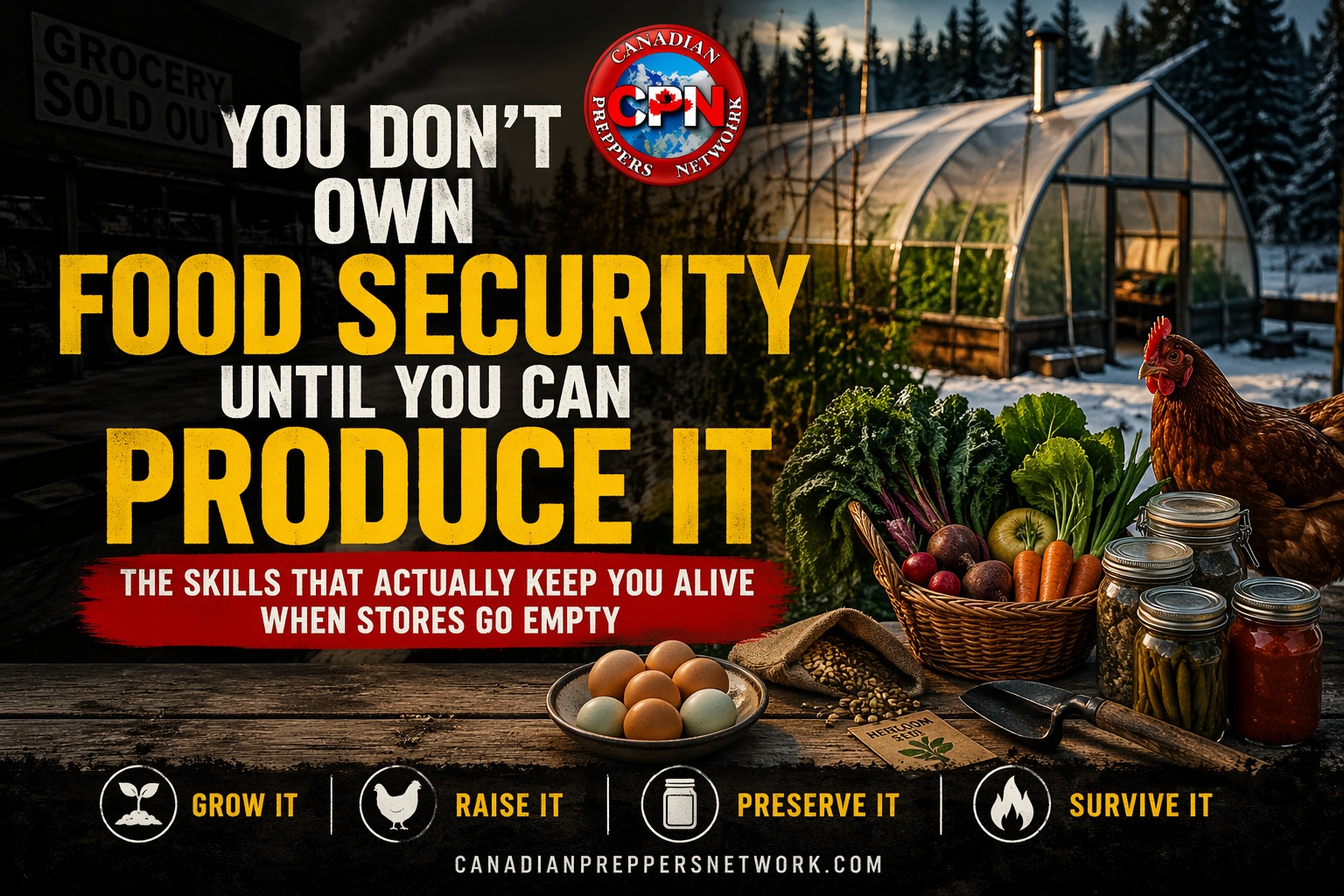
If your plan ends when your stored food runs out, you don’t have food security—you have a timer.
And that timer is shorter than you think.
Storage Buys Time. Production Extends Survival.
There’s nothing wrong with food storage. In fact, it’s essential.
If you’re still building that base, this guide walks through doing it properly without overspending:
https://canadianpreppersnetwork.com/how-to-build-a-30-day-food-supply-in-canada-without-overspending/
A well-built reserve—rice, beans, canned goods—gives you breathing room when supply chains hiccup or income disappears.
But storage is finite.
Production is different.
A small garden, a few animals, a system that produces even a fraction of your calories—those don’t just delay the problem. They change the equation entirely.
If you’re starting that transition, even basic, durable hand tools matter more than people think:
https://www.amazon.ca/s?k=stainless+steel+garden+tools+set
Preparedness begins when you become a producer.
Protein Is Where Most Plans Collapse
Calories are easy. Protein is not.
You can stretch grains. You can bulk meals with potatoes. But your body—and your family—will eventually pay the price without reliable protein.
This is where most preparedness plans quietly fail.
- Hunting sounds good—until everyone else has the same idea
- Store-bought meat disappears quickly in any real disruption
- Livestock becomes fragile if you rely on commercial feed
Even water becomes a failure point in winter if you’re not set up for it. Heated livestock waterers are one of those small details that matter more than expected:
https://www.amazon.ca/s?k=heated+livestock+waterer
Rabbits, chickens, small systems—they only work if you can sustain them when conditions turn against you.
The Skill Stack Nobody Practices (Until It’s Too Late)
Owning gear isn’t the same as having skill.
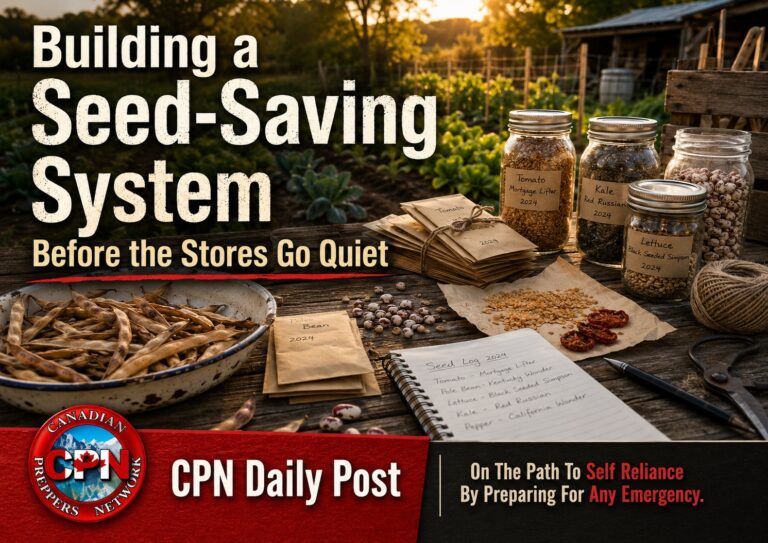
A pressure canner in the basement doesn’t mean you know how to preserve meat safely. A pack of seeds doesn’t mean you know how to grow food—let alone save seeds for next season.
If you need a proper starting point for water systems—which ties directly into both gardening and livestock—this breaks it down clearly for Canadian households:
https://canadianpreppersnetwork.com/water-storage-and-filtration-for-canadian-households/
If you’re serious about closing the preservation gap, this is the tool that makes it possible:
https://www.amazon.ca/s?k=presto+23+quart+pressure+canner
And without renewable seed stock, your system dies in a single season:
https://www.amazon.ca/s?k=heirloom+seed+vault
These aren’t hobbies. They’re systems.
Canadian Reality: Winter Will Expose You
Preparedness advice from warmer climates doesn’t translate cleanly here.
Canada has a built-in stress test: winter.
You don’t fail in July. You fail in February.
If you’ve ever dealt with extended outages, you already know how fast things degrade without heat and planning:
https://canadianpreppersnetwork.com/heating-a-home-without-power-what-actually-works-after-24-hours/
- Growing seasons are short
- Preservation isn’t optional—it’s survival
- Heating and food systems are deeply connected
Even something as basic as monitoring storage conditions matters:
https://www.amazon.ca/s?k=analog+indoor+outdoor+thermometer
A productive garden in summer means nothing if you can’t carry it through the cold.
The Hard Truth Most People Avoid
There is no moment where you “figure this out” under pressure.
You don’t learn to grow food during a crisis.
You don’t learn to raise animals when feed is gone.
You don’t learn to preserve food when your harvest is already spoiling.
You either build these systems now—or you face the consequences later.
Where to Start (Before It Matters)
You don’t need a farm. You need momentum.
Start small—but start real:
- Grow something you actually eat
- Raise one form of protein
- Learn one preservation method and use it this year
- Reduce dependency on inputs you can’t control
If you want a deeper framework for building a fully self-reliant system—from land use to long-term food production—Acres of Preparedness: Planning the Last Safe Place lays out a practical path for Canadian conditions:
https://www.amazon.ca/dp/B0C1J9X9Q8
Final Thought
Preparedness isn’t measured by how much you can store.
It’s measured by what you can produce when there’s nothing left to buy.
And that line—the one between consumer and producer—is where most people quietly fall behind.
Don’t be one of them.