Most Canadians don’t think about water until something interrupts it.
It’s always there. It’s always clean. It’s always available.
Until it isn’t.
And when it stops working the way you expect—even temporarily—it becomes your most immediate problem.
The Problem With a Single Source
In most homes, water comes from one place.
A tap.
Behind that tap is a system—treatment, pumping, pressure, delivery. It works well, most of the time. But it’s still a system. And systems fail, slow down, or become unreliable under stress.
You don’t need a complete failure to have a problem.
A boil water advisory. A pressure drop. A temporary interruption.
That’s enough to change everything.
Prepared households don’t rely on a single source.
They build options.
What You Actually Need
Water planning doesn’t have to be complicated.
At its core, it comes down to two things:
Having enough on hand—and having a way to get more if needed.
A common baseline is about four litres per person per day. That covers drinking, basic food preparation, and minimal sanitation.
But numbers only matter if they’re realistic for your household.
The goal isn’t to calculate perfectly.
It’s to ensure you’re not dependent on immediate resupply.
Storage: Your First Layer of Control
Stored water is the simplest and most reliable starting point.
It gives you immediate access without needing power, pressure, or outside systems.
You don’t need specialized solutions to begin. Even clean, sealed containers rotated regularly can create a solid buffer.
As your setup improves, dedicated storage containers make things easier to manage. Stackable water containers designed for long-term storage are more durable, easier to handle, and reduce the risk of contamination:
https://www.amazon.ca/dp/B07H9K9Q7B/?tag=canadianprep-20
What matters most is consistency.
Stored water only works if it’s maintained and accessible.
Filtration: Your Backup Plan
Storage handles the short term.
Filtration handles everything beyond that.
If your stored water runs low—or if you need to rely on alternate sources—filtration becomes essential.
This is where most households are unprepared.
Without filtration, your options are limited. With it, your options expand significantly.
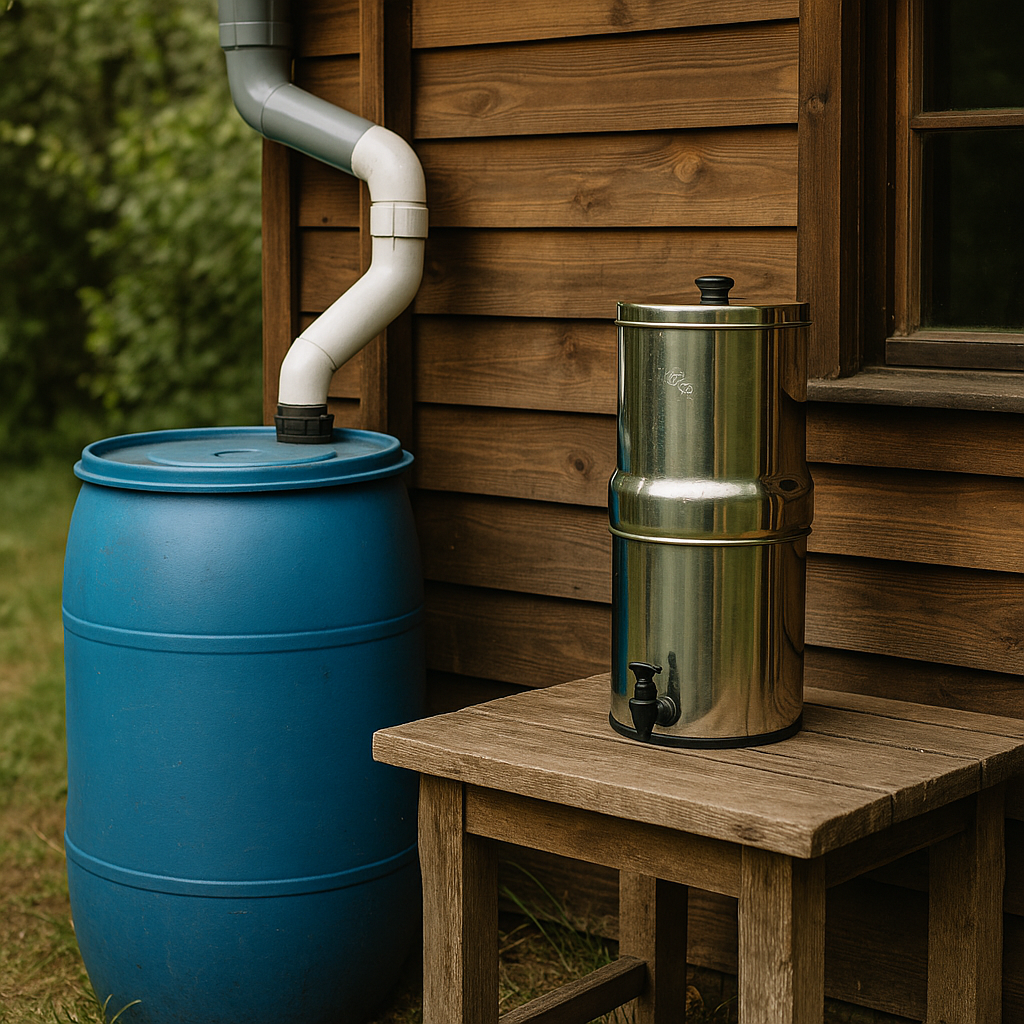
A gravity-fed filtration system is one of the simplest and most reliable tools you can have. It works without electricity, doesn’t rely on pressure, and can process water from a wide range of sources:
https://www.amazon.ca/dp/B00FA2RLX2/?tag=canadianprep-20
It’s not about convenience.
It’s about removing dependency on a single system.
Filtration becomes essential during outages, especially when systems don’t recover quickly. This guide covers how those first 72 hours actually unfold:
👉 https://canadianpreppersnetwork.com/72-hours-is-where-most-people-stop/
Where Water Actually Comes From
When people think about backup water, they often imagine extreme scenarios.
In reality, your backup sources are much closer than that.
Rainwater. Nearby lakes or rivers. Even stored household water that can be repurposed.
The key isn’t finding perfect sources.
It’s having the ability to make imperfect sources usable.
That’s what filtration gives you.
Water is only one part of the equation. If your food supply isn’t stable, the pressure returns quickly—this is how to build that buffer:
👉 https://canadianpreppersnetwork.com/how-to-build-a-30-day-food-supply-in-canada/
Using Water Without Wasting It
During a disruption, water use changes.
You become more aware of how much you’re using—and how quickly it adds up.
Simple adjustments make a difference:
- using less for cleaning
- reusing where possible
- prioritizing drinking and cooking
This isn’t about restriction.
It’s about awareness.
The more efficiently you use water, the longer your supply lasts.
The Overlooked Connection
Water affects everything else.
Food preparation depends on it.
Hygiene depends on it.
Basic comfort depends on it.
You can go without power longer than you can go without water.
That’s why it deserves attention early—not later.
What Most People Get Wrong
They assume it will always be there.
Even when disruptions happen, they expect water to be the last thing affected.
Sometimes it is.
But when it isn’t, the impact is immediate.
And without preparation, there’s very little time to adjust.
Build Quietly, Maintain Consistently
You don’t need a large or complicated setup to be prepared.
Start with a few days of stored water.
Add filtration when you can.
Improve your system gradually.
The goal isn’t to build something impressive.
It’s to build something reliable.
Final Thought
Water is one of the few things you can’t improvise for long.
When it becomes uncertain, everything else becomes harder.
A simple plan—storage plus filtration—removes that uncertainty.
And once water is handled, the rest of your preparedness becomes much easier to manage.
When you look at water in isolation, it seems manageable. When you look at it over several days alongside food and power, the picture changes:
👉 https://canadianpreppersnetwork.com/your-first-7-days-without-normal-supply-chains/