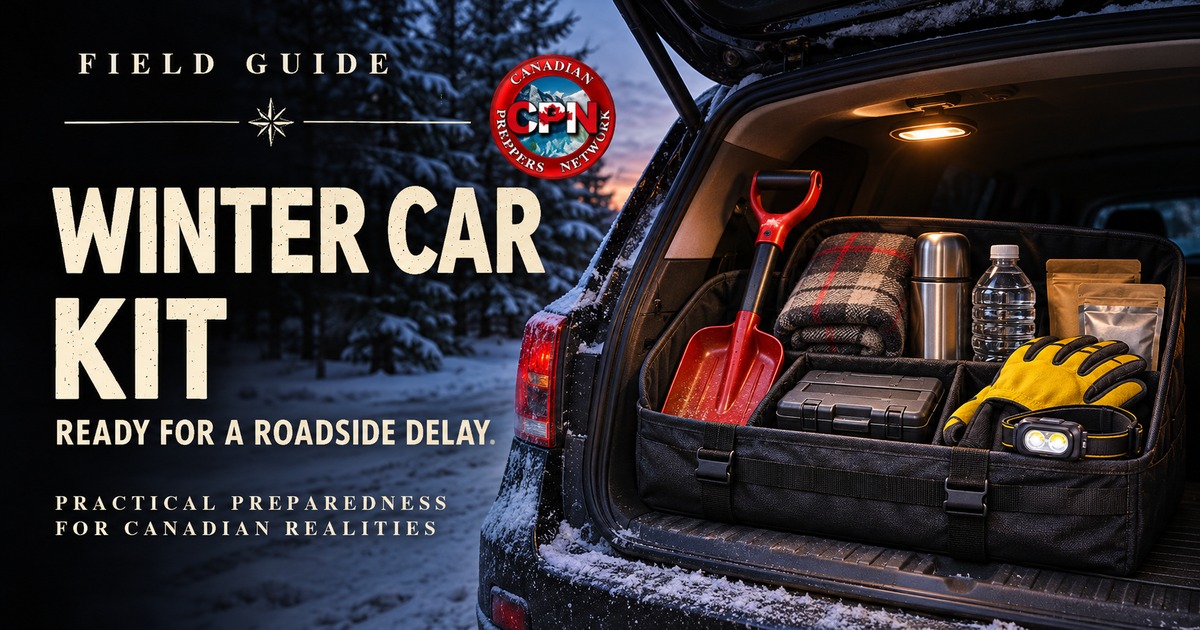
Pack for a breakdown, a night in the cold and the drive home afterward.
A winter car kit has three jobs. It helps you deal with a minor roadside problem, keeps you visible and able to call for help, and gives everyone in the vehicle enough warmth, food and water to wait if you can’t get moving again. Build it around the people you actually carry and the longest stretch of road you regularly drive.
Start with what you’d need if the engine quit, the trunk wouldn’t open and help was several hours away. Then pack the tools you’d use once it was safe to get out. CAA’s winter checklist covers the basics. This checklist puts each item where you’ll need it and accounts for what happens when the kit freezes.
The complete winter car kit checklist
Keep the cabin portion of your winter car kit within reach of a seat, secured in a compartment or bag. Strap the heavier gear down in the cargo area. A shovel, booster pack or water bottle can become a projectile in a crash.
Keep within reach in the cabin
- Warmth and shelter. A winter sleeping bag or heavy blanket for each regular passenger, plus winter boots, dry socks, insulated mitts, a toque and spare warm layers. A foam sitting pad helps if you have to wait outside.
- Light and visibility. A headlamp, cold-rated spare batteries and a reflective vest. Put the vest on before stepping out if it’s safe to leave the car.
- Communications and navigation. A charged phone, car charger, matching cable, charged power bank, offline maps, a paper road map and a written list of emergency and roadside assistance numbers.
- First aid and personal needs. A first-aid kit, trip-specific medication, tissues, toilet paper, waste bags and personal hygiene supplies. If you carry an emergency escape tool, mount it where the driver can reach it while belted.
- Food and drinking water. A cold-tested bag of ready-to-eat food and liquid water brought from indoors at departure. Stow the reserve water in a secured bin.
- Passenger and pet supplies. Correctly sized warm layers and extra food and water. For pets, include a leash or carrier, a bowl and a blanket.
Secure in the cargo area
- Roadside visibility. A reflective warning triangle or battery-powered roadside beacon. Set it out only if you can do so safely.
- Snow and traction. A compact shovel, snowbrush, ice scraper, traction mats or sand, and work gloves to keep your insulated mitts dry.
- Battery and tyres. Jumper cables or a compatible jump pack, a tyre-pressure gauge and an inflator.
- Spare tyre and jack. Carry the vehicle’s specified spare, jack, jack handle, wheel wrench and locking wheel-nut key if fitted. Add a wheel chock. If the vehicle has a factory inflator and sealant instead of a spare, check that both are present and the sealant is in date. Ask about a compatible spare kit if you regularly drive remote routes.
- Basic hand tools. Pack a compact socket set matched to the vehicle, an adjustable wrench, pliers, flathead and Phillips screwdrivers, a multitool, sturdy tape and cable ties. Add shop towels and a funnel.
- Mechanical fluids. Your winter car kit should include winter-rated windshield washer fluid and a small sealed bottle of the specified engine oil. If you carry spare coolant or brake fluid, use the exact specification in the owner’s manual and keep it sealed. Use separate, labelled funnels for oil and coolant. Keep all fluids upright in a leak-catching bin away from food and water.
Check the owner’s manual for the correct boost points and procedure. Bring your jump pack and power bank inside when temperatures fall below their storage ratings. Check the spare’s pressure against the vehicle placard or owner’s manual and find the approved jack points before you need them.
Change a wheel only on firm, level ground well clear of traffic. Never get under a vehicle supported only by a jack. Call for assistance if the roadside is unsafe. A brake warning, soft pedal or suspected brake-fluid leak calls for a tow. If the engine overheats, stop safely and let it cool. Never open a hot coolant cap.
|
||||
| Approval and kit contents depend on clinical assessment. Does not replace emergency or regular medical care. Affiliate link: CPN may earn a commission. |
Pack drinking water in two parts
The water you can drink immediately goes in at departure. Fill bottles indoors and bring them with you. For two adults, two one-litre bottles and a one-litre vacuum flask give you three litres of liquid water when you leave. That’s an example load for departure. Add more for extra passengers, pets, longer trips and stretches where help could take hours. A flask slows freezing. Bring it back inside when you get home.
The reserve stays in your winter car kit. Divide potable water among several small, wide-mouth, freezer-safe plastic containers suitable for drinking water. Follow the maker’s fill instructions and leave room for expansion. Secure containers upright in a bin that can catch a leak. For emergency water pouches, check that the maker rates the packaging for freezing and your expected temperatures. A freeze-rated pouch can still be a solid block when you need a drink.
If the cabin is still warm when you get stuck, start thawing one small container while you still have liquid water. Keep it capped and away from direct heat. Replace any cracked or leaking container. An insulated bag slows heat loss. After an overnight cold soak, count frozen water as reserve that still needs to thaw.
Inspect the reserve after the first hard freeze and rotate it regularly. Put an empty travel bottle by your keys as a reminder to fill it when you leave.
Pack food you can eat straight from the kit
For the winter car kit, choose foods that need no stove or added water and are easy to chew after a night in the cold. Pack small portions you can open with stiff fingers.
- Roasted nuts, seeds or loose trail mix. Choose for passenger allergies and pack a blend you can eat a piece at a time.
- Plain crackers, pretzels or dry cereal. Pick bite-sized pieces and allow drinking water for dry or salty snacks.
- Thin oat biscuits or shortbread. Test the exact product cold. Small, crisp pieces are easier to handle than dense bars.
- Shelf-stable jerky in thin pieces. Thick strips can be tough even at room temperature.
- Emergency ration bars rated for vehicle storage. Check the maker’s temperature range and see if you can break off a piece and chew it cold.
For the food bag in a two-person winter car kit, start with four ration bars, four single servings of trail mix and a sleeve of crackers divided into portions. Adjust to the people, route and time you might be stopped. Write the earliest best-before date on the bag so you know when to rotate it.
Cold can make chewy protein bars, thick chocolate and fruit bars difficult to bite. Freeze-dried meals and oatmeal use drinking water and require preparation. Leave canned foods and wet meal pouches out of the permanent winter stash. The contents can freeze solid, and freezing can damage cans and their seals.
|
Test your winter car kit in the driveway
- Freeze a water container and one of each snack overnight. Open the food wearing mitts. Time how long it takes to pour water at room temperature and check the cap and seams after thawing. Expect a colder car to thaw it more slowly.
- Sit in the parked car with the engine off. Reach a warm layer, headlamp, phone cable and drink from your seat. Have your regular passenger try it too.
- Find the vehicle tools in the dark. Locate the spare, jack, jack handle, wheel wrench, locking nut key, jack points and boost points. Check the inflator plug and see if you can grip the shovel in gloves.
- Load the car for a trip. Secure the kit and check that luggage, groceries or a dog crate don’t bury the gear you’ll need first.
If stranded, give your location, direction of travel and passenger count when calling for help. Call 911 if anyone is in danger. In poor visibility, a safely positioned vehicle is generally easier for rescuers to find than someone on foot. If you run the engine for heat, check that the exhaust is clear and recheck it as snow drifts. Keep fuel-burning cooking gear out of the cabin. See Transport Canada’s winter driving guidance.
Before the next storm, load the winter car kit and do the driver’s-seat check. Make sure you can reach warmth, light, a way to call for help and a drink with the engine off.