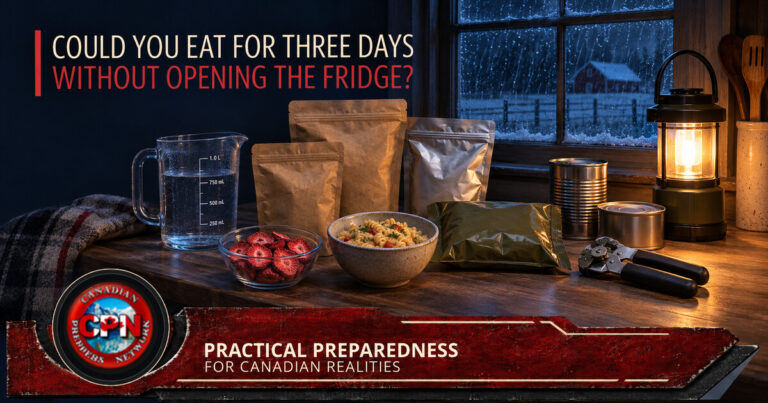
A three-day test for the meals you’ll actually eat when the taps stop.
The power goes out just before supper. You pull out two freeze-dried meals, read the directions and reach for the kettle. Then you remember the well pump is down too. Every litre you pour into supper now comes out of the same supply you’re counting on for drinking, coffee and cleanup. A blackout pantry water budget tells you how far that supply will stretch.
Yesterday’s three-day blackout pantry test asked whether you could put nine meals on the table without opening the fridge. Today, put those nine meals beside your stored water. By the end of the test, you’ll know how much water the menu draws, which meals to swap if the outage runs long, and how many litres to add before the next storm.
Count what leaves the jug
Start with the food you’d actually serve. Set out the packages and work from their directions. If a pouch calls for 500 mL and you need two pouches to feed the household, supper starts at one litre. Add anything else you’ll pour from the jug, including water for powdered milk, coffee, a side dish or a mug of soup.
Count water even if it goes down the drain. A pot of pasta can draw much more from your reserve than the cooked pasta holds. A meal you prepare and eat in its pouch may leave you with only spoons to wash. A tin of stew can go straight into bowls, but someone still has to clean the bowls and the can opener.
If a meal calls for hot water, write that down beside the amount. Two meals can use the same volume and put different demands on your setup. If you can’t heat water safely with the power off, pick a meal you can serve as-is or prepare with cold potable water according to its package directions.
|
Put three days on paper
Give drinking water its own line. In this example, two adults set aside 12 L for drinking over three days, based on a planning allowance of 2 L per adult per day. Health Canada’s emergency guidance also suggests budgeting an additional 2 L per person per day for cooking and cleaning. Use that guidance alongside your own measured needs, and account separately for pets, medical needs and any sanitation demands the kitchen test leaves out.
Here’s a sample blackout pantry water ledger for two adults. The meal and cleanup amounts are illustrative. Use your own labels and measure what you pour.
| Day | What’s on the menu | Drinking | Meal prep and hot drinks | Kitchen cleanup | Total |
|---|---|---|---|---|---|
| 1 | Instant oats, canned salmon and crackers, freeze-dried supper | 4 L | 1.5 L | 1 L | 6.5 L |
| 2 | Granola with powdered milk, chickpea wraps, ready-to-eat stew | 4 L | 0.75 L | 1 L | 5.75 L |
| 3 | Nut butter and crackers, an MRE entrée, freeze-dried supper | 4 L | 1.25 L | 1 L | 6.25 L |
| Three-day total | 12 L | 3.5 L | 3 L | 18.5 L | |
In this blackout pantry water budget, 18.5 L covers only drinking and kitchen use. Allow separately for handwashing, pets, medication or caregiving, other hygiene and a reserve for delays or spills. The sample cleanup figure is something to test in your own kitchen. If you pour more to wash and rinse properly, write down what you used and adjust the reserve.
A household with one 20 L jug would have just 1.5 L left after this menu. That’s the number worth finding now, while the tap still works.
Choose the meal you’d swap first
Set a refill point before the outage. If the jug falls below the amount you’ve set aside for drinking and essential hygiene until your next reliable refill, switch to the lower-water meals. If you have no confirmed refill, recheck your remaining water at the end of each day and move the ready-to-eat options forward.
Mark each supper with the amount of water it needs and whether you have to heat it. Then choose a ready-to-eat replacement that feeds the same number of people.
Say your planned supper takes two freeze-dried pouches at 500 mL each. Swap those for a ready-to-eat entrée that needs no added water and you keep one litre in the jug. The oats that need a splash of water can stay on the menu. The pasta that takes a potful may move further down the list.
Freeze-dried meals still earn their place. They’re convenient, and preparing them in the pouch can keep the dish pile small. Keep a few meals beside them that you can open and eat when water or fuel gets tight. Check what’s inside each MRE before counting it as a water-free meal. The entrée may be ready to eat while the powdered drink still needs water. Use any ration heater according to its directions and budget its water separately.
If you’re under a water advisory, follow the local notice and use water confirmed safe for drinking and food preparation. Cold-soaking a meal leaves the quality of the water unchanged. Kitchen cleanup also has to follow the applicable instructions for dishes and food-contact surfaces.
|

Do one evening with the tap off
Pick a regular evening and make the supper you’d cook on the first night of an outage. Start with a measured jug and keep track through the last dish.
- Measure supper. Pour the amount called for on the labels. Record every extra pour, including drinks and sides.
- Wash up. Measure what it takes to wash and rinse the utensils, dishes and food-contact surfaces you used.
- Check the container. Can someone lift it and pour accurately into a meal pouch? If you spill water every time, try a smaller dispensing jug you can refill from the reserve.
- Update the ledger. Use the measured amounts to update your blackout pantry water budget. Mark the first meal you’ll swap if resupply is delayed.
Then count only the water you could reach and use during an outage. A jug that might freeze in the garage or a well that depends on the grid belongs outside that initial count. CPN’s winter water storage guide covers how to keep a usable reserve within reach. If you’re planning for repeated or prolonged outages, look for A Fully Self-Sustained Water & Sanitation System in the CPN bookshop.
Write the blackout pantry water total on your pantry list beside the nine meals. If you come up short, change the menu, increase the stored supply or do both while you have the choice. Which supper would you swap first if the tap were still dry on day three?