Long-term winter camp setup is not about enduring a miserable night outdoors—it is about creating a system that allows you to live, work, and recover in sustained cold. In Canadian conditions, where snow depth, wind, and prolonged sub-zero temperatures are normal rather than exceptional, this skill determines whether an outdoor situation stabilizes or collapses under fatigue and exposure.
Once you move beyond short-term emergencies, efficiency becomes survival. Every unnecessary step burns calories. Every poorly chosen site compounds workload. A successful winter camp reduces movement, manages moisture, and ensures reliable access to heat, water, and fuel without constant crisis management.
Selecting a viable camp location is the first irreversible decision. Firewood availability should drive site choice more than scenery or convenience. Standing deadwood that can be processed without digging is essential for long-term heating and water production. Natural wind protection from terrain or forest density reduces heat loss and fuel consumption. Avoid low-lying areas that trap cold air, frozen waterways that introduce ice hazards, and overhead deadfall zones where snow-loaded branches can fail without warning.

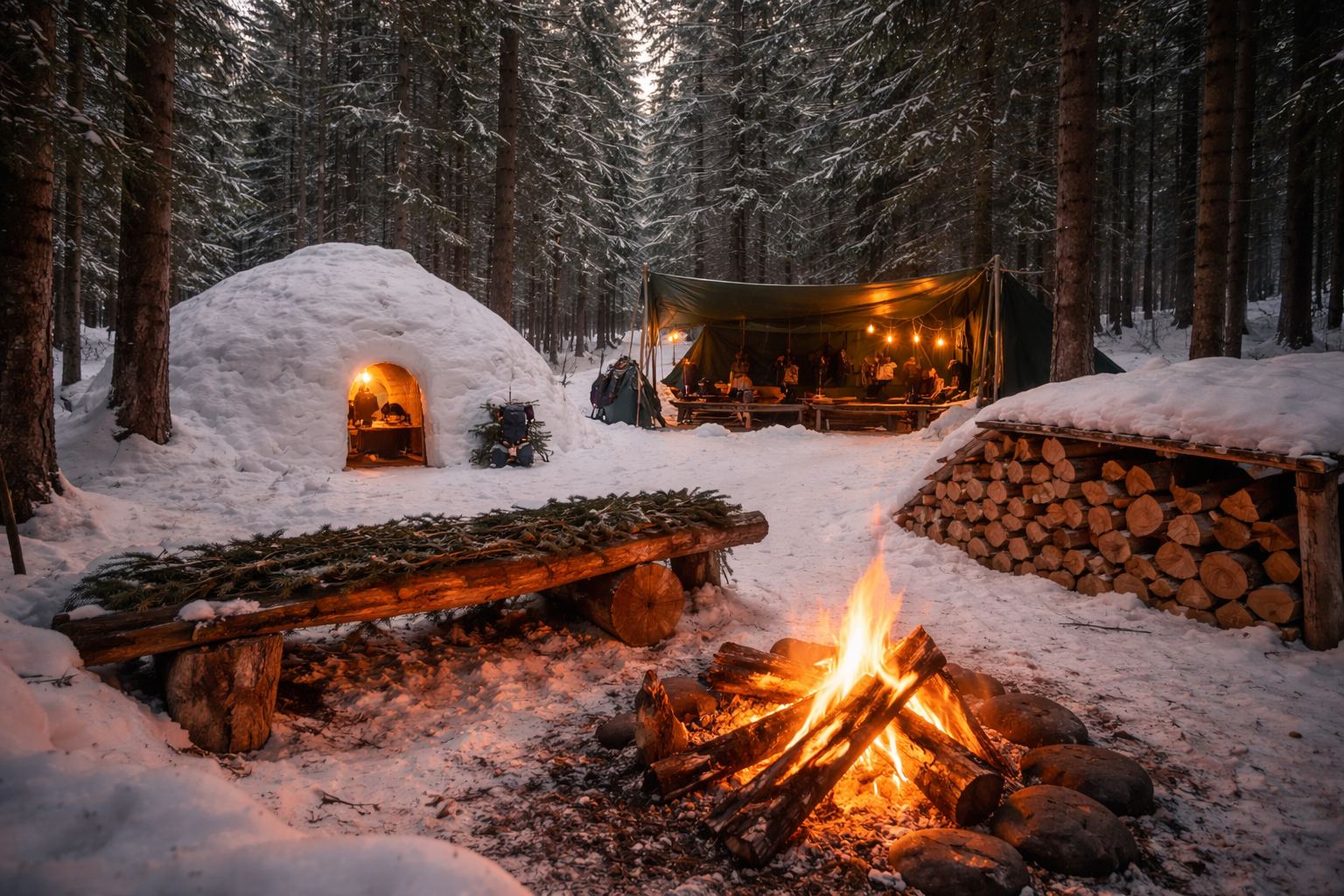
Once established, camp layout becomes a daily force multiplier. Shelter, fire area, and wood-processing space should be positioned close together and connected by packed snow paths that are stamped early and allowed to freeze hard. In winter, even a few extra steps taken dozens of times per day add up to exhaustion. Fire placement should respect prevailing wind direction, keeping smoke out of the shelter while allowing reflected heat to be used efficiently.
Shelter choice for long-term winter use must prioritize durability and moisture control over speed of construction. Snow shelters such as quinzhees perform exceptionally well when temperatures remain consistently below freezing, offering insulation and wind resistance unmatched by most improvised structures. Tarp-and-snow-wall hybrids also work well in forested environments with abundant fuel. Regardless of shelter type, raised sleeping platforms, thick ground insulation, and deliberate ventilation are non-negotiable. Moisture accumulation inside a shelter will destroy insulation performance faster than cold alone.
A compact aluminum snow shovel quickly proves itself as one of the most valuable winter tools in a sustained camp. It is used for shelter construction, fire pits, wind walls, snow management, and maintaining travel paths. A durable option such as the Suncast Aluminum Snow Shovel with Steel Edge
https://www.amazon.ca/dp/B00002N5E2?tag=canadpreppn01a-20
handles heavy, compacted snow far better than lightweight plastic models and reduces fatigue during repeated use.
Firewood processing becomes the dominant daily task in any long-term winter camp. Fuel must be cut, split, staged, and protected from snow before it is needed. Quiet, efficient processing conserves energy and avoids unnecessary exposure. A folding saw like the Silky Bigboy 2000 Folding Saw
https://www.amazon.ca/dp/B001T9D2BE?tag=canadpreppn01a-20
allows rapid processing of standing deadwood without relying entirely on heavier tools. When paired with disciplined fuel staging, this approach prevents reactive wood gathering in dangerous conditions.
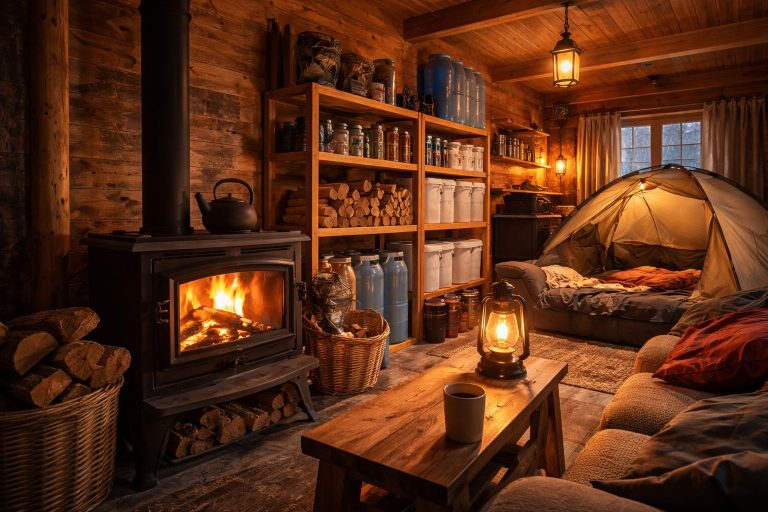
Water procurement must also be treated as a system. Melting snow consumes significant fuel, making flowing water the preferred source whenever it can be accessed safely. Containers should be insulated to prevent freeze-up, and hydration should be intentional rather than reactive. Inside the shelter, condensation management is critical. Ventilation openings must be checked daily, especially after snowfall, to prevent moisture buildup that can soak insulation and clothing unnoticed.
Clothing and sleep systems are active tools in winter, not static equipment. Layers must be adjusted constantly to prevent sweating during work and freezing during rest. Ground insulation is particularly critical, as conductive heat loss into snow will defeat even high-quality sleeping bags. Closed-cell foam pads remain reliable in extended cold because they do not compress or fail. A proven option such as the Therm-a-Rest Z Lite Sol Insulated Sleeping Pad
https://www.amazon.ca/dp/B000ARJU9U?tag=canadpreppn01a-20
provides consistent insulation night after night in winter conditions.
Long-term winter camps are appropriate when movement is unsafe, resources are nearby, and weather patterns are stable. They are not appropriate during freeze-thaw cycles, extreme wind events, or when injury limits workload capacity. Knowing when to commit to a camp—and when to abandon it early—is part of the skill itself.
For related cold-weather preparedness topics, see:
- https://canadianpreppersnetwork.com/winter-shelter-and-heat-preppers
- https://canadianpreppersnetwork.com/cold-weather-fire-starting
- https://canadianpreppersnetwork.com/winter-water-collection-and-snow-melting
Long-term winter camp setup is not bushcraft theatre. It is a practical, repeatable skill that underpins evacuation failures, remote property access issues, extended outages, and deliberate off-grid living in Canada. Master it once, and every other winter decision becomes easier.