January is when food preparedness stops being abstract. Across Canada, winter storms, transport disruptions, and post-holiday price pressure quietly stress the food system. Grocery stores remain open, but selection narrows, restocking slows, and prices creep upward. This is exactly the environment where a solid food plan proves its value.
For preppers, winter is not about reacting — it is about confirming that stored food, cooking systems, and rotation habits actually work under cold-weather conditions.
Cold Weather Changes Your Calorie Math
Cold environments increase caloric demand. Even indoors, the body burns more energy maintaining temperature, and routine winter tasks like snow clearing or hauling firewood raise daily requirements further.
This makes calorie-dense staples essential:
- Rice, pasta, oats, and flour
- Dry beans and lentils
- Cooking fats such as oil, ghee, and lard
Stored in food-grade buckets with oxygen absorbers, these staples remain stable for years in typical Canadian basements and cold rooms.
If you want to validate your pantry honestly, cook exclusively from stored food for a week. Gaps usually appear quickly — especially fats, spices, and foods that make repetitive meals tolerable.
For background context on why these stresses keep reappearing, this earlier CPN article remains relevant:
Protein Without Betting Everything on the Freezer
Freezers are useful, but in winter they become a single point of failure unless backup power is extremely reliable. Ice storms and wind events have a habit of outlasting expectations.
Shelf-stable protein reduces that risk:
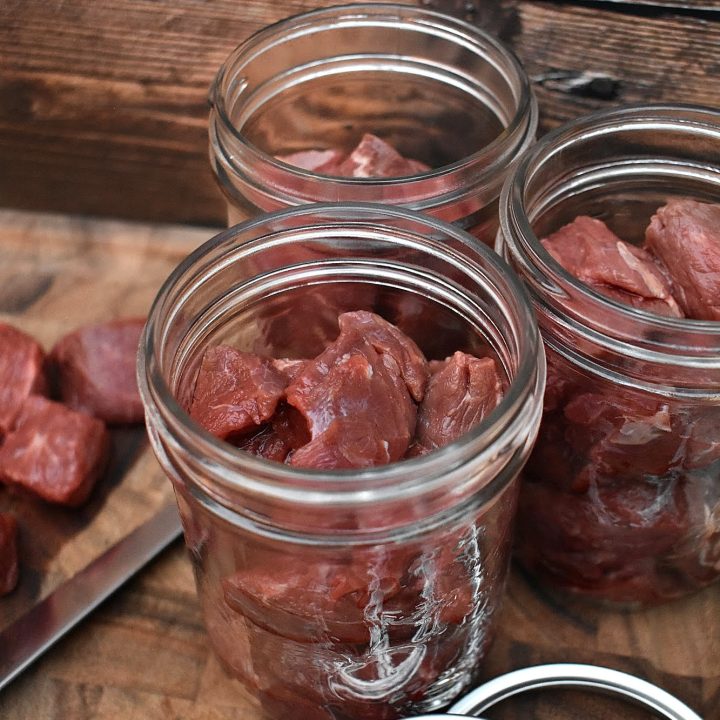
- Pressure-canned meats and stews
- Commercial canned fish and poultry
- Dry legumes paired with grains
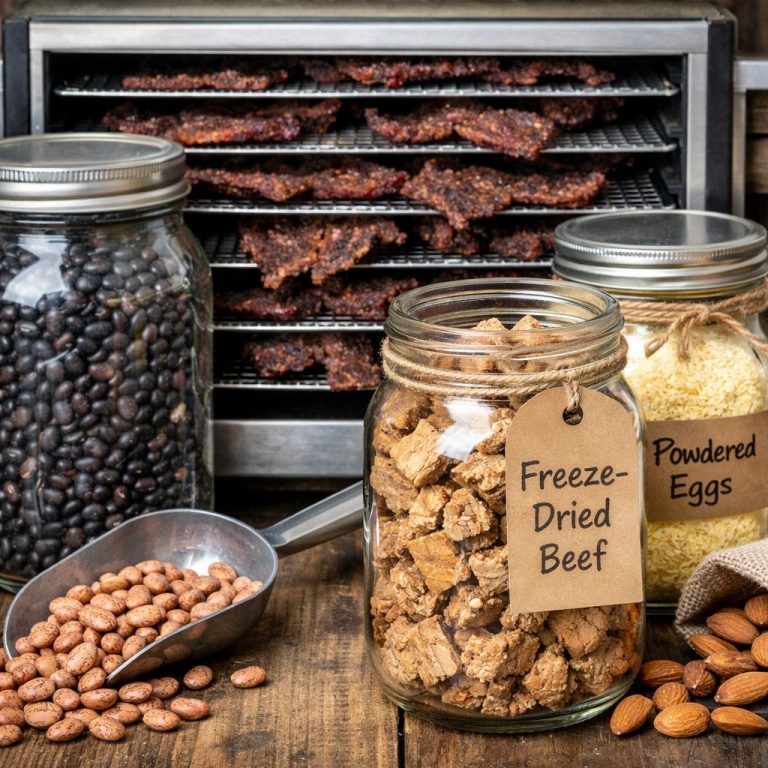
- Freeze-dried meat for longer storage horizons
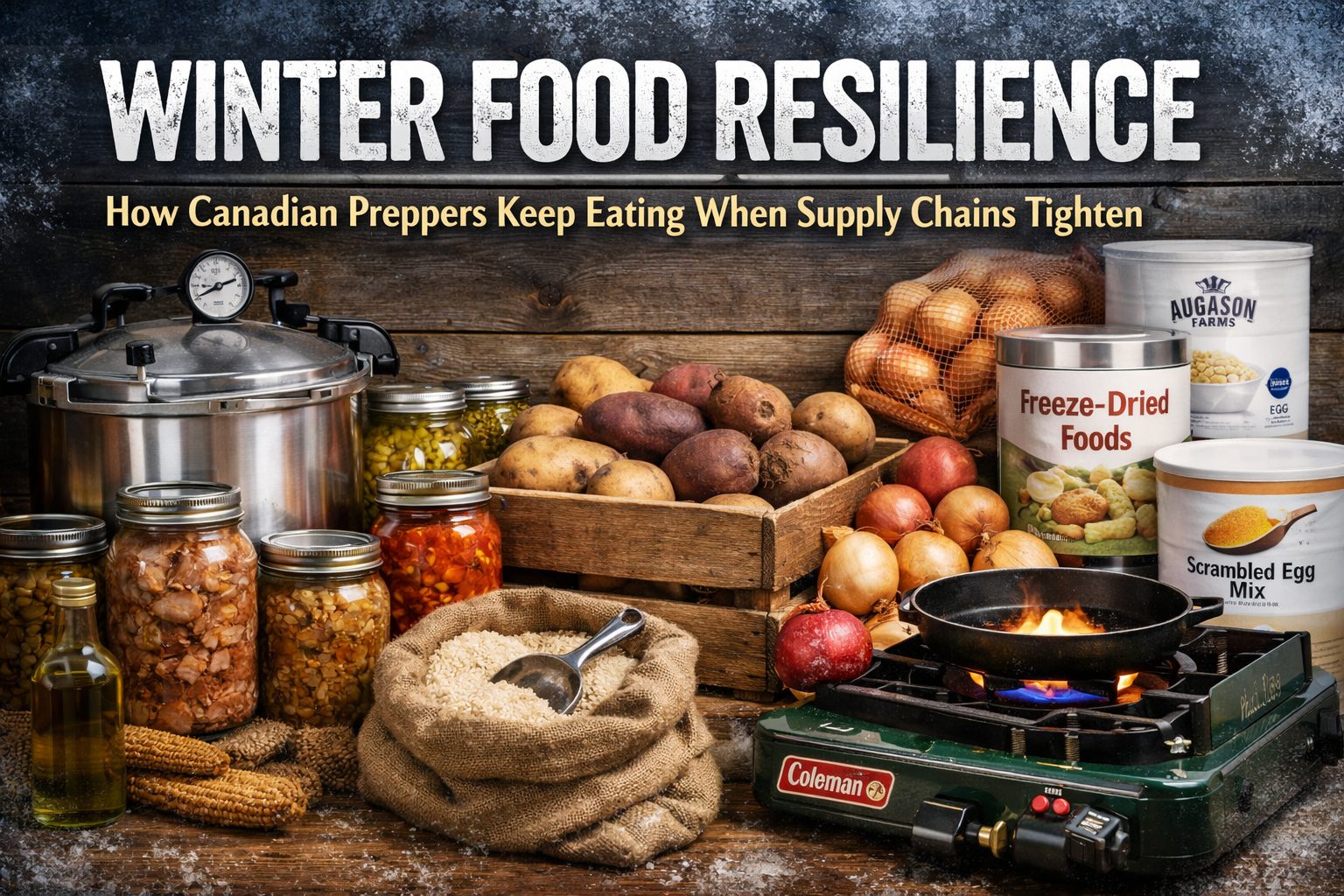
A pressure canner remains one of the most powerful tools for household food security. The All American 921 Pressure Canner allows bulk meat purchases to be converted into multi-year, shelf-stable meals without relying on electricity.
👉 Amazon.ca: https://amzn.to/3AllAmerCan
This approach hardens your food system and reduces dependence on continuous power during winter outages.
Root Cellars: Low-Tech Food Security That Still Works
Root cellars are often dismissed as outdated, yet they remain one of the most reliable winter food systems available.
Even a simple basement setup can function effectively if temperature and humidity are managed. Properly cured and stored, the following crops routinely last deep into winter:
- Potatoes
- Carrots and beets
- Onions and squash
- Apples
Root cellaring provides fresh calories and micronutrients when fresh produce is expensive or limited. Most importantly, it requires no fuel, no power, and no maintenance beyond basic monitoring.
This low-tech resilience pairs well with broader winter preparedness planning discussed in:
Freeze-Dried Food as a Strategic Layer
Freeze-dried food works best as a support layer, not a replacement for staples. It shines during illness, injury, or periods when cooking time and fuel are limited.
Ingredient-based options provide far more flexibility than pre-packaged meals. Products from Augason Farms can be incorporated into everyday recipes rather than stored indefinitely for emergencies only.
👉 Amazon.ca: https://amzn.to/3AugFarmCan
This keeps rotation simple and prevents the common mistake of storing food no one actually eats.
Rotation Is the Real Preparedness Skill
Food shortages are rarely the cause of food failure. Poor rotation is.
Winter is the ideal season to:
- Pull older items forward
- Cook deliberately from storage
- Replace steadily instead of panic buying
If your household cannot maintain normal meals from stored food for two weeks without stress, the system needs refinement. Winter reveals weaknesses gradually — before consequences become serious.
Food and Cooking Fuel Must Be Planned Together
Food storage without cooking fuel is incomplete. Electric ranges are often the first casualty in outages, and propane performance drops sharply in extreme cold if tanks are poorly managed.
At least two cooking methods should be available. A proven option such as the Coleman Dual Fuel Stove provides flexibility when the grid is unreliable.
👉 Amazon.ca: https://amzn.to/3ColeDualFuel
Plan ventilation and indoor safety in advance — winter is not the time to improvise.
Final Thought: Winter Is an Honest Test
Winter does not usually cause dramatic food failures. Instead, it applies steady pressure through storms, road closures, higher prices, and limited selection.
If your household can cook normally through January and February without stress, your food plan is functioning well. If not, winter is showing you exactly what needs improvement — while correction is still possible.
📘 Recommended Reading
For those building long-term, scalable food systems rather than short-term pantries, Acres of Preparedness provides practical guidance on land use, food production, and preservation.
👉 Amazon.ca: https://amzn.to/4iLrm9Y