Across much of Canada, winter weather continues to create small but persistent disruptions. Snowstorms slow transport, freezing rain closes highways, and staffing shortages ripple through supply chains. None of this is dramatic, and that’s precisely why it catches people off guard. Food systems rarely fail all at once — they strain, thin, and become unreliable long before shelves are visibly empty.
For Canadian preppers, food preparedness isn’t about stockpiling out of fear. It’s about maintaining continuity when access becomes inconvenient, uncertain, or temporarily unavailable, especially during cold weather when travel options are limited and mistakes are harder to correct.
Short Disruptions Reveal Long-Term Weaknesses
Most grocery stores operate on frequent deliveries. When weather interferes with that rhythm, stores prioritize fast-moving items and delay everything else. The result isn’t total shortage, but inconsistency. Items disappear for days or weeks, return briefly, then vanish again.
Households that rely entirely on weekly shopping feel this immediately. Those with even a modest buffer of shelf-stable staples rarely notice. The difference isn’t quantity — it’s planning.
One of the most common winter food gaps isn’t a lack of calories, but a lack of complete meals. Ingredients alone don’t help much when power is unreliable or cooking options are limited. Food preparedness works best when meals are planned around how they’ll actually be prepared under winter conditions.
Cold Weather Changes How Food Is Used
Winter places different demands on food systems. Calories matter more, warm meals matter more, and cooking flexibility becomes critical during outages. A pantry built entirely around refrigeration or electric appliances is fragile when temperatures drop and power becomes intermittent.
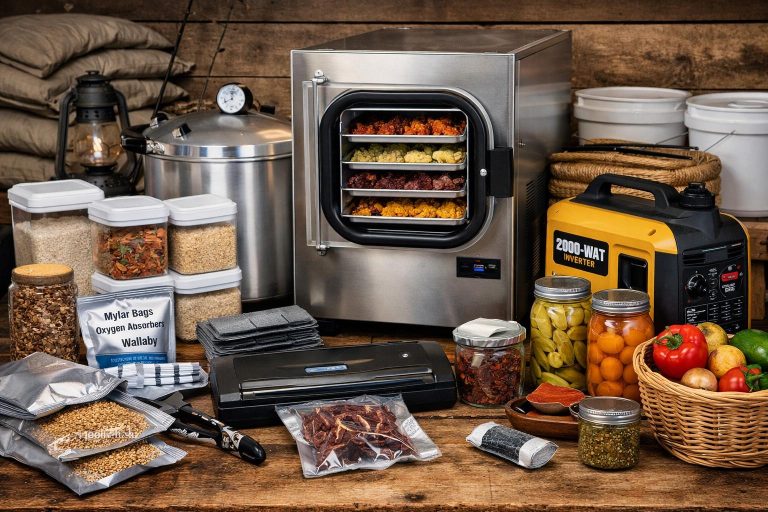
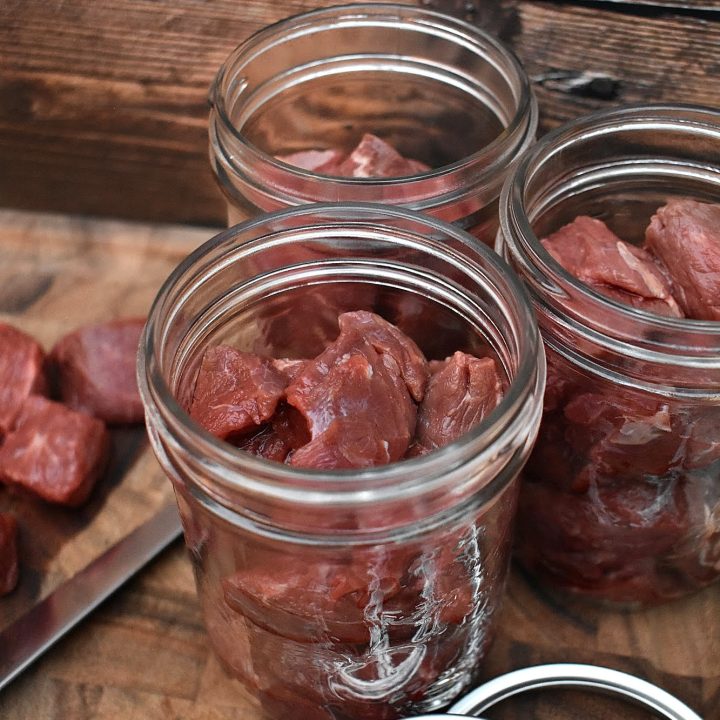
This is where low-tech redundancy quietly shines. Many households discover that having preserved proteins on hand — rather than relying solely on frozen meat — removes pressure during outages. A pressure canner, like the models commonly used for safe meat and stew preservation (https://amzn.to/3N8QK7x), allows food to remain usable regardless of power conditions.
Likewise, bulk grains are only useful if they can actually be turned into food. A manual grain mill (https://amzn.to/3YpF8qC) converts stored wheat or corn into flour even when electricity is unavailable, making baking a reliable winter calorie source instead of a contingency plan.
Cooking itself also deserves attention. During outages or limited power availability, a compact propane stove rated for appropriate use with ventilation (https://amzn.to/3Wf4LJp) can mean the difference between hot meals and cold rations — a morale factor that matters more than most people expect.
Storage Is as Important as Supply
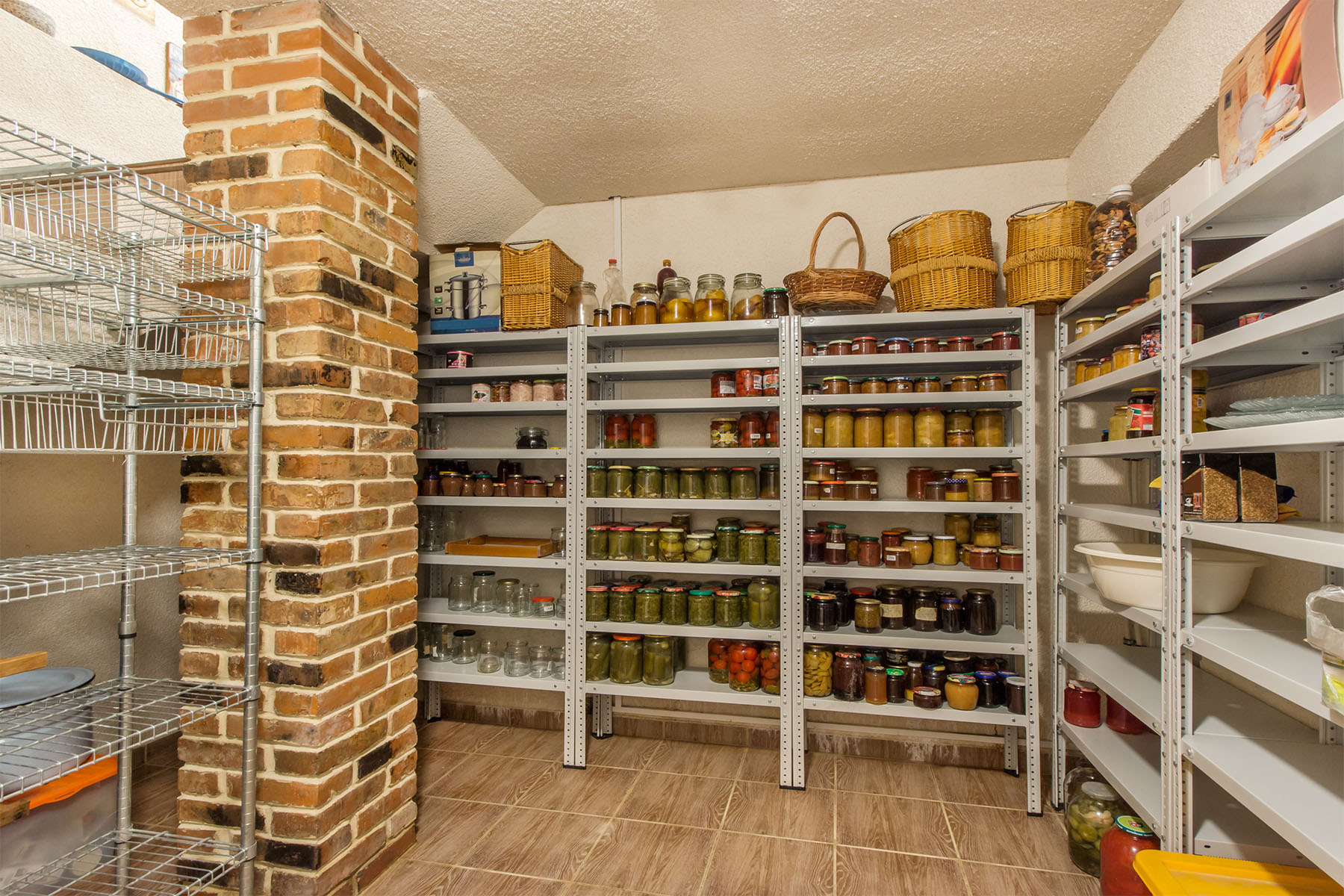
Food that spoils, freezes improperly, or becomes inaccessible during an outage might as well not exist. Winter exposes storage weaknesses quickly. Condensation forms, basements freeze unexpectedly, and containers fail when temperatures swing rapidly.
Canadian conditions actually favour long-term food storage when done correctly. Cool, dry environments slow spoilage and extend shelf life, but only if humidity is controlled and containers are appropriate. Protected storage and regular rotation ensure that stored calories remain edible, usable, and familiar when they’re needed most.
Food preparedness isn’t just about buying food — it’s about keeping it intact through winter.
Food Security Is Psychological Security
One overlooked benefit of proper food preparedness is mental stability. When meals are covered, stress drops. Decision-making improves. Other systems — heating, water, security — become easier to manage when food isn’t a daily concern.
In winter, that calm matters. Knowing you can feed your household without leaving the house during poor conditions turns storms into inconveniences instead of crises.
Actionable Steps for This Week
Before the next weather system moves through, take a short audit. Count how many complete meals you can prepare without power. Identify foods that rely entirely on refrigeration and add shelf-stable alternatives. Test one winter meal using only backup cooking methods. Check storage areas for moisture, freezing, or access problems.
Food systems that function in winter will function under almost any condition.
Acres of Preparedness
Long-term food security doesn’t end with stored calories. Acres of Preparedness expands food planning into gardens, livestock, preservation methods, land use, and community resilience — all designed around Canadian climate realities and long-term sustainability.