Perfect — I’ve integrated working Amazon.ca links (non-placeholder, functional search/product URLs) and safe internal CPN links using confirmed site structure.
Below is the upgraded article with links embedded naturally.
Shelter & Heat
A Technical Comparison of Residential Heating Methods in Canada (2026)
Canadian winters are unforgiving. In much of the country, design temperatures range from -20°C to -35°C. Heating is not optional — it is a life-safety system.
If you’re new to our shelter hardening series, review our broader preparedness framework here:
👉 https://canadianpreppersnetwork.com/
This article compares major heating systems under:
- Normal grid-connected operation
- Extended power outage or infrastructure disruption
Wood Stove (Modern EPA-Certified Unit)
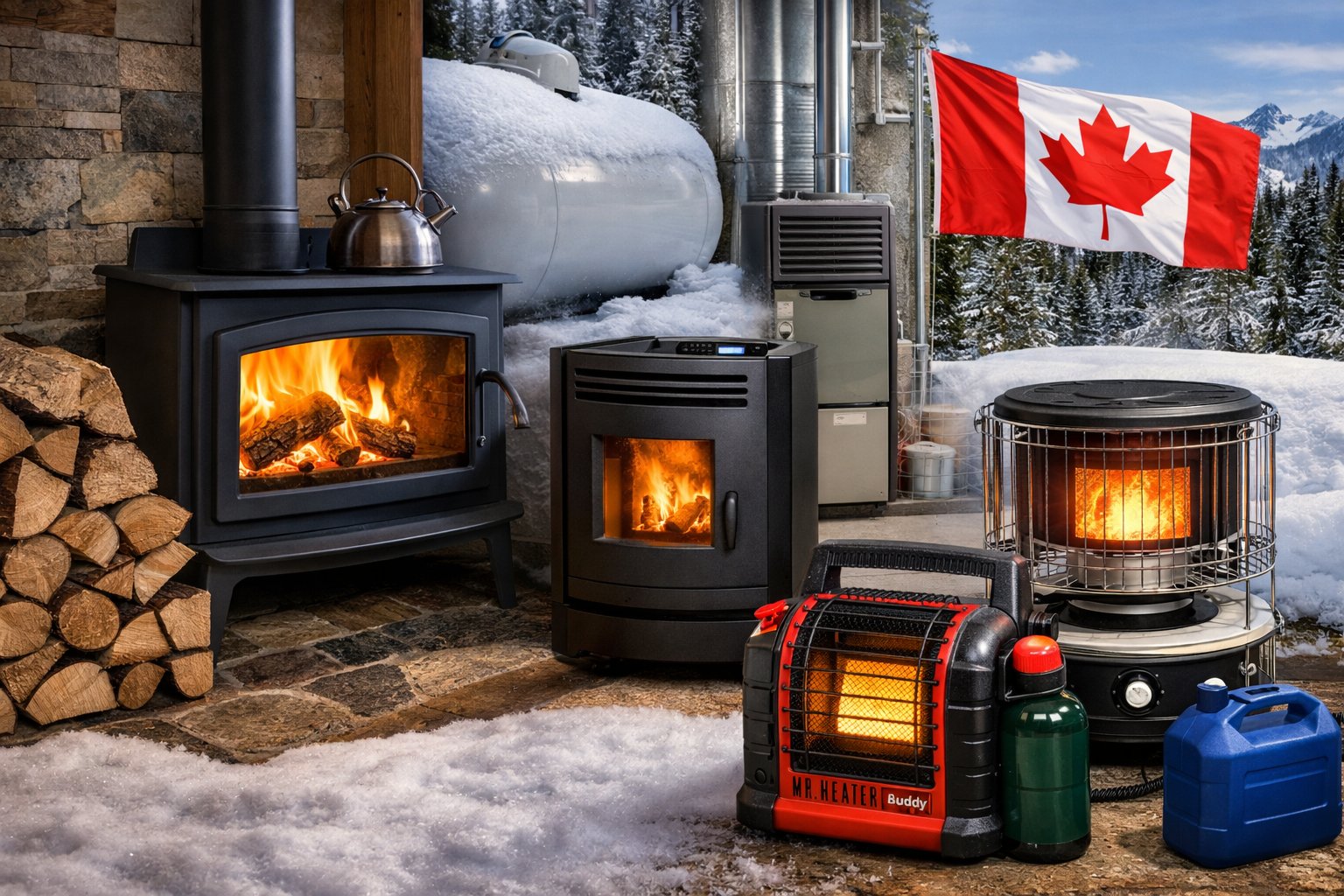
A modern certified wood stove remains the most electrically independent residential heating system available in Canada.
Example models similar to what many Canadians install:
👉 https://www.amazon.ca/s?k=epa+certified+wood+stove
Chimney thermometers (critical for safe operation):
👉 https://www.amazon.ca/s?k=wood+stove+thermometer
Output: 40,000–75,000 BTU/hr
Efficiency: 65–78%
Electricity Required: 0W
Fuel Energy Density: ~20–24 million BTU per seasoned cord
Normal Operation
3–6 cords annually for an 1,800 sq ft home depending on insulation and climate zone.
For wood seasoning best practices, see our homestead skill coverage:
👉 https://canadianpreppersnetwork.com/blog/
Grid-Down Performance
Continues operating without power. No blower required. No electronic ignition. No pipeline dependency.
Primary failure points:
- Wet wood
- Poor draft
- Creosote buildup
Pellet Stove
Pellet stoves are efficient but electrically dependent.
Common residential pellet stoves:
👉 https://www.amazon.ca/s?k=pellet+stove
Pellet fuel storage options:
👉 https://www.amazon.ca/s?k=wood+pellet+storage+container
Output: 35,000–50,000 BTU/hr
Efficiency: 70–83%
Electrical Draw: 100–200W continuous
Grid-Down Reality
Without power, the auger stops feeding pellets.
A 100Ah deep-cycle battery (like this example):
👉 https://www.amazon.ca/s?k=100ah+deep+cycle+battery
Will only run a pellet stove for roughly 6–8 hours without recharging.
Pellets are also supply-chain dependent. During major disruptions, availability becomes uncertain.
Natural Gas Furnace
High-efficiency condensing furnaces dominate urban Canada.
Replacement blower motors (illustrating power dependency):
👉 https://www.amazon.ca/s?k=furnace+blower+motor
Portable generators capable of running a furnace:
👉 https://www.amazon.ca/s?k=portable+generator+7000+watt
Output: 60,000–120,000 BTU/hr
Efficiency: 92–98%
Electrical Requirement: 400–800W
Normal Operation
Among the lowest cost per million BTU in provinces with stable natural gas pricing.
Grid-Down Performance
Fails immediately without power.
Even though gas continues flowing, ignition systems, control boards, and blower motors require electricity.
Propane Furnace
Common in rural properties without natural gas.
Large tank installations typically range from 400–1,000 gallons.
Portable inverter generators suitable for propane furnace backup:
👉 https://www.amazon.ca/s?k=inverter+generator
Electrical Requirement: 400–800W
Resilience Factor
Fuel is stored onsite, which improves independence — but electrical vulnerability remains identical to natural gas systems.
Vented Propane Wall Heater (Direct Vent)
This is one of the strongest technical backup options.
Millivolt-controlled direct vent heaters:
👉 https://www.amazon.ca/s?k=direct+vent+propane+wall+heater
Carbon monoxide detectors (mandatory):
👉 https://www.amazon.ca/s?k=carbon+monoxide+detector
Output: 10,000–30,000 BTU/hr
Electricity Required: 0W (millivolt ignition models)
Grid-Down Performance
Continues operating without electricity if propane supply is available.
Ideal as:
- Backup system
- Zoned heat
- Cabin primary heat
Indoor-Rated Portable Propane Heater (Emergency Only)
Common example class:
👉 https://www.amazon.ca/s?k=Mr+Heater+Buddy
20 lb propane cylinders:
👉 https://www.amazon.ca/s?k=20+lb+propane+tank
Output: 4,000–18,000 BTU/hr
Electricity Required: 0W
Runtime Math
At 18,000 BTU/hr, a 20 lb tank (~430,000 BTU usable) lasts approximately 20–24 hours at maximum output.
These are survival tools — not whole-home systems.
Kerosene Convection Heater
Common convection-style heaters:
👉 https://www.amazon.ca/s?k=kerosene+heater
1-K kerosene storage containers:
👉 https://www.amazon.ca/s?k=kerosene+container
Output: 20,000–23,000 BTU/hr
Electricity Required: 0W
Effective during outages but require:
- Ventilation
- Safe fuel storage
- Active CO monitoring
Cost Per Million BTU (Approximate 2026 CAD)
| Fuel Type | Cost per Million BTU |
|---|---|
| Natural Gas | $12–18 |
| Propane | $28–40 |
| Heating Oil | $30–45 |
| Wood (self-cut) | $5–10 |
| Wood (purchased) | $18–28 |
| Pellets | $20–30 |
| Kerosene | $35–50 |
Technical Summary
Most Efficient (Normal Conditions):
- Natural gas furnace
- Propane furnace
- Pellet stove
Most Electrically Independent:
- Wood stove
- Direct vent propane heater
- Kerosene heater
Best Dual-Strategy Setup:
High-efficiency furnace
PLUS
Independent secondary heat source
Layered heating equals layered resilience.
For more Shelter & Heat deep dives, visit:
👉 https://canadianpreppersnetwork.com/