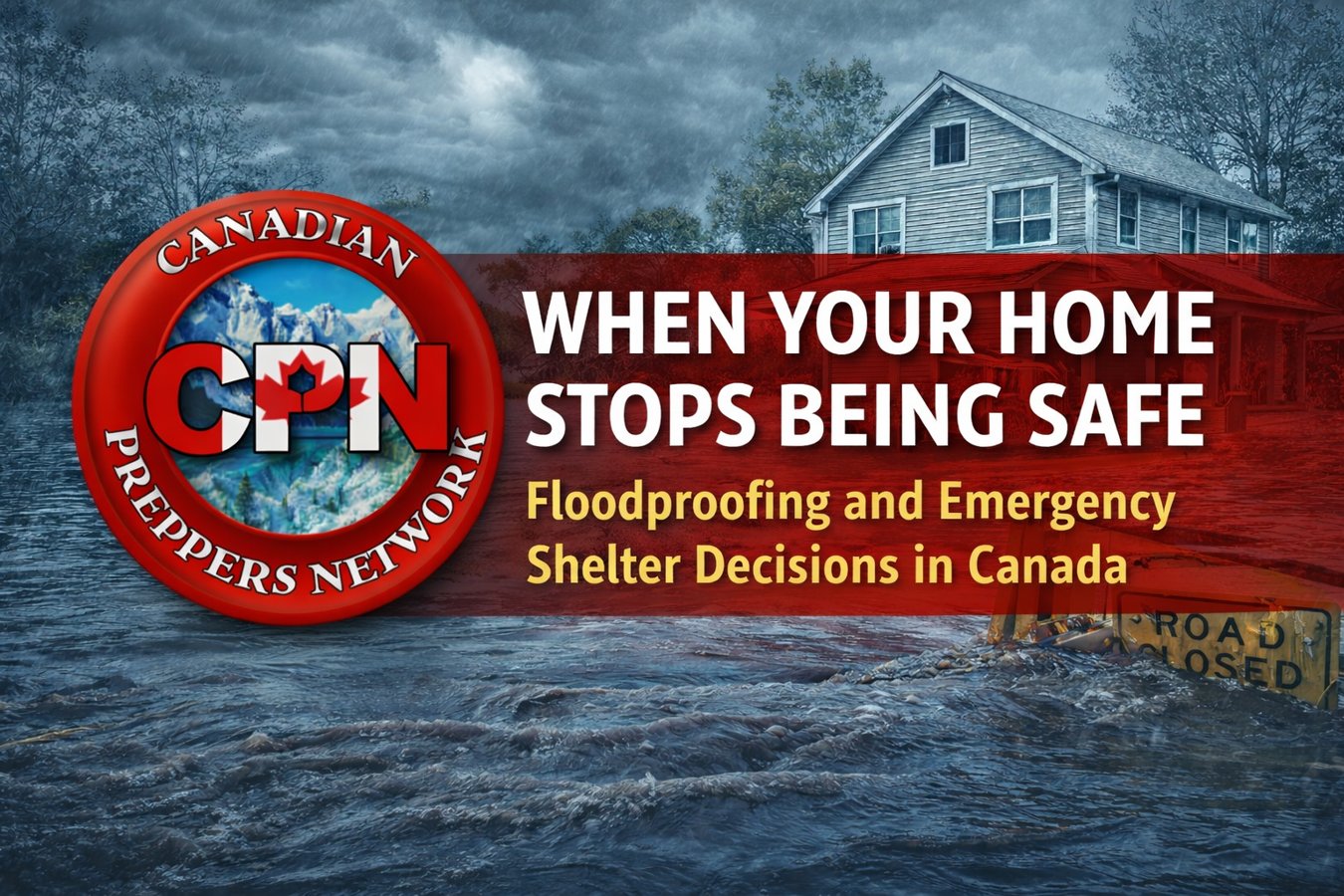
Spring flooding in Canada doesn’t creep in politely—it overwhelms. Entire neighborhoods go from dry to unlivable in hours, not days. Roads disappear. Basements fill. Septic systems backflow. Power cuts out. And the most dangerous mistake people make in that moment is hesitation.
Preparedness isn’t just about protecting your home. It’s about recognizing when your home is no longer worth protecting—and having a plan to move before conditions trap you.
This is where most preppers get it wrong.
The Reality: Your Home Has a Failure Point
There is a point—often reached faster than expected—where your house stops being an asset and becomes a liability.
Floodwater doesn’t just damage structures. It contaminates everything it touches. Once water breaches your foundation, you’re no longer dealing with inconvenience—you’re dealing with:
- Sewage infiltration
- Chemical runoff
- Structural weakening
- Electrical hazards
- Mold growth within 24–48 hours
At that stage, staying put is no longer “toughing it out.” It’s a risk decision.
Floodproofing That Actually Matters
Forget the usual advice about extending downspouts. That’s irrelevant when the street is under water.
What matters is slowing water long enough to buy time—and protecting critical systems.
1. Perimeter Defense (Temporary, Not Permanent)
Stackable flood barriers outperform sandbags in speed and efficiency.
A product like this is far more practical than traditional sandbagging:
https://www.amazon.ca/s?k=flood+barrier+water+dam
They deploy faster, seal better, and can be reused.
2. Sump Pump Capacity — Your First Line of Survival
Most homes fail here.
A standard sump pump cannot keep up with rapid groundwater rise. You need high-volume capability AND redundancy.
Primary pump:
https://www.amazon.ca/s?k=submersible+sump+pump+1%2F2+hp
Backup battery-powered pump:
https://www.amazon.ca/s?k=battery+backup+sump+pump+system
If the power goes out—and it will—the backup is what buys you time.
3. Water Removal: When You’re Already Losing
Once water is inside, you’re not preventing—you’re managing damage.
This is where most people rely on undersized electric pumps that fail under load.
A gas-powered transfer pump is the correct tool:
https://www.amazon.ca/s?k=gas+powered+water+transfer+pump
It runs independently of the grid and can move serious volume fast.
4. Critical Systems Elevation
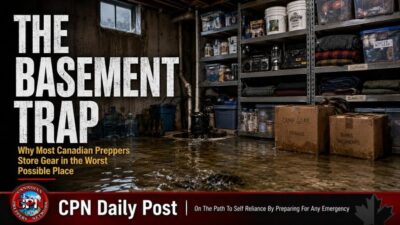
If your furnace, breaker panel, or water heater is basement-mounted, you’re already behind.
Short-term mitigation:
- Elevate electronics onto shelving
- Install quick-disconnects where possible
- Pre-stage tarps and plastic barriers
Heavy-duty waterproof tarps:
https://www.amazon.ca/s?k=heavy+duty+waterproof+tarp
This doesn’t save your basement. It protects what matters inside it.
The Decision Point: Stay or Leave
This is where most people freeze.
You need a clear threshold before the event—not during it.
Leave immediately if:
- Water is rising faster than your pump can handle
- Roads are still open but forecast to close
- Sewage smell or backflow is present
- Structural cracks or shifting appear
- You lose power AND backup capability
Staying too long is how people get trapped.
Bug-Out Reality: Shelter Isn’t Optional
Leaving your home without a shelter plan is just trading one problem for another.
Hotels fill instantly. Emergency shelters are unpredictable. You need your own system.
1. Vehicle-Based Shelter (Phase One)
Your vehicle is your first shelter.
- Keep fuel above half at all times during flood season
- Store blankets, food, and lighting inside
- Maintain a 72-hour sustainment capability
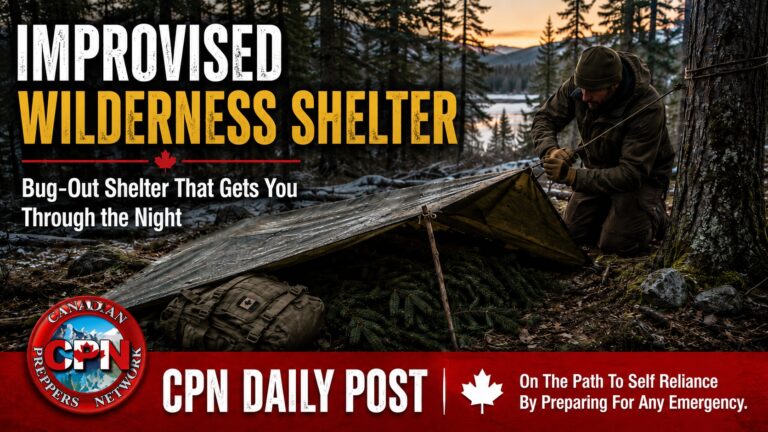
2. Rapid Deployment Shelter (Phase Two)
You need something that goes up fast, in bad conditions, on poor ground.
A reliable 4-season tent is not optional:
https://www.amazon.ca/s?k=4+season+tent+waterproof
Pair it with a proper ground barrier:
https://www.amazon.ca/s?k=tent+footprint+ground+tarp
Most failures happen from ground moisture, not rain.
3. Heat in Wet Conditions
Cold kills faster than hunger.
Wet + wind in Canadian spring conditions will break you within hours.
A portable propane heater like this:
https://www.amazon.ca/s?k=mr+buddy+heater
Combined with:
https://www.amazon.ca/s?k=propane+1lb+cylinder
Gives you survivable conditions when everything else is compromised.
Where Most People Fail
They wait too long.
They assume:
- “It won’t get that bad”
- “We’ll manage one more night”
- “The water will recede”
By the time reality sets in, they’ve lost mobility—and options.
Preparedness isn’t about endurance. It’s about timing.
The Real Strategy
Flood preparedness in Canada is not about saving your house at all costs.
It’s about:
- Slowing damage where possible
- Protecting critical systems
- Recognizing failure early
- Leaving while you still can
Your home is replaceable.
Your ability to move, adapt, and stay ahead of the situation—that’s what keeps you alive.
Final Thought
The moment your home stops being safe is not obvious unless you’ve already decided what that moment looks like.
Make that decision now.
Because when the water starts rising, you won’t have time to think it through.