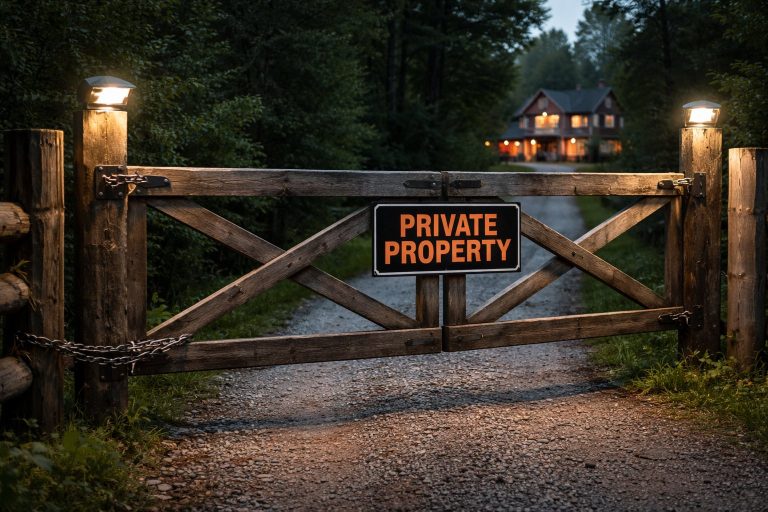
There’s a quiet assumption most Canadians carry about home security—that if someone tries to get in, they’ll go for the door.
That’s not how it plays out anymore.
Across the country, forced entry is getting faster, louder, and more aggressive. Windows are no longer a secondary vulnerability—they’re often the primary point of entry, because they fail quickly, quietly (at first), and predictably.

If you’re thinking in terms of locks and alarms but haven’t addressed your glass, you’re leaving a critical gap.
This isn’t about aesthetics. It’s about physics.
Glass Fails Fast—Faster Than Most People Expect
Standard residential windows—whether double-pane or even tempered—are not designed to resist force. They’re designed for insulation and safety in everyday accidents, not deliberate attack.
A single strike with a blunt object will usually:
- Spiderweb the pane instantly
- Collapse the structure within seconds
- Create a usable entry point in under 10–15 seconds
Tempered glass doesn’t solve this. It shatters differently, but it still fails quickly.
The result is simple: anyone committed to getting in will be through your window long before most homeowners can react.
Security Film: What It Does—and What It Doesn’t
Window security film is often misunderstood. It’s not bulletproof, and it won’t make your glass “unbreakable.”
What it does do is hold the glass together after impact.
Instead of collapsing inward, the window becomes:
- A flexible, resistant barrier
- A noisy, time-consuming obstacle
- A psychological deterrent when entry doesn’t happen instantly
That delay matters. Most intrusions rely on speed and surprise. If the first strike doesn’t create access, the situation changes immediately.
A properly installed 8–12 mil film can withstand repeated blows before giving way—turning a 10-second breach into something much longer and far more visible.
A solid, consistently available option on Amazon.ca is the
BDF S8MC Window Film Security and Safety Clear 8 Mil
https://www.amazon.ca/dp/B00FRLJTZO?tag=canadianprep-20
For proper installation, a simple kit like the
Gila Complete Window Film Application Kit
https://www.amazon.ca/dp/B000KKM8EG?tag=canadianprep-20
helps avoid bubbles, edge lift, and weak adhesion—common failure points.
Physical Barriers: The Old Methods Still Work
Film slows them down. Barriers stop them.
There’s a reason older homes—and rural properties—still rely on physical reinforcement. It’s not subtle, but it’s effective.
Options include:
- Interior window bars (removable or hinged for fire safety)
- Exterior security screens
- Reinforced shutters
For a clean, interior-mounted solution that actually holds up in Canadian listings, the
Ideal Security Window Security Bar (Adjustable, White)
https://www.amazon.ca/dp/B0002YUX8I?tag=canadianprep-20
fits most standard windows and installs without major modification.
If your property is isolated, or response times are long, physical barriers aren’t overkill—they’re appropriate.
Ballistic Reality: What Actually Stops a Round
This is where the conversation needs to stay grounded.
Standard residential windows—film or not—do not stop bullets.
Security film may prevent immediate shattering and reduce fragmentation, but it does not provide meaningful ballistic protection.
If you’re concerned about rounds entering the home, you’re looking at a completely different category of protection:
- Laminated ballistic glass
- Polycarbonate layers
- Multi-layer composite panels
These systems are rated (UL levels) based on what they can stop—handgun rounds, rifle rounds, etc. They are expensive, heavy, and usually reserved for specific applications like safe rooms or high-risk properties.
For most Canadian homeowners, the realistic goal is to:
- Prevent easy entry
- Reduce vulnerability
- Create time and distance
Trying to bridge that gap with consumer-grade film is a misunderstanding that needs correcting.
Layering Matters More Than Any Single Upgrade
A reinforced window on its own is useful. A reinforced window as part of a system is far more effective.
Think in layers:
- Visibility – motion-activated lighting changes behaviour before contact
- Detection – cameras and alerts tell you something is happening now
- Delay – film and barriers slow entry
- Response – a plan for where you go and what you do next
For lighting, a dependable and stable listing is the
LEPOWER 1600LM Solar Security Lights Motion Sensor Outdoor
https://www.amazon.ca/dp/B07Q1G3C5L?tag=canadianprep-20
For simple, wire-free monitoring that doesn’t rely on a complex install, the
Blink Outdoor 4 Wire-Free Smart Security Camera
https://www.amazon.ca/dp/B0B1N5HW22?tag=canadianprep-20
gives you mobile alerts and fast deployment.
The goal isn’t to make your home impenetrable. It’s to make it unpredictable, time-consuming, and high-risk for anyone attempting entry.
Most will move on.
The Takeaway Most People Miss
People spend thousands on alarms, cameras, and monitoring—and leave their windows unchanged.
That’s backwards.
If entry takes seconds, everything else is reacting too late.
If entry takes time, makes noise, and creates uncertainty, you’ve already shifted the outcome.
Windows aren’t just glass. They’re a decision point—yours or theirs.
Right now, in most homes, that decision is being made for you.