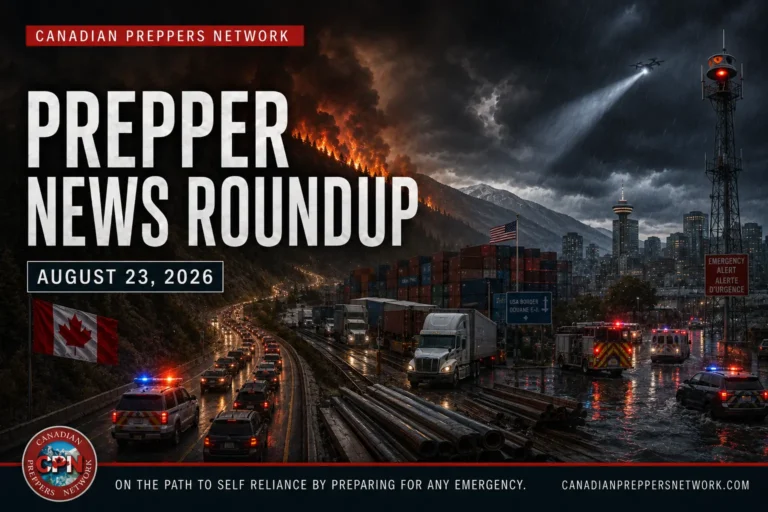
When disaster strikes, one of the most critical decisions a prepper must make is whether to bug in (stay put and fortify your home) or bug out (evacuate to a safer location). Both strategies have their place, but choosing the wrong one at the wrong time could mean the difference between safety and chaos.
Bugging In: Fortifying the Homefront
Bugging in is often the default choice for Canadian preppers. Your home is where your supplies, tools, and comfort are. It’s familiar, and in many cases, safer than taking your chances on the open road.
Advantages of Bugging In
- Stockpiled Resources – Food, water, medical supplies, and gear are already on hand.
- Shelter & Security – Four walls and a roof provide protection from the elements and potential looters.
- Community Ties – Neighbours can band together, share skills, and form a defensive perimeter.
- Stability for Family – Bugging in is less stressful for kids, pets, and elderly members.
When Bugging In Works
- Winter storms, ice events, or blizzards common in Central Ontario.
- Regional power outages where supply chains will be restored eventually.
- Civil unrest that’s temporary and contained.
Bugging Out: Leaving When Home Isn’t Safe
Bugging out means abandoning the safety of home to move toward a pre-designated bug out location, whether it’s a cabin, a friend’s homestead, or even crown land deep in the bush.
Advantages of Bugging Out
- Escape Dangerous Zones – Fires, floods, or riots can make staying put a death sentence.
- Access to Resources Elsewhere – Lakes, forests, and remote land provide fresh water, food, and cover.
- Avoid Becoming a Target – Well-stocked homes can draw desperate people.
When Bugging Out Works
- Forest fires (increasingly common in Canada).
- Long-term grid collapse where urban areas become unsafe.
- Chemical spills, nuclear accidents, or other environmental hazards.
The Grey Zone: Deciding Factors
Prepping isn’t about “always bugging in” or “always bugging out.” It’s about reading the situation. Consider:
- Threat Level – Is your home safe from fire, flood, or attack?
- Timeframe – Short-term crises favour bugging in; long-term collapse may force bugging out.
- Location – Urban dwellers face higher risks of violence and shortages. Rural preppers may safely stay put.
- Mobility – Can your family realistically travel with gear? Do you have a reliable vehicle or trailer?
Bug In or Bug Out? The Canadian Perspective
Canada poses unique challenges: vast distances, harsh winters, and sparse population density. In many cases, bugging in is safer until the situation escalates. But every prepper should have a well-planned bug out location, stocked with supplies and accessible by multiple routes.
Final Word: Don’t Choose, Prepare for Both
The smartest prepper doesn’t limit themselves to one option. Have a fortified home base AND a stocked bug out plan. If the grid fails tomorrow, you can hunker down with supplies. If your neighbourhood turns dangerous, you can grab your go-bags and head north without hesitation.
Prepping is about flexibility. The disaster decides whether you bug in or bug out — your job is to be ready for either.