Protecting seed, feed and infrastructure as autumn nights turn cold
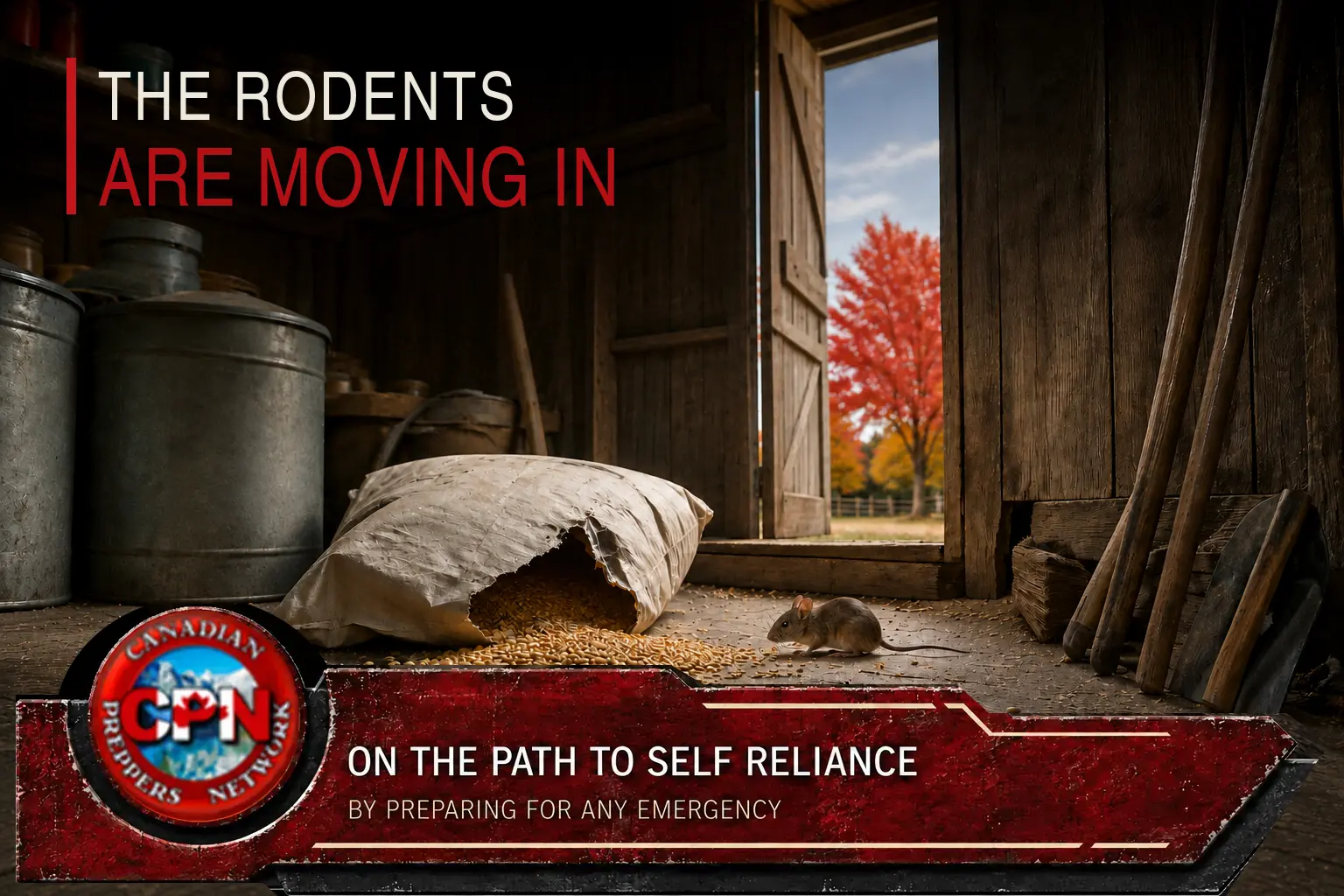
The first sign may be a torn feed bag.
It may be a scatter of droppings behind the freezer, a scratching sound inside the wall or the sudden discovery that something has chewed into a packet of carefully saved seed.
By then, the rodents are already inside.
Autumn changes the balance around a Canadian homestead. Fields are harvested, natural food becomes scarcer and nights turn colder. Deer mice that lived unnoticed around fields and woodlands begin investigating sheds, barns, workshops, garages and houses. Health Canada specifically identifies fall as a period when deer mice may invade nearby buildings.
This is not merely an unpleasant housekeeping problem. Rodents can contaminate food and animal feed, destroy seed, damage insulation, gnaw wiring and carry disease. In a prolonged emergency, their damage becomes even more serious because spoiled supplies, electrical components and replacement materials may not be replaceable.
Fall rodent control should therefore be treated as homestead hardening.
Rodents Attack the System, Not Just the Food
It is easy to measure rodent damage by what has visibly been eaten. That usually underestimates the loss.
A mouse may consume only a small amount from a feed bag while contaminating far more with urine, droppings and nesting material. A bag that looked like several months of poultry or rabbit feed can become questionable after one night of activity.
Seed is even more vulnerable. Rodents may selectively eat larger seeds, destroy labels or mix varieties while nesting. Losing a container of beans or corn after stores close would not mean losing a snack. It could mean losing part of the next planting season.
The damage extends beyond food:
- Electrical wiring can be stripped or severed.
- Insulation can be pulled apart for nesting.
- Flexible hoses and soft containers can be punctured.
- Stored clothing, leather and paper records can be shredded.
- Water and feed can be contaminated.
- Rodents can move pathogens between barns, pens and storage areas.
- Dead rodents can contaminate inaccessible walls or machinery.
A homestead that depends on stored seed, livestock feed, electrical equipment and repair materials cannot tolerate the same level of damage as an ordinary household.
PLINKIN’ IN THE WOODS
Spend a full day developing practical outdoor rimfire marksmanship skills. This is a hands-on private event—not another afternoon sitting at a shooting bench.
Saturday, September 12, 2026
8:00 a.m.–5:00 p.m.
Great Ape Empire
267 Highway 6, Wiarton, Ontario
Event admission: $250 CAD
Weekend camping: $20 per person
Space is strictly limited.
Presented in collaboration with Off-Grid School, Preppers Meet, Canadian Preppers Network and Great Ape Empire.
Begin Outside the Building
The most effective rodent control begins before the animal reaches a wall.
Walk the property as though you were a mouse looking for cover, water and food. Tall weeds against a foundation, stacked lumber, discarded equipment, feed spills and an overflowing compost area provide protected routes towards the building.
Health Canada recommends moving woodpiles away from buildings and raising them approximately 30 centimetres off the ground. Grass and weeds should be cut back from foundations. Garbage needs tight-fitting lids, and leaking taps, open drains and sweating pipes should be corrected.
Pay particular attention to:
- Wood stacked directly against walls
- Lumber, roofing or fencing materials lying on the ground
- Feed spilled around bins and animal pens
- Fallen fruit beneath trees
- Birdseed scattered around feeders
- Compost containing fatty or oily food
- Pet or livestock food left out overnight
- Leaking troughs, hoses and outdoor taps
- Dense vegetation covering foundations
- Junk piles that cannot be inspected underneath
The objective is not to create a sterile property. It is to remove the protected route connecting outdoor habitat to valuable supplies.
Seal the Shell Before Setting Traps
Trapping mice while leaving an open route into the building creates a permanent chore instead of solving the problem.
Health Canada warns that mice can pass through openings approximately the size of a dime, while rats may use a quarter-sized opening. Worn door thresholds alone can provide enough space.
Inspect the building from the ground upward:
- Foundation cracks
- Gaps beneath doors
- Corners where siding meets masonry
- Openings around plumbing and electrical lines
- Dryer and equipment vents
- Roof and soffit gaps
- Damaged screens
- Loose flashing
- Openings beneath cladding
- Gaps around loading doors
- Junctions between additions and older walls
Perform one inspection during daylight from inside a darkened shed or barn. Visible light often exposes openings that are easy to miss from outside.
Small gaps around pipes can be packed with steel wool and then properly sealed. Larger openings may require metal screening, hardware cloth, flashing, cement or durable building material. Foam by itself is rarely a complete rodent barrier because it can be chewed.
Do not accidentally block required ventilation, drains or equipment clearances. The goal is controlled airflow without uncontrolled animal access.
Complete this work before cold weather makes sealants difficult to apply and snow hides the foundation.
Canadian Grid-Down Starter Kit
Use this printable first-72-hours checklist to test your household’s water, food, sanitation, power, communications and operating routines before a short outage becomes a long-term emergency.
Defend the Storage Core
A sealed building is the first barrier. Proper containers form the second.
Paper sacks and thin plastic totes offer organization, not rodent protection. Feed, grain and valuable seed should be moved into containers that resist chewing and close tightly. Depending on the quantity, this may mean glass jars, metal cans, metal hoppers or properly constructed heavy storage bins.
The Canadian Food Inspection Agency recommends keeping feed in a dry, clean and secure environment, covering feed bins and inspecting regularly for moisture, spills and pest activity.
A workable storage room should allow inspection. Containers packed tightly against walls create undisturbed travel lanes and make droppings difficult to see. Leave enough space to examine the wall, floor and back of shelving.
Organize supplies by importance:
- Breeding seed and irreplaceable planting material
- Human food
- Livestock and poultry feed
- Pet food
- Bedding, paper and fabric
- General materials that could become nesting material
Do not concentrate every valuable seed lot in one vulnerable building. A protected secondary seed cache provides insurance against rodents, fire, moisture and human error. CPN’s article The Last Seed Packet explains why a functioning seed reserve must survive more than one season.
Find the First Intruder Quickly
Rodent control becomes harder after animals establish nesting areas and begin reproducing. Early detection matters.
Look for:
- Fresh droppings
- Gnawed packaging
- Shredded paper or insulation
- Greasy rub marks along walls
- Tracks on dusty surfaces
- Burrows beside foundations
- Scratching after dark
- A stale or musky odour
- Feed disappearing without explanation
- Pets repeatedly investigating one location
Create a simple inspection route through the feed room, pantry, workshop, barn and garage. Check the same corners regularly. A dated log can distinguish one old sign from continuing activity.
Monitoring should become more frequent when outdoor temperatures fall or crops are harvested nearby.
Trap Along Travel Routes
Rodents normally travel close to walls and cover rather than crossing open rooms unnecessarily. Traps should therefore be positioned along their routes, not randomly placed in the middle of a building.
Health Canada recommends positioning ordinary traps at right angles to the wall with the baited end closest to it. Covered and electronic designs may instead be positioned parallel and flush against the wall. Traps should be checked every day.
Use enough traps to address the problem quickly. One trap behind a feed bin is not a control programme.
Where livestock, pets or poultry can reach the area, traps must be placed inside suitable protective boxes or behind secure barriers. A trap that injures a dog, cat or chicken has created a second emergency.
Rats may be cautious around new objects. Health Canada suggests baiting traps without setting them for several days so rodents become accustomed to them before the traps are activated.
Continue monitoring after activity apparently stops. Young rodents may emerge later, and an unsealed opening may admit another animal.
Poison Is Not a Complete Plan
Rodenticide may have a place in some control programmes, but it should not replace sanitation, exclusion and trapping.
Poison creates several problems on a working homestead:
- Pets or livestock may reach the bait.
- Wildlife can be exposed.
- Predators may consume poisoned rodents.
- Carcasses may remain inside walls or stored materials.
- Rodents may continue entering because the building was never sealed.
- Replacement bait may eventually become unavailable.
Health Canada requires poisoned bait to be used according to its approved label. Tamper-resistant bait stations are required where children or pets can access the area, and agricultural use must also protect livestock and non-target wildlife. Improvised poisons and unlabelled products have no place around food or animals.
If poison is used, choose only a product registered in Canada, follow the label precisely, secure it correctly and inspect for carcasses. Physical exclusion remains the long-term solution.
CPN Gold Membership
Gold members receive unlimited access to the CD3WD collection and hundreds of practical offline manuals covering agriculture, pest control, food storage, repairs, water, sanitation and self-reliance.
Membership also includes the monthly Canadian Preparedness Intelligence Briefing.
Never Sweep Dry Droppings
Rodent cleanup can expose people to contaminated dust.
The Public Health Agency of Canada advises against sweeping or vacuuming dry droppings, urine-contaminated material or nesting debris. Dry cleaning can throw contaminated particles into the air.
Instead:
- Ventilate the area when practical.
- Wear rubber or plastic gloves.
- In a confined contaminated space, use an appropriate N95-level or Canadian CA-N95 respirator.
- Spray droppings and surrounding material with a Health Canada-approved disinfectant or a mixture of one part bleach to nine parts water.
- Leave the material wet for ten minutes.
- Wipe it up using paper towels or a wet mop.
- Double-bag contaminated disposable material.
- Clean reusable equipment.
- Wash hands thoroughly after removing gloves.
Heavily contaminated buildings may require professional cleaning. Do not turn a feed-room problem into a respiratory exposure by attacking it with a dry broom.
Conduct a Fall Rodent Drill
Set aside one weekend before the first hard freeze.
On the first day, remove attractants around the buildings, raise or relocate woodpiles, cut vegetation, clean spilled feed and inspect every exterior wall. Seal the openings that can be repaired immediately and mark those requiring additional materials.
On the second day, reorganize the storage core. Move vulnerable food, seed and feed into resistant containers. Create inspection space around walls and shelving. Install monitoring traps along likely travel routes and record their locations.
Then ask harder questions:
- Which single container would be most damaging to lose?
- Is all the breeding seed stored in one place?
- Could rodents reach animal feed without being seen?
- Would poisoned bait endanger a working dog, cat or barn animal?
- Can droppings be cleaned safely during an extended emergency?
- Are spare traps, gloves, disinfectant and sealing materials already stored?
- Can the inspection continue without electric lights?
The purpose is not simply to kill the mice present today. It is to build a system that keeps working when replacement feed, seed, wiring, insulation and pest-control supplies are no longer arriving.
Prepper Radio Canada
The Canadian Basic Amateur Radio Course for Preppers includes 86 self-paced lessons covering Canadian regulations, radio theory, antennas, operating procedures and practical emergency communications.
$79 CAD · One-time payment · Six months of access
Build a Fall Rodent-Control Kit
These supplies support exclusion, protected storage, monitoring and safe cleanup:
- Rodent-resistant metal feed containers
- Fine galvanized hardware cloth
- Metal door sweeps and weather stripping
- Steel wool for sealing small gaps
- Covered snap traps
- Lockable rodent-control stations
- N95 respirators for contaminated cleanup
- Rechargeable inspection headlamp
Disclosure: This article contains Amazon affiliate links. As an Amazon Associate, Canadian Preppers Network may earn from qualifying purchases.
The Standard Is Denial
Rodents will remain part of the rural and suburban environment. The objective is not to eliminate every mouse outdoors.
The objective is to deny them an easy route into the systems that keep the homestead operating.
Remove the sheltered approach. Seal the building. Protect the storage core. Detect activity early. Trap along established routes. Clean contamination without creating another hazard.
A torn feed bag may appear to be a small autumn nuisance. After supply lines fail, it may represent weeks of lost animal feed, a damaged seed reserve or the beginning of an infestation that the household no longer has the materials to control.
The time to close that opening is before the nights turn cold.
Related Reading on CPN
- The Last Seed Packet
- When the Animals Still Need You
- Food Procurement and Storage in Canada
- Homestead Skills in Canada
- Homestead Skills Buying Guide