
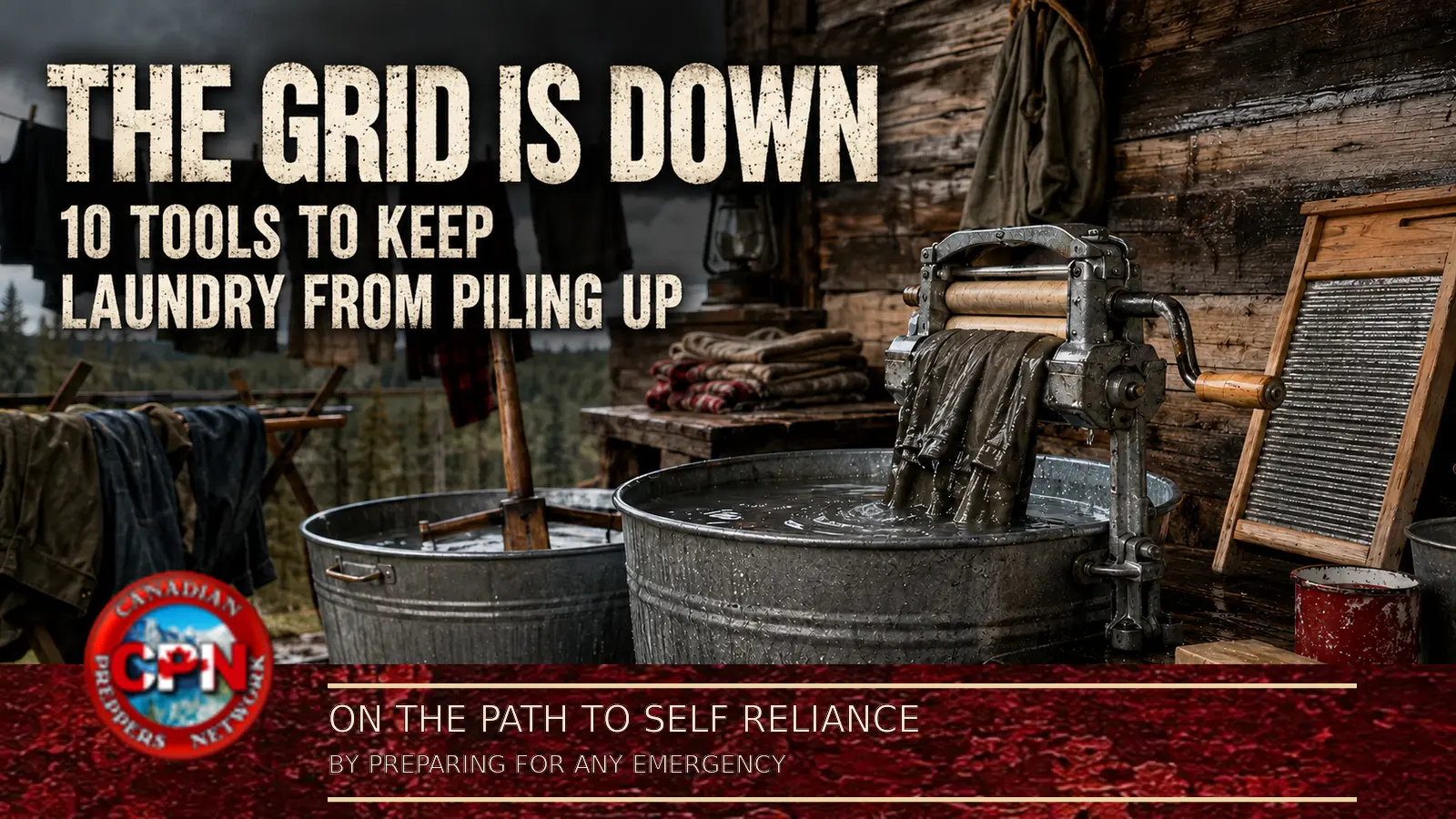
Ten off-grid tools for clean clothes without electricity.
Laundry rarely receives much attention in emergency planning. Most households assume they can tolerate dirty clothing until the power returns. That might work during a two-day outage, but it quickly becomes a sanitation problem during a prolonged emergency.
Work clothing absorbs sweat and grime. Towels remain damp. Bedding becomes soiled. Reusable cleaning cloths accumulate. Without a practical washing system, people may begin using valuable drinking water inefficiently while accomplishing very little.
A dependable grid-down laundry system needs to handle four jobs: soaking, agitation, rinsing and water removal. These ten tools can accomplish all four without electricity.
Download the Free Canadian Grid-Down Starter Kit
Laundry is only one essential household system that disappears when utilities fail. Review your plans for water, food, lighting, sanitation, communications and other immediate needs.
10. A Proper Laundry Scrub Brush
A stiff laundry brush concentrates cleaning power on collars, cuffs, socks, work clothing and stubborn stains. This reduces the need to scrub an entire garment against a washboard.
Look for a brush with a solid handle and moderately stiff synthetic bristles. Extremely hard brushes can damage fabric, while soft household cleaning brushes accomplish very little.
A small brush also conserves soap and water because individual problem areas can be treated before the main wash.
9. Solid Laundry Soap
Liquid detergent is convenient, but it is bulky, vulnerable to freezing and difficult to ration. Solid laundry bars store compactly and can be applied directly to stains or grated into wash water.
Choose an unscented or lightly scented product that rinses cleanly. Excessive soap creates more work because every bit of it must eventually be removed with clean water.
Store several bars in a dry container and include a simple metal grater dedicated to laundry use. Never return that grater to food preparation.
8. Durable Clothespins
Cheap plastic clothespins become brittle after repeated exposure to sunlight and cold Canadian weather. A supply of wooden or stainless-steel pins is more appropriate for long-term use.
Stainless-steel pins are compact, resistant to rust and less likely to break in storage. Wooden pins are inexpensive and easily replaced, but they should be kept dry when not in use.
Purchase more than you expect to need. Pins disappear, bend and get repurposed for closing bags, securing tarps and countless other household jobs.
7. Heavy-Duty Clothesline
A dryer consumes considerable electricity even when the grid is working. After a major disruption, sunlight and moving air become the only dependable drying system.
Braided polyester line generally handles weather better than untreated natural rope. Plastic-coated wire can work for a permanent installation, but it is less convenient for a portable kit.
Include enough line to establish several shorter runs instead of one extremely long span. Long lines sag badly under wet blankets, towels and work clothing.
6. A Folding Indoor Drying Rack
Outdoor drying is not always possible. Smoke, heavy rain, freezing precipitation or limited security may force laundry indoors.
A strong folding rack creates usable drying space without permanently occupying a room. Look for wide feet, positive-locking joints and enough clearance to keep longer garments off the floor.
Indoor drying adds considerable moisture to the building. Maintain ventilation whenever possible and avoid placing wet clothing directly against walls, furniture or stored supplies.
5. A Full-Sized Washboard
A washboard requires more effort than an agitator, but it has almost nothing to break. It is particularly useful for heavily soiled work clothing and small loads that do not justify filling an entire wash tub.
Full-sized boards are easier to use than decorative miniature versions. Metal or glass rubbing surfaces generally clean more effectively than a nearly flat plastic board.
The objective is controlled scrubbing, not destroying the fabric. Soak clothing first, apply soap to the dirtiest areas and let the ridged surface do the work.
4. A Portable Hand-Crank Washer
Compact hand-crank washers can clean socks, undergarments, shirts and other small items while using relatively little water. They are useful in apartments, RVs and retreats where storage space is limited.
Their weakness is capacity. A unit that performs well with several shirts may struggle with jeans, blankets or heavy towels. Plastic gears, handles and mounting points should also be inspected carefully.
The established WonderWash is currently expensive on Amazon.ca, while many cheaper alternatives are poorly reviewed generic imports. Treat this as an optional convenience and compare the current price before ordering. It should supplement—not replace—a tub, agitator and wringer.
3. Two Large Wash Tubs
A proper manual laundry system needs at least two containers: one for washing and another for rinsing. A third container makes a second rinse considerably easier.
Galvanized steel tubs are durable but heavy. Large plastic utility tubs are lighter and easier to move, although they can crack in extreme cold. Whichever type you choose, make sure you can lift or drain it safely when filled.
Laundry tubs should be permanently marked and kept separate from drinking-water containers. They can also support bathing, equipment cleaning and other sanitation jobs, but should never be returned to potable-water service.
2. A Manual Laundry Agitator
Sometimes called a laundry plunger, this tool forces soapy water through the fabric as it is moved up and down inside a bucket or tub.
Purpose-built agitators contain openings that move water through the clothing. They generally work better than an ordinary toilet plunger and avoid the sanitation concerns associated with repurposing bathroom equipment.
A manual agitator handles larger loads than many countertop crank washers, stores easily and has few moving parts. For most households, it is the best inexpensive starting point.
1. A Hand-Crank Clothes Wringer
Washing clothing is only half the problem. Removing the water is the real bottleneck.
Twisting garments by hand is slow, tiring and hard on both the fabric and the operator’s wrists. Clothing left saturated also takes much longer to dry and may begin smelling before it is ready to wear.
A clamp-mounted wringer passes clothing between adjustable rollers, removing much more water than hand squeezing. It is especially valuable for towels, jeans, bedding and cold-weather clothing.
Look for strong clamps, adjustable rollers and corrosion-resistant hardware. Confirm that the wringer can attach securely to your chosen wash tub or a dedicated bench.
If the budget permits only one specialized piece of manual laundry equipment, the wringer deserves serious consideration.
Build a Complete System
The strongest arrangement combines two tubs, a laundry agitator and a wringer. Clothing is soaked and agitated in the first tub, transferred through the wringer into the rinse tub, agitated again and passed through the wringer a second time before hanging.
Wash lightly soiled clothing first and reserve heavily contaminated work gear for the final load. This allows the same water to accomplish more without transferring the worst grime to everything else.
Laundry water should be planned alongside the household’s drinking, cooking and sanitation requirements. Never dispose of soapy water directly into lakes, streams or near a well.
Manual-Laundry Buying Box
These links lead directly to individual Amazon.ca product pages. Prices and availability can change.
- Calliger heavy-duty hand-crank clothes wringer
- Lehman’s manual laundry agitator
- HOMZ 17-gallon utility tubs—two-pack
- WonderWash hand-crank washer—price-check before ordering
- Columbus full-sized family washboard
- SONGMICS heavy-duty folding drying rack
- Extreme Max braided cotton-polyester clothesline
- AoHu stainless-steel clothespins—28-pack
- SoapWorks old-fashioned laundry bar
- Handled laundry stain scrub brush
As an Amazon Associate, Canadian Preppers Network earns from qualifying purchases.