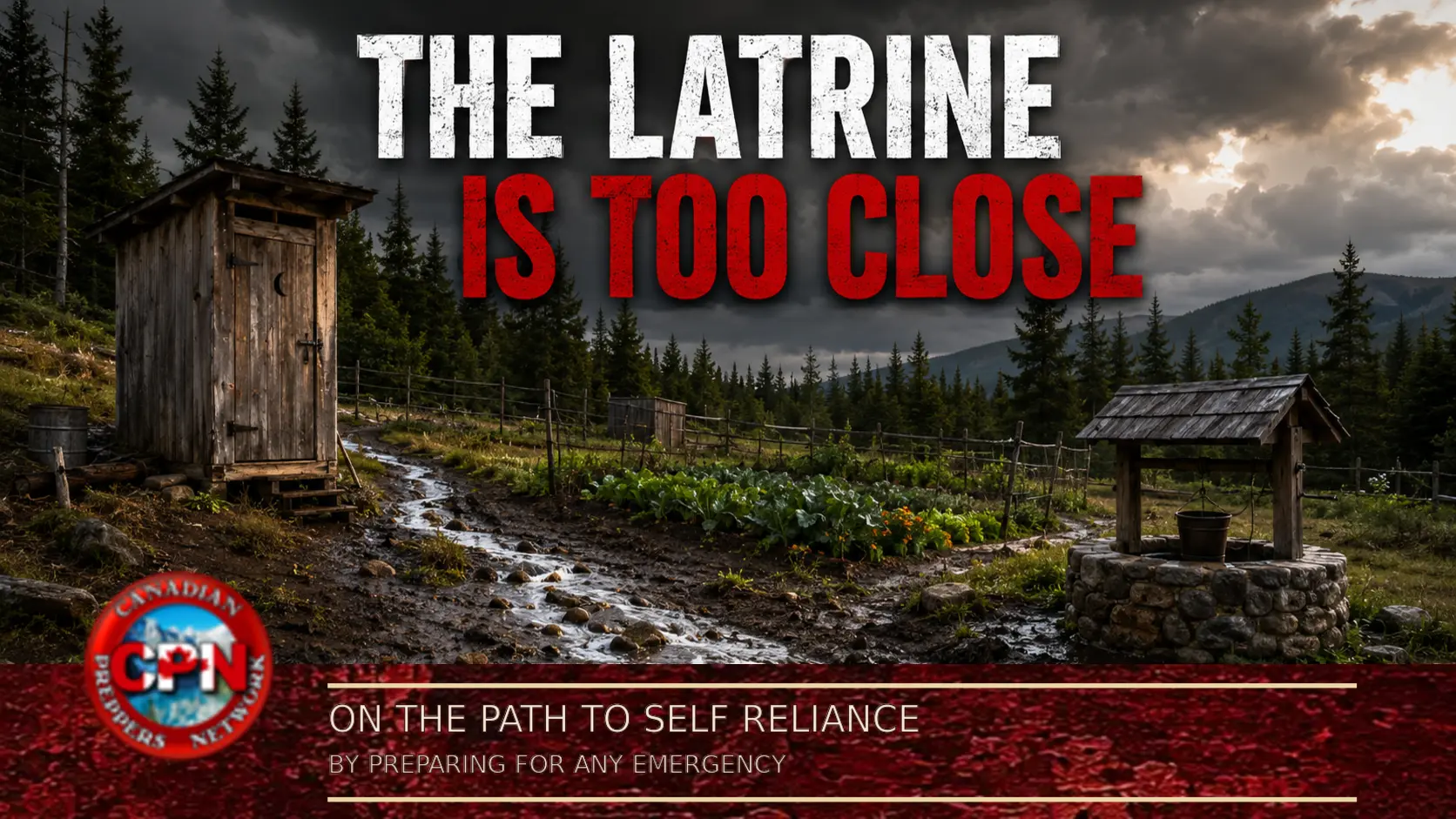
Protecting Your Water Supply from Human Waste
A post-collapse latrine can look perfectly functional while quietly threatening everything around it.
It may have privacy, a sturdy seat and enough capacity for the group. It may control odour reasonably well and be located close enough to reach at night. None of that matters if contaminated runoff is moving toward the well, waste is leaching through porous soil, or spring flooding is carrying it into the garden and surface water.
The most dangerous sanitation failures do not necessarily begin with a visibly overflowing toilet. They begin underground, where nobody notices them until people start getting sick.
Protect the Water Before Choosing the Toilet
The first question is not what kind of latrine to build. It is where waste can be managed without threatening the retreat’s water.
Every property should be divided into clean and dirty zones.
The clean zone includes:
- The well or water intake
- Stored drinking water
- Rainwater collection
- Food-preparation areas
- Gardens and harvested produce
- Medical and washing stations
The dirty zone includes:
- Toilets and latrines
- Waste-storage containers
- Greywater disposal
- Garbage handling
- Animal manure
- Cleaning and decontamination areas
These zones must remain physically separated. A convenient sanitation area immediately behind the house may be entirely inappropriate if the well, garden or drainage route is nearby.
Health Canada advises keeping contaminants away from private wells and maintaining the land around a well so that surface water drains away from it. That principle becomes even more important when normal sewage services and professional water testing are unavailable.
Downhill Is Not a Complete Answer
“Put the latrine downhill from the well” is useful advice, but it is not enough.
The visible slope only shows how water moves across the surface. Groundwater can follow a different route through soil, gravel, fractured rock and old drainage channels. A shallow well, damaged casing or poorly sealed wellhead can be especially vulnerable.
Start by identifying:
- The well and any secondary water sources
- The direction of surface drainage
- Low areas that collect water
- Seasonal streams and drainage ditches
- Flood-prone ground
- Exposed or shallow bedrock
- Sandy or gravelly soil
- Buried water lines
- Gardens, greenhouses and food-storage areas
A latrine should be well downhill and far away from the water source, but greater separation may be necessary on porous ground, fractured rock, steep terrain or land that floods.
A commonly used conservative field baseline is approximately 60 metres from wells, streams, lakes and other water sources. That is a starting point—not a guarantee. Provincial requirements, local soil conditions, groundwater movement and the type of sanitation system may demand considerably more distance.
If there is any doubt, use a sealed containment system rather than allowing waste to enter the ground.
Rain Changes the Entire Site
A location that appears safe during dry weather may become completely unsuitable during a storm.
Heavy rain can fill a pit, move surface contamination downhill and carry waste toward a wellhead. Saturated soil also loses much of its ability to contain and naturally process waste. Once the ground is waterlogged, contaminants can travel farther and faster.
Before establishing a sanitation area, inspect the property during or immediately after heavy rain. Look for temporary streams, pooling water and drainage routes that are invisible during dry conditions.
The safest location is not merely dry today. It must remain isolated during spring thaw, prolonged rain and the worst flooding reasonably expected on the property.
Keep Human Waste Away from the Garden
The garden may seem like an obvious place to return nutrients to the soil. Untreated human waste, however, does not belong around crops.
A working food garden attracts constant foot traffic. Tools move between beds and buildings. Produce is handled and carried into the kitchen. Irrigation water can splash soil onto leaves and vegetables. Placing a latrine uphill or nearby creates too many opportunities for contamination.
Keep the sanitation zone separate from:
- Vegetable beds
- Orchards and berry patches
- Greenhouses
- Compost used on food crops
- Irrigation storage
- Livestock feed
- Outdoor food-processing areas
Ordinary garden composting should not be treated as a safe method for processing human waste. A properly managed composting-toilet system is a specialized sanitation system with controlled temperatures, retention times and handling procedures.
One Pit Is Not a Permanent System
A retreat occupied by several people can produce more waste than expected. A small pit that works for two campers over a weekend may fail quickly when used by a household or mutual-assistance group for months.
The sanitation plan should include:
- A primary toilet system
- A backup contained toilet
- A designated replacement location
- Covered storage for supplies
- A separate handwashing station
- A procedure for illness
- A plan for winter and frozen ground
- A method for closing and marking retired sanitation areas
Do not wait until the first location is full before deciding where the next one will go. Map several suitable locations in advance while maintaining separation from water, food production and living areas.
Retired sites should be clearly marked so nobody later places a tent, garden bed, water container or work area over them.
Build the Handwashing Station at the Same Time
A latrine without handwashing is an incomplete sanitation system.
The washing station should be immediately outside the toilet area so nobody can conveniently skip it. Use a controlled-flow water container, liquid soap and a catch basin or drainage arrangement that does not create a muddy pool.
Hand sanitizer can supplement handwashing, but it should not replace soap and water when hands are visibly dirty.
Keep toilet-cleaning tools inside the dirty zone. Mark them clearly and never allow the same bucket, brush, cloth or gloves to migrate into the kitchen, medical area or water-handling station.
Control Access and Movement
The sanitation area should be convenient enough to use consistently but isolated enough to protect the retreat.
Create one defined path between the living area and the toilet. This prevents people from wandering through the garden or water zone on their return. Provide lighting that can be used safely at night without illuminating the entire property.
The toilet should also be usable by anyone with limited mobility. A system that is difficult to reach or unstable will encourage improvised alternatives closer to the shelter—and those alternatives may create the contamination problem the latrine was intended to prevent.
Use Containment When the Ground Is Unsuitable
Some properties should not use pit latrines at all.
Sealed containment is the better choice when:
- The water table is high
- The ground floods
- Bedrock is close to the surface
- Soil is extremely sandy or porous
- The property is small
- The well location leaves insufficient separation
- Waste cannot be kept away from gardens or water
- Local regulations prohibit burial
- The site may be occupied only temporarily
A portable toilet, lined bucket toilet, separating toilet or commercially designed composting system can keep waste out of the ground. These systems still require a lawful and sanitary disposal plan, but they reduce the immediate risk of contaminating the property.
Never bury plastic bags, disposable wipes or chemical toilet products. They do not become safe merely because they are out of sight.
Watch the Well After the System Changes
Any change in sanitation around a private well should increase water vigilance.
Watch for changes in taste, smell, colour or clarity, but do not assume normal-looking water is safe. Microbial contamination may provide no obvious warning. Testing is the only reliable way to evaluate a well after flooding, damage or suspected contamination.
If the wellhead has been submerged, contaminated runoff has reached it, or illness appears within the group, stop treating the well as a safe drinking source until it can be properly assessed and treated.
Boiling may address many microbial hazards, but it does not make chemically contaminated water safe.
Download the Free Grid-Down Starter Kit
Sanitation is only one part of a functioning retreat. Use the free Canadian Grid-Down Starter Kit to identify weaknesses in water, food, heat, lighting, communications, medical readiness and emergency planning before those systems are tested for real.
Preparedness Buying Box: Sanitation-Site Supplies
As an Amazon Associate, Canadian Preppers Network may earn from qualifying purchases.
Portable or separating toilet
Provides a contained backup when the ground is unsuitable for a pit system.
Heavy-duty toilet waste bags
Choose bags specifically designed for portable sanitation rather than thin household garbage bags.
Lidded buckets
Useful for keeping sanitation tools, absorbent material and dirty-zone equipment separated.
Portable handwashing station
A water container with a controlled spigot makes routine handwashing easier while limiting waste.
Biodegradable toilet tissue
Stores compactly and is less troublesome than wipes, which should never be placed in a latrine.
Nitrile gloves
Useful when cleaning the toilet area or handling sealed waste containers.
Waterproof site markers and flagging tape
Mark retired pits, drainage routes, water-protection boundaries and future sanitation locations.
Rechargeable motion or pathway lights
Improve nighttime access without lighting the entire retreat continuously.
Related Reading
- Building a Complete Off-Grid Sanitation System
- The First Outbreak Starts in Someone’s Yard
- Water Collection and Purification in Canada
- Water Storage and Filtration Buying Guide
The toilet does not need to overflow before it becomes a threat. If it is positioned badly, contamination may already be moving toward the water supply beneath the surface.
A post-collapse sanitation system succeeds through separation: waste from water, dirty tools from clean tools, toilets from food production and runoff from the well. Get the location wrong, and every other part of the retreat becomes harder to protect.