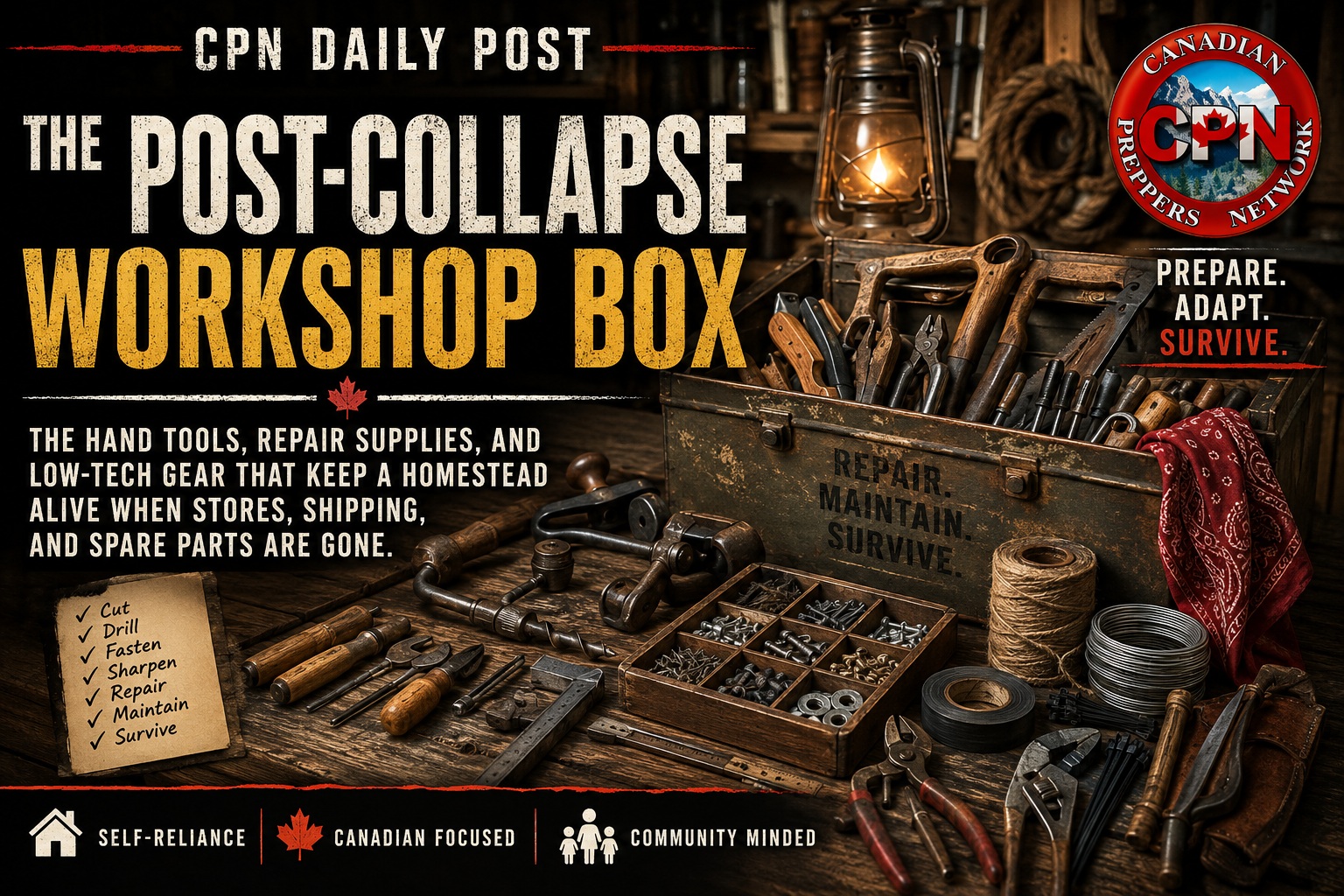
The hand tools, repair supplies, and low-tech gear that keep a homestead alive when stores, shipping, and spare parts are gone.
Most preparedness plans are built around food, water, heat, security, communications, and medical supplies.
That is a good start.
But after the first wave of disruption, another problem shows up fast: things break.
Hinges tear out. Handles snap. Buckets crack. Tarps rip. Harness fails. Fences sag. Stoves need adjustment. Shelves collapse. Garden tools loosen. Carts lose bolts. Radios need mounts. Water systems need brackets. Doors need reinforcing. Sleds, wagons, animal pens, chicken coops, cold frames, gates, racks, and tool handles all need repair.
In normal life, that usually means a trip to the hardware store, an online order, or a replacement part.
In a long-term collapse, those options may be gone.
That is when the workshop becomes survival infrastructure.
Not the fancy suburban garage with battery tools, specialty gadgets, and a wall full of chargers. Those tools are useful while the grid, fuel, replacement batteries, and supply chains hold together. But the deeper preparedness question is different.
What can you still build, fix, cut, drill, sharpen, fasten, patch, bind, measure, and maintain when the hardware store is empty and delivery trucks are no longer coming?
That is the purpose of the post-collapse workshop box.
It is not a random pile of tools. It is a deliberate repair chest built around low-tech, durable, hand-powered equipment and the small consumables that keep a homestead functional when replacement parts are scarce.
For broader long-term skill planning, see the CPN Homestead Skills hub.
The Workshop Is Not Optional
A lot of preppers underestimate maintenance.
They imagine collapse as a supply problem: enough food, enough water, enough fuel, enough batteries, enough medical gear. Those things matter. But stored supplies are only one part of resilience.
The real test is whether your systems keep working after repeated use.
A water filter setup is great until the mounting bracket cracks. A wood stove is great until the door latch fails. A chicken coop is great until a predator finds a weak corner. A garden cart is great until a wheel pin disappears. A radio mast is great until a storm bends the support hardware. A rain barrel system is great until a fitting breaks or a downspout tears loose.
Preparedness is maintenance under pressure.
A post-collapse workshop gives you the ability to keep solving small problems before they become major failures. It turns scrap into parts, broken tools into usable tools, and abandoned material into something useful.
That matters because in a serious collapse, waste becomes expensive. Throwing something away because one part failed is a luxury of normal life.
The prepared household repairs first.
Hand Tools Come First
Battery-powered tools are convenient. Cordless drills, impact drivers, grinders, and saws can save enormous time while power is available.
But a post-collapse workshop cannot depend on them.
Batteries age. Chargers fail. Inverters die. Solar time may be limited. Cold weather reduces performance. Tool-specific battery packs become dead weight when they can no longer be replaced.
That does not mean cordless tools are useless. It means they should not be the foundation.
The foundation should be hand tools.
A good hand saw still cuts when the power is out. A brace and bit still drills holes. A file still shapes metal. A sharpening stone still restores an edge. A screwdriver still drives screws. A wrench still turns bolts. A manual hand drill still works without a charger. A hacksaw still cuts rod, pipe, brackets, bolts, and damaged hardware.
Hand tools are slower.
That is the trade-off.
But slow tools that work are better than fast tools that cannot be charged.
For a broader look at backup energy systems that still have a place in the plan, see the CPN Energy Production hub.
Cutting Tools: Wood, Metal, Plastic, and Rope
The first layer of a workshop box should cover cutting.
Not just one kind of cutting. Several.
A bow saw or pruning saw handles green wood, small firewood, poles, saplings, and rough outdoor work. A proper hand saw handles boards, lumber, shelves, frames, and repair stock. A backsaw or fine-tooth saw helps with cleaner joinery and smaller work. A hacksaw handles metal, threaded rod, bolts, pipe, plastic, and small hardware.
Spare blades matter as much as the tools.
A hacksaw with one dull blade is not a metalworking system. A bow saw with no extra blades is temporary. A knife without sharpening gear is slowly becoming scrap.
The box should include spare saw blades, utility blades, a quality fixed-blade knife, a file card or wire brush for cleaning files, and a safe way to store sharp edges so they do not damage other gear.
Cutting is the beginning of repair. If you cannot cut material to size, you cannot build much.
Drilling Without Electricity
Drilling holes is one of the most underrated repair abilities.
Holes let you bolt, peg, lash, rivet, stitch, pin, mount, hang, reinforce, drain, and align. Without the ability to make clean holes, many repairs turn into crude binding and guesswork.
A hand drill is useful for smaller holes. A brace and bit is useful for larger holes in wood. Auger bits, twist bits, countersinks, and spare bits should be kept together and protected from rust.
For post-collapse use, drilling is not just carpentry.
You may need to drill a new hole in a gate hinge, repair a tool handle, mount a hasp, build a shelf, reinforce a sled, attach hardware to a cart, hang a radio shelf, or pin a cracked wooden part together.
A cordless drill may do those jobs faster.
A hand drill does them when nothing else will.
Fasteners Are Future Currency
Screws, nails, bolts, washers, nuts, pins, brackets, hooks, eye screws, hose clamps, wire, and repair plates do not look exciting.
That is exactly why people forget them.
In a long collapse, fasteners become incredibly valuable. They are the small parts that turn raw material into useful structure. Without them, repairs become slower, weaker, and more dependent on improvised lashings.
A good workshop box should include mixed screws, common nails, carriage bolts, lag screws, machine screws, washers, lock washers, nuts, cotter pins, small hinges, mending plates, angle brackets, hose clamps, chain repair links, and assorted hooks.
Do not store them loose in one giant coffee can unless frustration is part of the plan.
Sort them.
Label them.
Keep common sizes accessible. Store duplicates. Protect them from moisture. The person who can produce the right bolt, washer, or screw when everyone else is digging through junk has real capability.
Fasteners are not glamorous preparedness supplies.
They are what keep everything else attached.
Holding, Clamping, and Bending
Many repairs fail because the work cannot be held still.
A small bench vise, locking pliers, C-clamps, spring clamps, bar clamps, and adjustable pliers make a huge difference. They let one person do work that otherwise requires three hands.
Clamps hold boards while glue sets. Locking pliers grip stripped bolts. A vise holds metal while filing. Pliers bend wire. Fence tools twist, pull, crimp, and cut. A pipe wrench handles stubborn round stock and fittings.
This is where a post-collapse workshop starts to become a force multiplier.
It lets a tired person make cleaner repairs with less waste and less injury risk.
That matters when materials are scarce.
Sharpening Keeps Tools Alive
Sharp tools are safer, faster, and more useful.
Dull tools waste energy. They slip. They damage material. They encourage bad habits. In a no-resupply situation, dull tools are not just annoying. They are a slow loss of capability.
A workshop box should include sharpening stones, a file set, a mill bastard file, a chainsaw file if chainsaws are part of the plan, a sharpening puck for axes and machetes, and basic oil or waterstone maintenance supplies depending on the sharpening system used.
Axes, knives, chisels, drawknives, hoes, shovels, saws, and pruning tools all need edge maintenance.
This connects directly to wood heat, shelter repair, gardening, animal care, and field work. For more on shelter and heating resilience, see the CPN Shelter & Heat hub.
A prepper with dull tools owns future problems.
A prepper who can sharpen owns options.
Measuring and Layout Tools
Not every repair has to be pretty.
But it does have to fit.
A tape measure, folding ruler, carpenter’s square, combination square, level, chalk line, pencils, marking knife, compass, and straightedge help turn scrap and salvaged material into usable parts.
Bad measurements waste material. In normal times, wasting a board or cutting a bracket wrong is irritating. In a long collapse, it may mean losing something you cannot replace.
Layout tools do not require batteries. They do not expire. They help build doors that close, shelves that sit level, frames that do not twist, and repairs that last longer than a week.
This is the quiet side of preparedness: accuracy.
Repair Materials: The Stuff That Saves the Day
The tools are only half the box.
The other half is repair material.
Wire, cordage, leather scraps, canvas, rubber sheet, inner tubes, hose clamps, mending plates, epoxy, wood glue, construction adhesive, tape, tarred twine, waxed thread, zip ties, paracord, baling wire, fencing wire, solder, heat-shrink tubing, spare handles, dowels, washers, and scrap metal all have a place.
Some of these items are temporary repairs. Some are permanent repairs. Some simply hold a system together until a better fix can be made.
The key is not to rely on one magic product.
Duct tape has its place, but it is not a workshop.
A proper repair box gives you options: mechanical fastening, stitching, clamping, bracing, binding, patching, sealing, and replacing worn parts with salvaged material.
That variety is what keeps a homestead running.
Leather, Fabric, and Soft Repairs
Hard repairs get most of the attention, but soft repairs matter too.
Packs rip. Gloves split. Tarps tear. Harness rubs through. Canvas covers fail. Straps break. Belts crack. Buckles pull loose. Heavy clothing needs patching. Bags, tool rolls, and animal gear need maintenance.
A sewing awl, heavy needles, waxed thread, sail needles, canvas patches, leather scraps, rivets, buckles, grommets, snaps, and webbing are all worth considering.
This is especially important for anyone using livestock, working animals, garden carts, sleds, tarps, tents, or improvised shelters. The ability to stitch, patch, rivet, and reinforce fabric or leather can keep critical gear working much longer.
A small tear ignored becomes a destroyed tarp.
A loose strap ignored becomes lost equipment.
A split glove ignored becomes a hand injury.
Soft repairs are still survival repairs.
Electrical Repair Without Depending on Electronics
Even a low-tech homestead will likely still use some electrical systems: radios, small solar, 12-volt lighting, battery charging, security sensors, or communication gear.
That means the workshop box should include basic electrical repair supplies.
Wire strippers, crimpers, electrical tape, heat-shrink tubing, spare wire, fuses, inline fuse holders, ring terminals, spade connectors, butt connectors, zip ties, a basic multimeter, and spare plugs can keep small systems alive.
The goal is not to become dependent on electronics.
The goal is to maintain the few electrical systems that still earn their keep.
For blackout power and small electrical backup planning, see the CPN Energy Production Blackout Power Buying Guide.
Security Repairs Are Part of the Workshop
Security does not end with awareness, dogs, cameras, radios, or defensive planning.
Security also depends on keeping physical barriers working.
Doors need hinges. Gates need latches. Fences need wire. Windows may need braces. Locks may need hasps. Animal pens need reinforcement. Storage buildings need stronger hardware. A weak hinge or broken latch can become a serious problem when supplies are scarce and people are desperate.
This is where the workshop supports the security plan.
A box with hasps, hinges, screws, chain, staples, fencing pliers, wire, braces, and hand tools can harden weak points before they fail.
For more on layered security thinking, see the CPN Security & Defense hub.
A lock is only as useful as the door, frame, screws, hinge, and wall around it.
Salvage Skills Matter
In a collapse, the world becomes full of broken things that still contain useful parts.
Old bicycles provide chain, bearings, cables, spokes, nuts, bolts, tubing, brackets, and wheels. Broken appliances provide sheet metal, screws, wire, switches, springs, and panels. Damaged furniture provides lumber, hinges, handles, brackets, and fasteners. Abandoned equipment may provide axles, pins, belts, pulleys, frames, and hardware.
A good workshop box should support salvage.
That means wrenches, screwdrivers, pliers, pry bars, hacksaws, files, punches, cold chisels, containers for sorted parts, and the discipline to strip useful material before throwing anything away.
This is where mindset matters.
A consumer sees junk.
A prepared repairman sees parts.
Organisation Is a Survival Skill
The best tool in the world is useless if no one can find it.
In a stressful situation, a chaotic workshop wastes time and creates conflict. People dig through boxes, lose fasteners, damage tools, leave blades exposed, and forget what supplies are running low.
The post-collapse workshop box should be organised before it is needed.
Use small parts organisers, tool rolls, labelled tins, buckets, ammo cans, tackle boxes, wooden drawers, or whatever system is durable and clear. Keep cutting tools protected. Keep files from banging together. Keep fasteners sorted. Keep adhesives sealed. Keep spare blades dry. Keep electrical parts separate from dirty hardware.
Inventory matters too.
If screws, wire, blades, tape, glue, and sharpening supplies are being used, someone should know what is left.
The collapse workshop is not a junk pile.
It is a controlled repair system.
What Not to Waste Space On
Not every tool earns a place.
Hyper-specialised tools that only fit one modern appliance may not be worth much. Cheap novelty multi-tools often fail under real pressure. Low-quality tool sets with soft metal can round fasteners and create more problems than they solve. Battery tools with no manual backup should not be treated as long-term solutions.
The workshop box should favour durable, common, repairable tools over trendy gadgets.
Look for tools that solve broad problems: cutting, gripping, drilling, measuring, fastening, sharpening, prying, clamping, and patching.
If a tool only performs one rare job and depends on proprietary parts, think carefully before giving it space.
Space is storage.
Storage is cost.
Cost should buy capability.
Buying Box: Build the Post-Collapse Workshop Box
Disclosure: As an Amazon Associate, Canadian Preppers Network may earn from qualifying purchases.
This buying box is built around low-tech repair capability. Exact brands matter less than durability, common sizes, spare consumables, and the ability to keep working without electricity.
Manual Hand Drill and Brace Bit Sets
For drilling holes without depending on cordless batteries or chargers.
Hand Saws, Bow Saws, and Hacksaws
Covers wood, small poles, plastic, metal rod, bolts, and repair stock.
Spare Hacksaw Blades
Consumables are the weak point. Store extras before they are needed.
Metal Files and Wood Rasps
For shaping, smoothing, fitting, deburring, and restoring damaged parts.
Sharpening Stones and Tool Sharpening Gear
Keeps knives, axes, chisels, garden tools, and cutting edges useful.
Locking Pliers and Clamps
Essential for holding work, gripping damaged fasteners, and making one-person repairs possible.
Assorted Screws, Bolts, Nuts, and Washers
The small hardware that keeps gates, shelves, carts, frames, and repairs together.
Fencing Pliers and Farm Wire Repair Tools
Useful for fencing, animal pens, garden protection, and general wire repairs.
Leather Sewing Awls and Waxed Thread
For repairing straps, tarps, packs, heavy fabric, harness pieces, and tool rolls.
Grommet Kits and Rivet Tools
For stronger repairs on tarps, canvas, straps, sheet material, and light hardware.
Wire Strippers, Crimpers, and Electrical Terminal Kits
For maintaining small 12-volt systems, radios, lights, battery leads, and solar accessories.
Tool Rolls and Small Parts Organisers
Because a repair system only works if the parts can be found quickly.
For more manual and homestead-focused tools, see the CPN Homestead Skills Buying Guide.
The First Box to Build
Do not try to build the perfect post-collapse workshop in one purchase.
Start with the first box.
That box should contain a few cutting tools, a way to drill holes, basic fasteners, pliers, a wrench set, screwdrivers, sharpening gear, wire, cordage, tape, a small parts organiser, and a simple inventory list.
Then use it.
Fix something with it this week. Repair a gate. Sharpen a tool. Replace a handle. Sort bolts. Patch a tarp. Mount a shelf. Build a small crate. Repair a garden cart. Practise now, while mistakes are cheap and supplies still exist.
A workshop box is not preparedness because it sits on a shelf.
It becomes preparedness when the person using it knows what each tool does, where each part is stored, and how to solve problems without waiting for someone else.
Final Thought
The post-collapse household will not be judged by how much gear it bought.
It will be judged by how long it can keep working.
Food storage matters. Water storage matters. Heat matters. Security matters. Communications matter. But every one of those systems will eventually need maintenance, repair, modification, or replacement parts.
When the stores are open, repairs are errands.
When the stores are gone, repairs are survival.
The household with tools, fasteners, repair supplies, and practical skill will keep solving problems while everyone else watches their systems fail one broken hinge, one dull blade, and one missing bolt at a time.
Build the box before you need it.