What one expensive first coop taught us about winter water, ventilation, predators and practical design
Keeping urban chickens can turn a small Canadian property into a more productive place, but the eggs are only part of the return. A first flock teaches daily husbandry, feed planning, winter routines, predator control, manure management and the difference between a coop that looks impressive and one that is easy to operate.
The original account below was published in 2011 and is preserved as a real first-coop experience. Its humour, photographs, costs, feed reference and forum link remain in place. Before starting a flock today, check current municipal bylaws, zoning, flock limits, rooster restrictions, setback rules, animal-welfare requirements and any applicable public-health guidance. Rules vary widely between Canadian communities and can change.
The First-Coop Lessons at a Glance
- Build for chores, not photographs. A run tall enough to stand in and doors wide enough for tools save years of frustration.
- Ventilation matters in winter. A dry, draft-controlled coop with high vents is usually more useful than a tightly sealed, damp box.
- Use predator-resistant materials. Hardware cloth provides substantially better protection than ordinary chicken wire, which is mainly designed to contain birds.
- Plan frozen-water routines. Heated equipment is not the only answer. Rotating two waterers can work when power is unavailable, provided the flock is checked often enough.
- Expect the run to lose its grass. Six hens can turn a small sod-covered run into mud quickly. Drainage, roof coverage and replaceable litter matter more than decorative turf.
- Calculate the whole system. Coop materials, feed, bedding, repairs and daily time make the first eggs expensive. The payoff includes experience, manure, pest control and a locally managed food source.
The Original Urban-Chicken Story
The Cost of My Education
When I was in high school I was a mostly average student except in Math – were I was a complete dunce. My grade nine advanced math teacher gave me and F+ – the plus for trying really hard and still not getting it. Having to go through life and not understanding the intricacies of higher math didn’t really impact me at that stage of my daily life – and I have so far managed without it more or less. Practical math was more my forte – but then again – you be the judge.
My DH and I have a philosophy in life. We are of the mind that a non-traditional financial educational system can be very effective. Some people have another name for our philosophy – they call it paying Stupid Tax. We’ve paid stupid tax many times over our lives and this was no exception – perhaps we should have had a little more input from a professional about building the coop…
Our first chicken coop was some mathematical equation that reversed all the known rules of our Universe or at least everything we had ever learned up to that point in our lives about financial wisdom. On the whole we’re a frugal bunch but somehow it all went out the window when it came to housing the girls. I’m sure it was OK/LM x BH=UCC which means Overkill over Lots of Money x Big Headaches = Ultimate Chicken Coop
Our chicken coop was amazing! We started out with our children’s playhouse (long outgrown) and turned it into the Most Expensive Backyard Chicken Coop on the planet. It had to be perfect. I didn’t want my chickens to live in squalor – they were going to live in a Fort Knox safe, Martha Stewart organized, Better Homes and Gardens beautiful coop. Oh it certainly was.. We designed and painted and fiddled and had Handyman Lew come and make changes till we got it perfect. We even laid sod in the covered outdoor run. It looked so cute and adorable…
…until our 6 red sex link chickens arrived. Darn things pooped everywhere and ate the grass down to mud in less than two weeks. It seems they were much less concerned about looks than I was. I’m not sure that they appreciated anything since they are rather bird-brained. They just pecked and scratched and did chicken-stuff while making some quiet clucking sounds now and then and a few loud squawks when laying eggs.
We worried about them being cold over the winter. DH won’t admit this in public but he woke me up several times on cold and blustery nights just to ask if I thought the chickens were warm enough. My sleepy and half coherent reply probably went something like – if you are so concerned why don’t YOU go an check on them and LET-ME-SLEEP! Ok – I worried too – a little. But I had been reassured by many others online that they would be fine even in sub-zero weather and it seems they were.
Our coop was not insulated but it was small enough that the body heat of the six girls did add up to raise the temperature a few degrees from the outside. Of course without the wind it really wasn’t unpleasant at all but then again the hens declined to give me written statements. We installed vents near the roofline to deal with the “fumes” and in nice weather we left the windows – which were covered with hardware cloth – open. Air quality is of great concern for birds. A dry and reasonably well ventilated space is more important than a closed up tight and warm one. One of the challenges of any chicken farmer is keeping the water from freezing. We used the simplest method – we had two waterers and brought one in to defrost and fill while the other was in the coop. We changed out the water several times a day if it was super cold but usually once a day was enough in good weather.
The outdoor run caused us the most trouble. We built it to withstand an army. We went overkill on the size of the wood we used but it was good and sturdy – you could walk on the joists. We used hardware cloth – not chicken wire which is far too flimsy and not enough to withstand an attack by raccoon or neighbourhood dog. We also added polycarbonite panels to the roof so the run wouldn’t get so muddy in the rain – that was a luxury I’m not sure was worth the money. We made one huge design flaw that we were unable to fix and that was the height of the run. It matched up to the roofline but it was a very VERY unpleasant job to clean out the run while bent over – make the run at least 6 feet tall!
For the record we used chicken egg layer pellets from our local co-op store for feed. That’s pellets instead of crumbs – much less waste with the larger pellets. I am in the process of finding a more sustainable feed option but it has been problematic for several reasons I won’t go into right now. At that point I was more concerned with learning how the whole farming process worked while not killing the chickens with my lack of knowledge. Time for getting creative comes with some more experience.
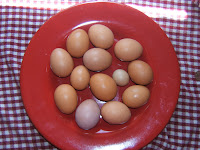
Starting out with any new project means there needs to be some money involved.
I consider it money well spent when I learn from the challenges and mistakes I’ve made.
When I added up the expenses and divided by the number of eggs we got in the one year the coop was in use I think the eggs came out to about $6.00 a piece. A great deal don’t you think when you consider it also made a chicken farmer out of me and that was priceless!Continue this conversation and ask your chicken questions by checking out the Canadian Preppers Network forum thread at
http://internationalpreppersnetwork.net/viewtopic.php?f=50&t=251Modern Canadian Takeaways
The strongest advice in the original story still holds: keep the coop dry, ventilate above the birds, use hardware cloth against predators, make the run comfortable to clean and establish a dependable winter-water routine. Those details affect flock health and household workload more than decorative finishes.
Start With the Bylaw and the Chore Route
Confirm that urban chickens are allowed before buying birds or materials. Then sketch the daily route: feed storage to coop, coop to compost, house to waterer and gate to cleaning access. Place supplies where they stay dry and secure from rodents. If every chore requires several awkward trips through snow, the design will fail precisely when motivation is lowest.
Design for Canadian Winter
Cold-hardy hens can tolerate low temperatures better than damp air and direct drafts, but breeds, flock size, health and local conditions matter. Avoid sealing the coop to trap warmth. Manage moisture, keep bedding dry, prevent wind from striking roosting birds and monitor combs, feet and water access during severe cold. Any electrical heater or heated waterer must be installed for dusty agricultural conditions, protected from pecking and checked for fire risk.
Treat Feed as a Preparedness Dependency
The original flock used layer pellets from a local co-op because the larger pellets reduced waste compared with crumbs. That remains a useful operational lesson. Urban hens still depend on a consistent, nutritionally complete ration; kitchen scraps and garden surplus are supplements, not a complete replacement. Store feed dry, rotate it, protect it from rodents and know how quickly the flock consumes a bag before planning a longer reserve.
Measure More Than Egg Price
The famous six-dollar egg calculation captured the cost of learning, not the mature economics of a settled flock. Track capital costs separately from recurring feed and bedding. Also record eggs by season, manure moved to the garden, losses, repairs and hours of labour. Urban chickens support resilience only when the system remains legal, humane, affordable and manageable through winter.
The practical conclusion is simple: begin smaller than your enthusiasm suggests, build for maintenance, secure the run properly and learn the flock’s routine before attempting a more elaborate feed or breeding system. The first coop is an education. Make sure the second season benefits from it.


