
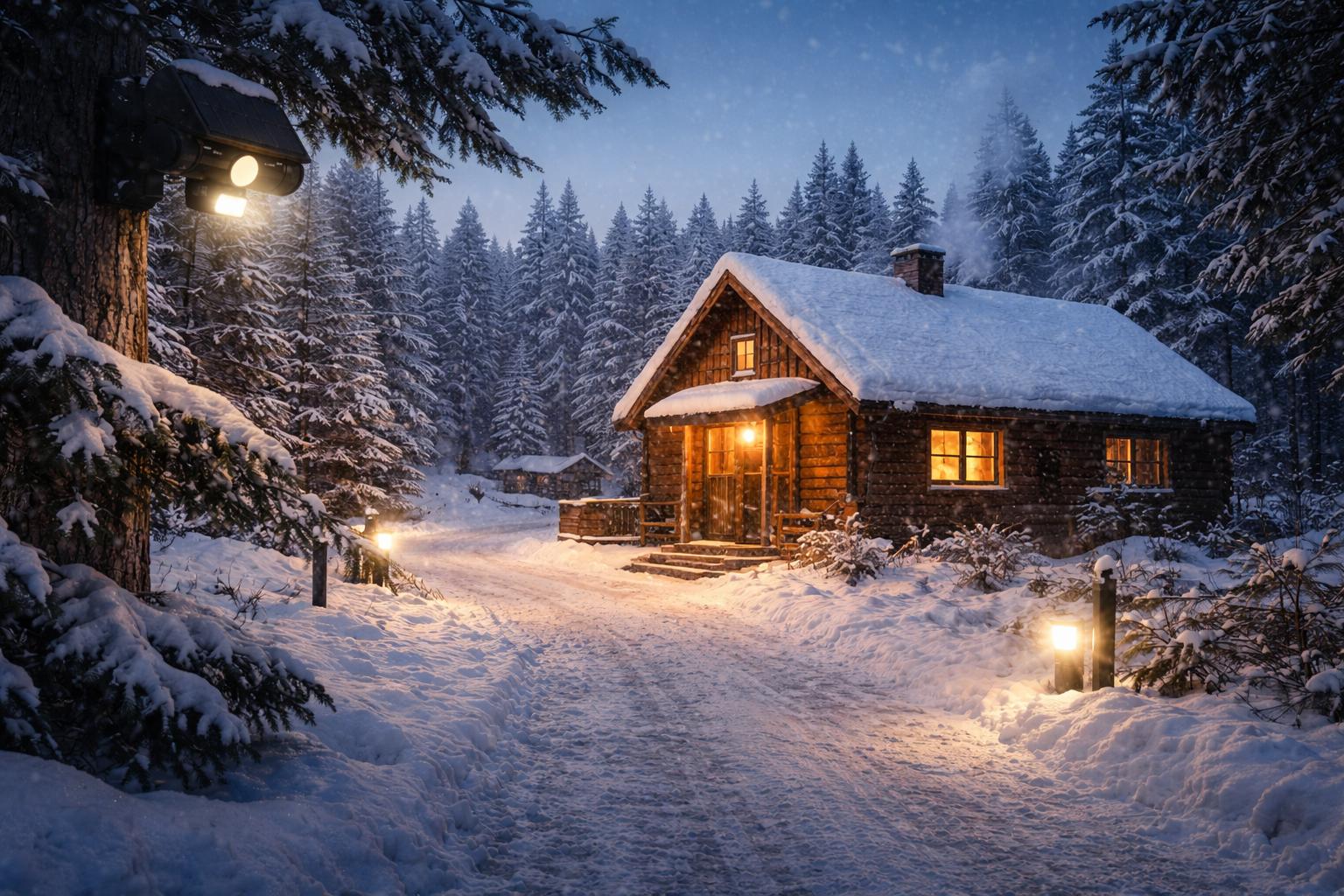
Winter security isn’t about being dramatic. It’s about not being caught off guard when the conditions that break systems—freezing rain, high winds, heavy snow, long nights—also increase the chances of opportunistic theft and delayed response times. In Canada, January is the month where many households discover their “security plan” was actually just a Wi-Fi camera and a porch light.
Over the last week, parts of the country (and neighbouring regions) have seen the kind of winter weather that regularly causes outages and travel disruption—freezing rain risks and power issues in southern Québec, for example, are a classic trigger for downed lines and delayed repairs. The Weather Network+1 Atlantic Canada was also tracking a messy mix of snow and rain around New Year’s, another pattern that commonly stresses infrastructure and keeps people off the roads. The Weather Network When fewer people are moving and conditions are rough, small security problems become bigger ones.
This is your winter security reset: a calm, practical review you can do in an afternoon, followed by a few low-profile improvements that actually work when the grid and weather don’t cooperate.
Step 1: Reinforce the boring stuff first (because it fails quietly)
Start with your doors, frames, and hardware—because in winter, expansion and contraction can turn “good enough” into “loose and rattly.” Check every exterior door for play in the frame, loose hinges, and strike plates with short screws. A door that flexes easily in mild weather often becomes worse when the wood dries and shrinks in deep cold.
If you do one upgrade this month, make it reinforcement that doesn’t advertise itself. A longer screw set and a reinforced strike area are a quiet improvement that raises the effort required to breach a door without changing how your home looks from the road. If you want a simple starting point, here’s an Amazon.ca search link for a door reinforcement/strike plate kit using your affiliate tag:
https://www.amazon.ca/s?k=door+reinforcement+strike+plate+kit&tag=canadpreppn01a-20
For broader hardening concepts (layering, weak points, and why winter exposes them), this CPN article fits perfectly as a companion internal read: “Shelter and Heat Fail Faster Than Anything Else: Winter Readiness for Canadian Homes”. Canadian Preppers Network
Step 2: Lighting that deters without turning your place into a lighthouse
Winter nights are long, and that tempts people to leave exterior lights on constantly. The problem is that constant lighting can make your property easier to navigate and can unintentionally signal occupancy patterns. A better winter approach is motion-based light where it matters, aimed at choke points: the driveway approach, the walk to the door, the gate, and the most likely line of travel to fuel storage.
In Canadian winter conditions, solar lighting can work well if you mount panels where they shed snow and still catch weak daylight. Look for lights that are weatherproof and simple—fewer “smart” features often means fewer failures. If you’re browsing options, this Amazon.ca search link targets cold-weather solar motion lights with your affiliate tag:
https://www.amazon.ca/s?k=solar+motion+light+outdoor+waterproof&tag=canadpreppn01a-20
If you want a higher-output option for a driveway or yard corner, search for “solar flood light” styles here:
https://www.amazon.ca/s?k=solar+flood+light+motion+sensor&tag=canadpreppn01a-20
Step 3: Cameras that still work when the internet doesn’t
A major winter security failure is assuming your camera system will help during a storm—then discovering it needs internet, grid power, or both. During outages, you want either local recording or a battery-backed system that keeps running and storing footage even when the connection drops.
CPN already has a strong internal reference here: “Off-Grid Security Cameras: Protecting Your Property When the Power Goes Out”. Canadian Preppers Network It’s worth re-reading with a winter lens: are your batteries tested, are your mounts snow-safe, and is your field of view blocked once drifts build?
For readers who want an easy entry point, battery outdoor cameras are common and can work well if you treat them like winter gear (test schedules, spare lithium batteries, and realistic expectations). Here’s an Amazon.ca search link for battery outdoor security cameras using your affiliate tag:
https://www.amazon.ca/s?k=outdoor+security+camera+battery&tag=canadpreppn01a-20
If you live rural or have a gate/driveway far from Wi-Fi coverage, cellular options may be worth comparing (remember: they rely on cellular networks, which can also be stressed in major events). Start browsing here:
https://www.amazon.ca/s?k=cellular+outdoor+security+camera&tag=canadpreppn01a-20
For more general security layering and mindset (especially for newer preppers), this internal CPN piece is a good supporting link: “Prepper Security Training: Essential Tips for Beginners”. Canadian Preppers Network
Step 4: Fuel and supplies—secure them, but also hide them
Winter outages turn fuel into a magnet. Propane cylinders, jerry cans, and even well-stacked firewood become obvious “value piles” when a neighbourhood goes dark and cold. Security here is less about heavy locks and more about visibility management.
Move fuel storage out of clean sight lines. Break up obvious stacks. Avoid leaving empty cans where people can infer you’ve got full ones somewhere. If you can, store fuel in a way that looks like normal rural life—not a depot. During winter, even a simple change like relocating cans behind a windbreak or into a neutral shed corner reduces attention.
If you need practical storage upgrades, browse lockable fuel containers and safety cans here (affiliate tag included):
https://www.amazon.ca/s?k=lockable+fuel+storage+container&tag=canadpreppn01a-20
This also ties neatly into CPN’s internal guidance on winter grid-down realities and why outages hit harder in Canada: “⚡ The Reality of Winter Power Failures in Canada”. Canadian Preppers Network
Step 5: Snow tells stories—manage tracks and routines
Snow is information. It shows where you walk, where you store things, and whether you’re home. In rural settings, a single set of tracks to an outbuilding can point directly at fuel or tools. In suburban settings, the absence of any activity after a storm can signal vacancy.
You don’t need to be extreme. Just be mindful. Vary your routes when practical. Don’t create one obvious “highway” between house and shed. If you’re clearing snow, consider what your cleared pathways communicate. Sometimes a modestly cleared path to the door is fine; a perfectly cleared line to a detached storage building may not be.
Step 6: Outage routines that reduce security mistakes
Most winter security problems during outages come from fatigue: people propping doors, leaving gear out, forgetting to lock outbuildings, or running predictable routines at predictable times. A winter reset should include a simple “storm mode” routine you can follow when power flickers or weather turns.
CPN’s internal master maintenance list is useful as a baseline for seasonal checks and habit-building. Canadian Preppers Network Pair that with your own short outage checklist: confirm lighting is set, confirm cameras are recording, confirm fuel is secured and not visible, confirm a neighbour check-in plan, and confirm you can move around safely without leaving your home wide open.
If you want to build the power side into that routine (because security and power are linked), CPN’s “Maintaining Alternative Power Systems in Winter” is a good internal support link. Canadian Preppers Network
A calm bottom line
A winter security reset isn’t a shopping list and it isn’t fear. It’s making sure your home stays a harder, quieter target when the weather is doing what Canadian weather does—cutting power, slowing travel, and keeping people indoors.
Start with the frame and hardware. Add motion lighting where it counts. Treat cameras as winter gear, not gadgets. Reduce the visibility of fuel and supplies. Then tighten your outage routine so you don’t create your own security gaps when you’re tired and cold. That’s the kind of preparedness that actually holds up in January.
If you’re tightening up your winter readiness this month, it helps to have one solid, practical reference you can keep on hand when the power is out and your phone battery is precious. Acres of Preparedness is a straightforward guide that focuses on building real-world self-reliance—food, water, shelter, skills, and the kind of quiet planning that actually holds up under Canadian conditions. If you want a single resource to work through over the winter, you can find it here: https://amzn.to/4iLrm9Y
