Home / Vehicle / Bug-In / Extended Emergency Use
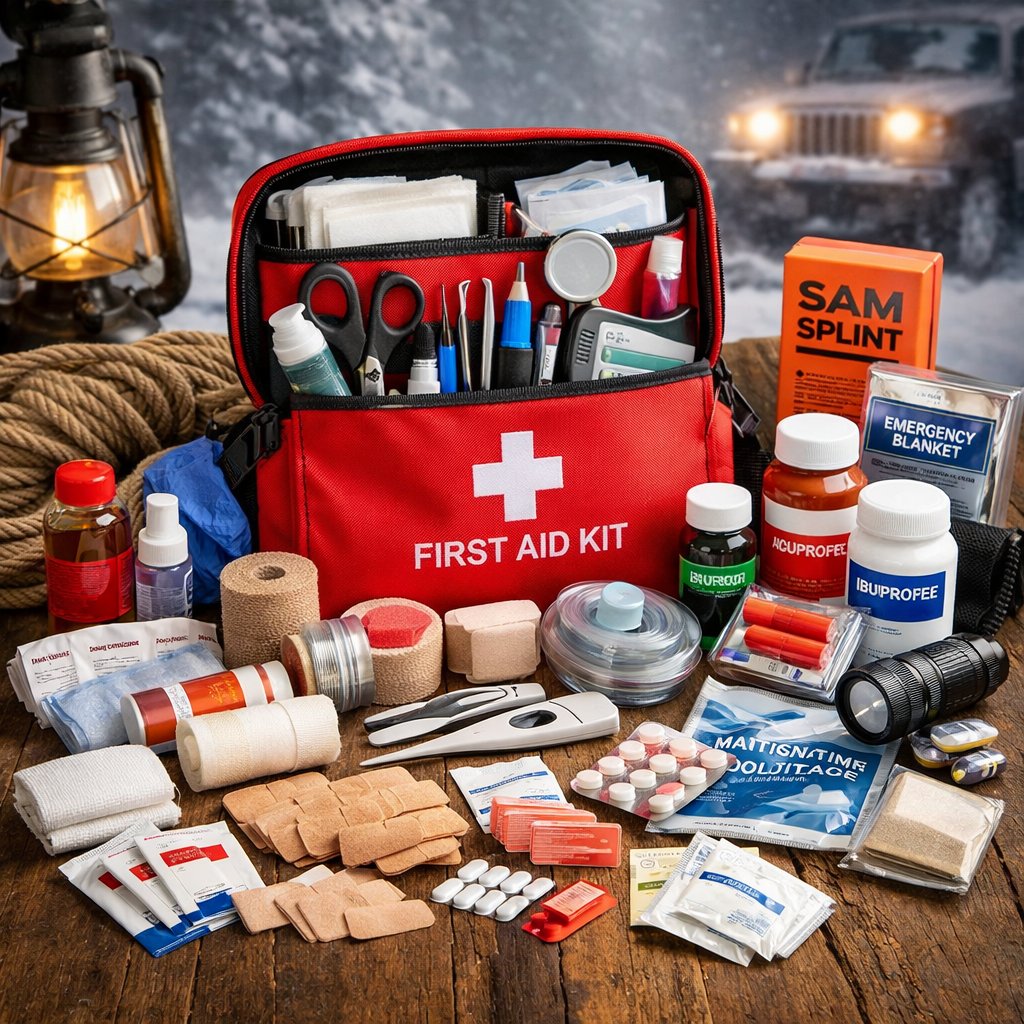
A basic first aid kit is designed to handle minor injuries until professional help arrives. In many real-world situations, however—severe winter storms, extended power outages, remote travel, or overwhelmed emergency services—help may be delayed for hours or even days. A more comprehensive first aid kit bridges that gap. It allows a household to treat common injuries, control bleeding, manage burns and sprains, and reduce infection risk using proven, non-invasive medical supplies. The checklist below expands on standard guidance from organizations such as the Canadian Red Cross, building a practical, civilian-appropriate kit intended for home use, vehicles, and extended emergencies where self-reliance matters.
This kit is designed to support multiple people for several days, not just minor scrapes. Think winter storms, power outages, remote travel, or delayed EMS response.
🩹 1. Wound Care & Dressings (Trauma + Minor Injuries)
Adhesive Bandages
- Standard strip bandages — 40
- Fingertip bandages — 10
- Knuckle bandages — 10
- Large fabric bandages — 10
Sterile Gauze Pads
- 5 × 5 cm (2″ × 2″) — 10
- 7.5 × 7.5 cm (3″ × 3″) — 10
- 10 × 10 cm (4″ × 4″) — 10
Large Dressings
- ABD trauma pads (12 × 22 cm / 5″ × 9″) — 6
- Non-adherent pads (Telfa-style) — 10
Wraps & Closures
- Roller gauze, 5 cm × 4 m — 4
- Roller gauze, 7.5 cm × 4 m — 4
- Elastic compression bandage, 7.5 cm × 4.5 m — 2
- Elastic compression bandage, 10 cm × 4.5 m — 1
- Butterfly wound closures — 10
- Adhesive wound-closure strips (Steri-Strip type) — 2 packs
🧴 2. Cleaning, Disinfection & Infection Control
- Antiseptic wipes — 20
- Povidone-iodine or chlorhexidine solution — 1 bottle (100–250 mL)
- Alcohol prep pads — 20
- Antibacterial ointment packets — 12
- Saline wound wash — 1–2 cans (100–200 mL each)
- Hand sanitizer — 1 bottle (60–100 mL)
🧤 3. PPE & Hygiene
- Nitrile gloves (non-latex) — 10 pairs
- CPR face shield or pocket mask — 1
- Eye protection (wraparound or shield) — 1
- Disposable masks — 10
- Biohazard / sealable waste bags — 6
🧰 4. Instruments & Tools
- Trauma shears (18–20 cm) — 1
- Fine-tip tweezers — 1
- Digital thermometer — 1
- Penlight or headlamp — 1
- Medical tape, 2.5 cm × 9 m — 2 rolls
- Safety pins (assorted) — 10
- Irrigation syringe (20–30 mL) — 1
🩸 5. Bleeding Control (Non-Tactical, Civilian-Appropriate)
- Hemostatic gauze — 2
- Pressure bandage — 2
- Triangular bandages — 4
- Cloth compression bandage (Israeli-style equivalent) — 1
(Optional but strongly recommended in rural or delayed-response areas)
🔥 6. Burns & Soft Tissue Injuries
- Burn gel packets — 6
- Burn dressings (10 × 10 cm) — 2
- Instant cold packs — 4
- Aloe or burn relief spray — 1
🦴 7. Sprains, Fractures & Immobilization
- SAM splint (36″) — 1
- Finger splints — 2
- Elastic cohesive wrap (self-adhering) — 2 rolls
- Sling (or large triangular bandage) — 1
👁️ 8. Eye, Ear & Minor Medical Care
- Sterile eye pads — 4
- Eye wash solution — 1 bottle
- Cotton swabs — 50
- Petroleum jelly (small tube) — 1
- Oral rehydration salts — 4 packets
💊 9. Medications (OTC – Rotate Regularly)
(Only include what your household safely uses)
- Acetaminophen — 1 bottle
- Ibuprofen — 1 bottle
- Antihistamines — 1 box
- Anti-diarrheal tablets — 1 box
- Motion sickness tablets — 1 pack
- Cough lozenges — 1 bag
- Electrolyte powder — 6 packets
🧒 10. Pediatric & Family Add-Ons (If Applicable)
- Children’s adhesive bandages — 20
- Children’s pain reliever — 1 bottle
- Pediatric thermometer covers — 1 pack
🧠 11. Documentation & Support Items
- First aid manual (paper) — 1
- Emergency contact list (laminated) — 1
- Notepad + waterproof pen — 1
- Emergency thermal blankets — 2
📦 Storage & Maintenance Notes
- Use a hard, water-resistant case with internal dividers
- Store duplicates in: home, vehicle, workshop, and bug-out gear
- Inspect every 6 months:
- Expired meds
- Used dressings
- Cold packs & antiseptics
Final Thought
The Canadian Red Cross focuses on immediate stabilization until help arrives. A comprehensive prepper-grade kit assumes help may be delayed, weather may be extreme, and multiple people may need care.
Supplies matter — training matters more. A kit like this paired with basic first aid and CPR knowledge puts you well ahead of the curve.