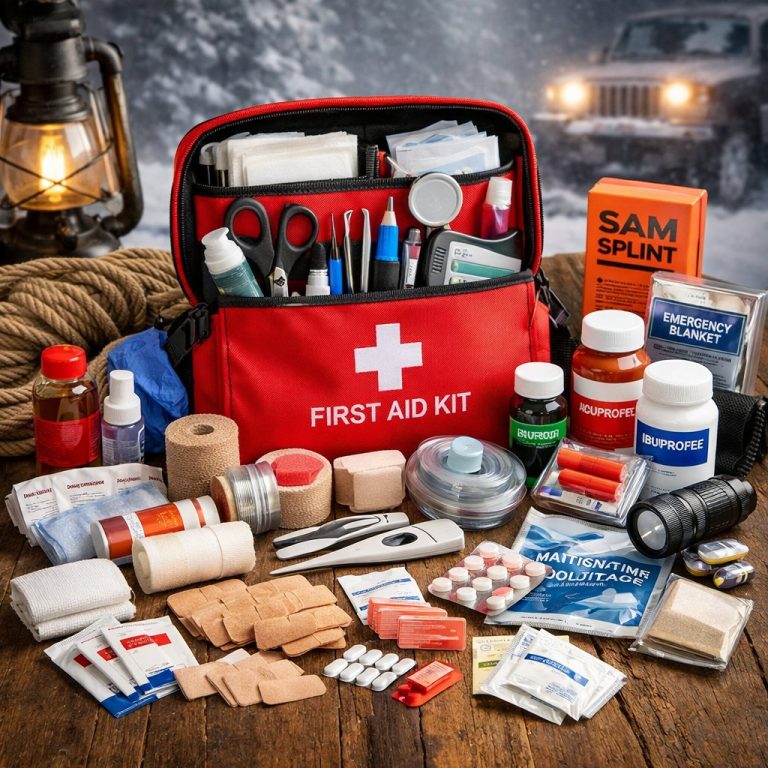
Most preparedness conversations around medical readiness revolve around gear. Bigger kits, more supplies, better storage. But when something actually goes wrong—when someone is bleeding, feverish, or deteriorating—gear is only as useful as the hands using it.
Across Canada, especially in rural areas or during severe weather events, help is not always immediate. Response times stretch. Roads close. Communication fails. In those conditions, the difference between a manageable situation and a life-threatening one often comes down to skill, not equipment.
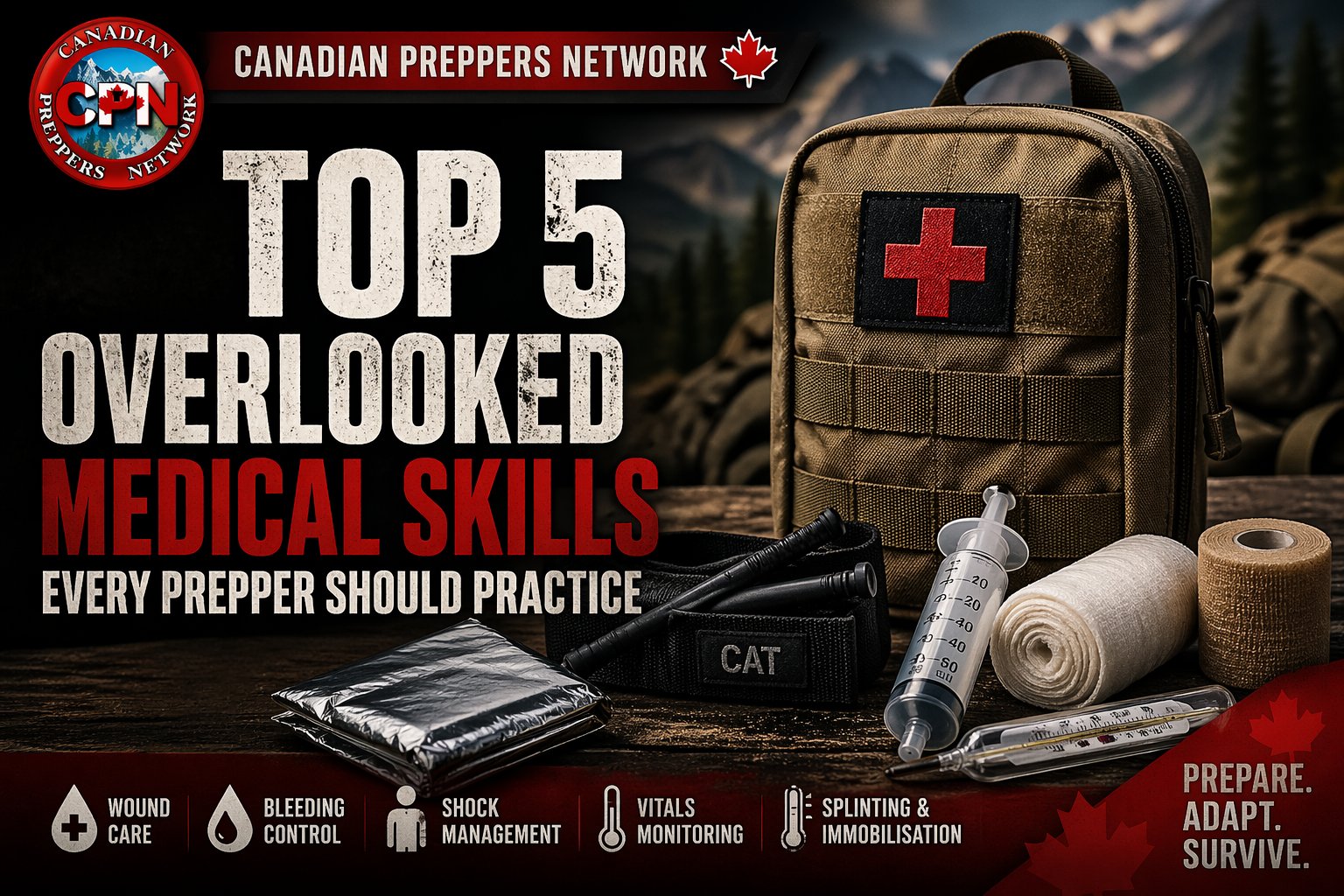
These are five medical skills that are consistently overlooked—and far more valuable than most people realise.
1. Proper Wound Cleaning and Irrigation
Most people underestimate how quickly a simple cut can turn into a serious problem. Infection is slow, quiet, and far more dangerous over time than the injury itself.
Cleaning a wound properly is not about pouring a bit of water over it and applying a bandage. It requires pressure, volume, and attention to detail. Dirt, debris, and bacteria need to be physically removed, not just rinsed.
A simple tool like a 60cc irrigation syringe gives you the ability to flush a wound with controlled pressure—something you cannot replicate with a water bottle:
https://www.amazon.ca/s?k=60cc+irrigation+syringe&tag=canadianprep-20
Pair that with sterile saline or properly treated water, and you dramatically reduce infection risk.
For a deeper look at water safety in medical use, refer to your existing guide:
https://canadianpreppersnetwork.com/water-storage-and-filtration-for-canadian-households/
2. Bleeding Control Beyond Basic Pressure
“Apply pressure” is where most people stop—and it’s often not enough.
Serious bleeding requires escalation: sustained pressure, proper wound packing, and when necessary, tourniquet use. These are not complicated techniques, but they must be understood before you need them.
A proven CAT-style tourniquet designed for one-handed application and reliable arterial compression:
https://www.amazon.ca/s?k=CAT+tourniquet&tag=canadianprep-20
Equally important is learning how to pack a wound effectively using compressed gauze. This is not intuitive, and it’s not something you want to figure out under stress.
3. Recognising and Managing Shock
Shock is rarely dramatic at first. It doesn’t look like it does in movies. It’s subtle—pale skin, rapid pulse, confusion, restlessness—and by the time it’s obvious, the situation is already critical.
In Canadian conditions, shock is often made worse by cold exposure. Even mild temperatures can accelerate heat loss in an injured person.
Managing shock means laying the person flat, keeping them warm, controlling bleeding, and monitoring continuously. A compact emergency thermal blanket can make a meaningful difference:
https://www.amazon.ca/s?k=emergency+thermal+blanket&tag=canadianprep-20
This is where medical knowledge and environmental awareness overlap—and where many people fall short.
4. Monitoring Vital Signs Without Guesswork
You cannot manage what you don’t track.
Most preppers rely on how someone “looks” or “feels,” but objective measurements tell a clearer story. A rising temperature, an irregular pulse, or dropping oxygen levels can signal deterioration before it becomes obvious.
A manual, mercury-free glass thermometer gives you a reliable, battery-free way to monitor body temperature over time:
https://www.amazon.ca/s?k=glass+medical+thermometer&tag=canadianprep-20
It requires a bit more patience to read, but it won’t fail when electronics do.
These are simple tools—but they shift you from guessing to observing.
5. Splinting and Immobilisation
Injuries that affect mobility—sprains, fractures, dislocations—are not just painful. In a grid-down or remote scenario, they can become life-threatening by limiting movement, increasing exposure, and complicating evacuation.
Proper immobilisation stabilises the injury, reduces pain, and prevents further damage.
A flexible SAM-style splint can be shaped to support arms, legs, or joints:
https://www.amazon.ca/s?k=SAM+splint&tag=canadianprep-20
More importantly, you should practise using improvised materials—wood, clothing, cordage—because your ideal gear may not be available when you need it.
Take This Further With Gold Membership
Understanding these skills is one thing—having the right reference material when it matters is another.
Canadian Preppers Network Gold Members get access to the CD3WD archive, including extensive manuals on emergency medicine, wound treatment, infection control, trauma care, and operating in low-resource environments.
That includes trusted resources like Where There Is No Doctor—a field-proven guide used worldwide for managing illness and injury when professional care isn’t immediately available.
This is the kind of material that goes beyond basic first aid—covering how to manage problems over time, not just in the moment.
If you’re serious about moving from basic preparedness to real medical capability, this is where you build depth.
Final Thoughts
Medical preparedness is not about having the largest kit—it’s about having the confidence and competence to use what you have.
The first 24 hours of any injury or illness set the trajectory. Get it right early, and most situations remain manageable. Get it wrong, and even minor problems can spiral.
If you’re investing time or money into preparedness, these are skills worth practising deliberately. They don’t require advanced training—but they do require intention.
Because when help is delayed, you are the first response.