A cut is rarely what kills you.
It’s what happens three days later.
In a functioning system, infection is an inconvenience. You clean the wound, maybe get a prescription, and move on. But remove timely care, antibiotics, and sterile environments—and even a minor injury becomes a serious threat.
Historically, more people died from infected wounds than from the injuries themselves. In a grid-down or delayed-response scenario, that reality returns quickly.
This is where preparedness stops being theoretical.
Why Infection Becomes the Real Threat
When skin is broken, bacteria enters. That’s unavoidable. What matters is what happens next.
Under normal conditions, modern medicine interrupts that process early. Without it, bacteria multiply, tissue breaks down, and the body begins to lose the fight—slowly at first, then all at once.
This is why even a small cut on your hand, a blister on your heel, or a scrape from working outside can become life-threatening if ignored.
If you’ve ever had a wound “get a little red and sore,” you’ve already seen the early stages.
The First Priority: Clean It Properly
Most people underestimate this step—or rush it.
Cleaning a wound is not a quick rinse. It’s the single most important action you can take to prevent infection.
You want to physically remove debris and bacteria, not just make it look clean.
A reliable saline solution is ideal for flushing wounds. A simple option like sterile saline can be found here:
https://www.amazon.ca/s?k=sterile+saline+solution&tag=canadianprep-20
If saline isn’t available, clean water is still better than doing nothing—but it must be as safe as possible. This is where your broader water plan matters. If your stored water is questionable, run it through a filter first, such as a LifeStraw:
https://www.amazon.ca/s?k=lifestraw+personal+water+filter&tag=canadianprep-20
Flush thoroughly. Then flush again.
Dirt left inside the wound is what feeds infection later.
Disinfecting Without Causing Damage
This is where people often make things worse.
Harsh antiseptics like hydrogen peroxide or iodine have their place—but overuse can damage healthy tissue and slow healing.
Use them sparingly, and only when needed.
A more controlled approach is applying a thin layer of antibiotic ointment. Polysporin is widely available in Canada:
https://www.amazon.ca/s?k=polysporin+antibiotic+ointment&tag=canadianprep-20
The goal isn’t to sterilize the wound completely. It’s to reduce the bacterial load enough for the body to take over.
Covering the Wound: Protection, Not Suffocation
Once cleaned, the wound needs to be protected—but not sealed off improperly.
You’re trying to strike a balance: keep contaminants out while allowing some airflow and drainage.
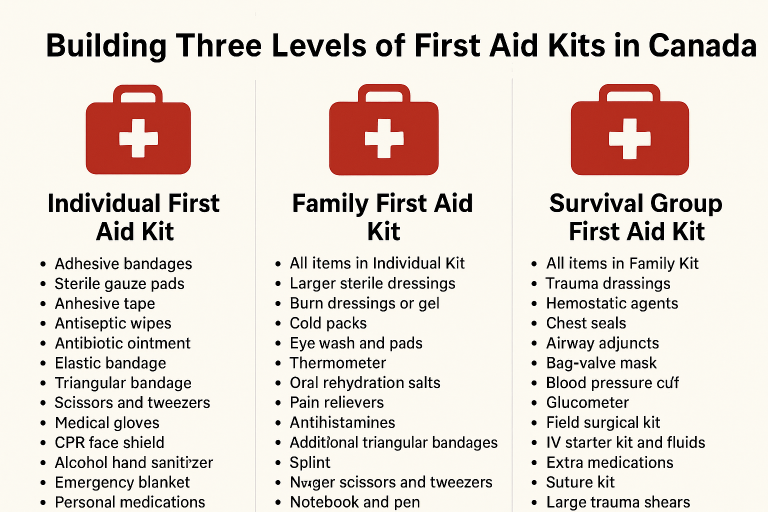
Basic sterile dressings are fine for minor wounds, but for anything deeper or more serious, you want proper coverage. A well-stocked kit is a good starting point:
https://www.amazon.ca/s?k=emergency+first+aid+kit&tag=canadianprep-20
Change dressings regularly. If it’s wet, dirty, or has been on too long—it needs to go.
This is not a “set it and forget it” process.
Recognizing Infection Early
Infection rarely appears all at once. It builds.
Early signs include:
- Redness spreading outward from the wound
- Increased warmth around the area
- Swelling and tenderness
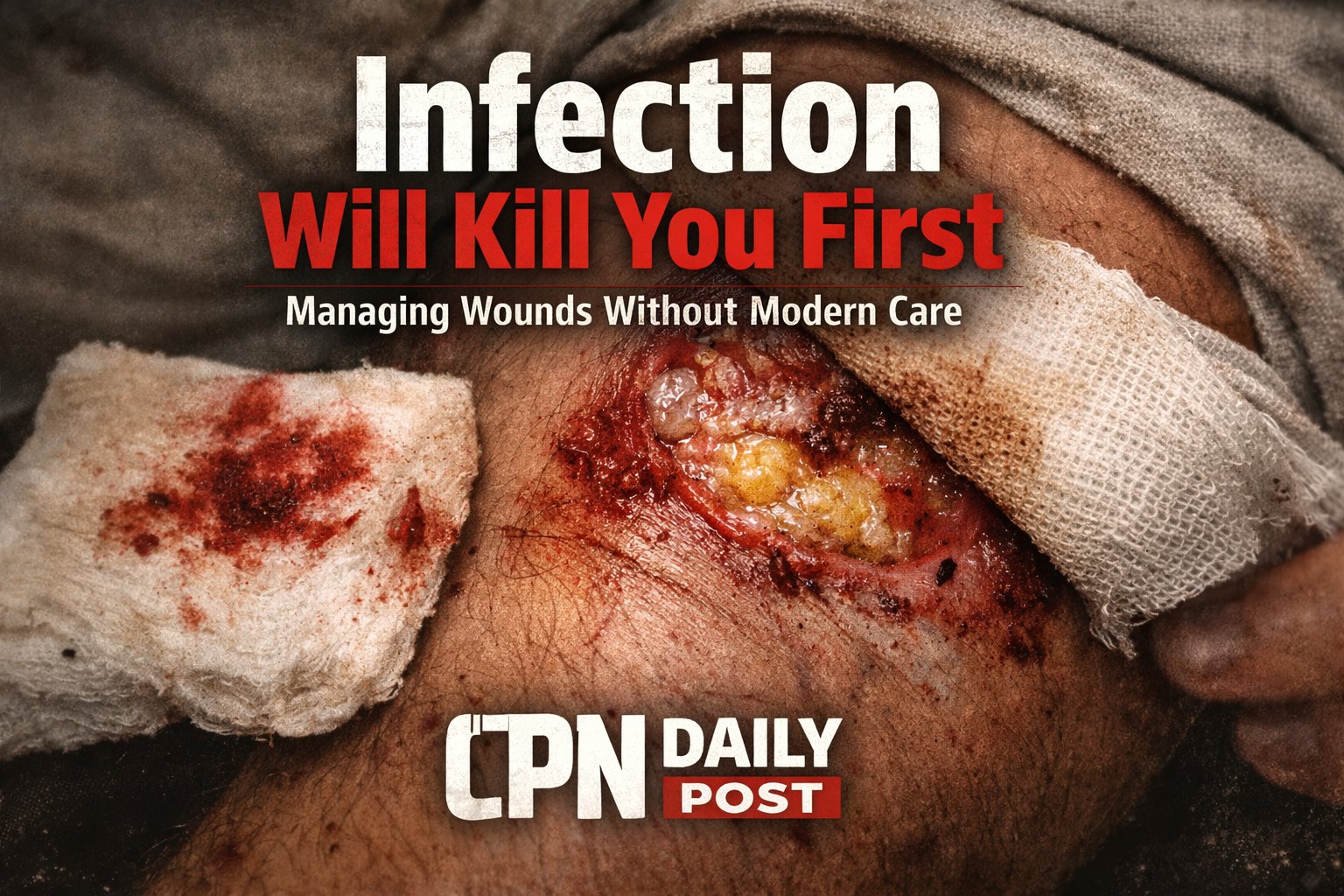
- Pus or unusual discharge
Later signs get more serious:
- Red streaks moving away from the wound
- Fever or chills
- Increasing pain rather than decreasing
If you wait until it’s obvious, you’re already behind.
This is where awareness matters more than gear.
When Things Go Wrong
Without access to antibiotics, your options narrow quickly.
At that point, your focus shifts to:
- Keeping the wound clean and draining
- Preventing further contamination
- Supporting the body (hydration, nutrition, rest)
And most importantly—recognizing when a situation is beyond your ability to manage.
This is the uncomfortable truth: not every infection can be handled at home.
Prevention Is the Real Strategy
The best wound is the one you never get.
Gloves, proper footwear, controlled tool use—these don’t feel like “medical preparedness,” but they are.
So is hygiene.
Regular handwashing, clean clothing, and keeping your living space under control all reduce the number of times you’ll have to deal with wound care in the first place.
If your water system is compromised, that becomes much harder—which is why your medical plan should always tie back to your water plan.
If you haven’t already built that out, this guide will help:
https://canadianpreppersnetwork.com/how-to-store-water-long-term/
Final Thought
In a prolonged disruption, people don’t collapse all at once.
They decline.
A small cut. A missed cleaning. A delayed response.
That’s how it starts.
Preparedness isn’t just about having supplies—it’s about understanding which problems become fatal when the system isn’t there to catch you.
Infection is one of them.
And it doesn’t wait.
📘 Acres of Preparedness: Planning the Last Safe Place
If you’re serious about building a system that actually works when infrastructure fails, Acres of Preparedness lays it out in practical, grounded detail.