There’s a dangerous assumption built into most first aid advice:
That help is on the way.
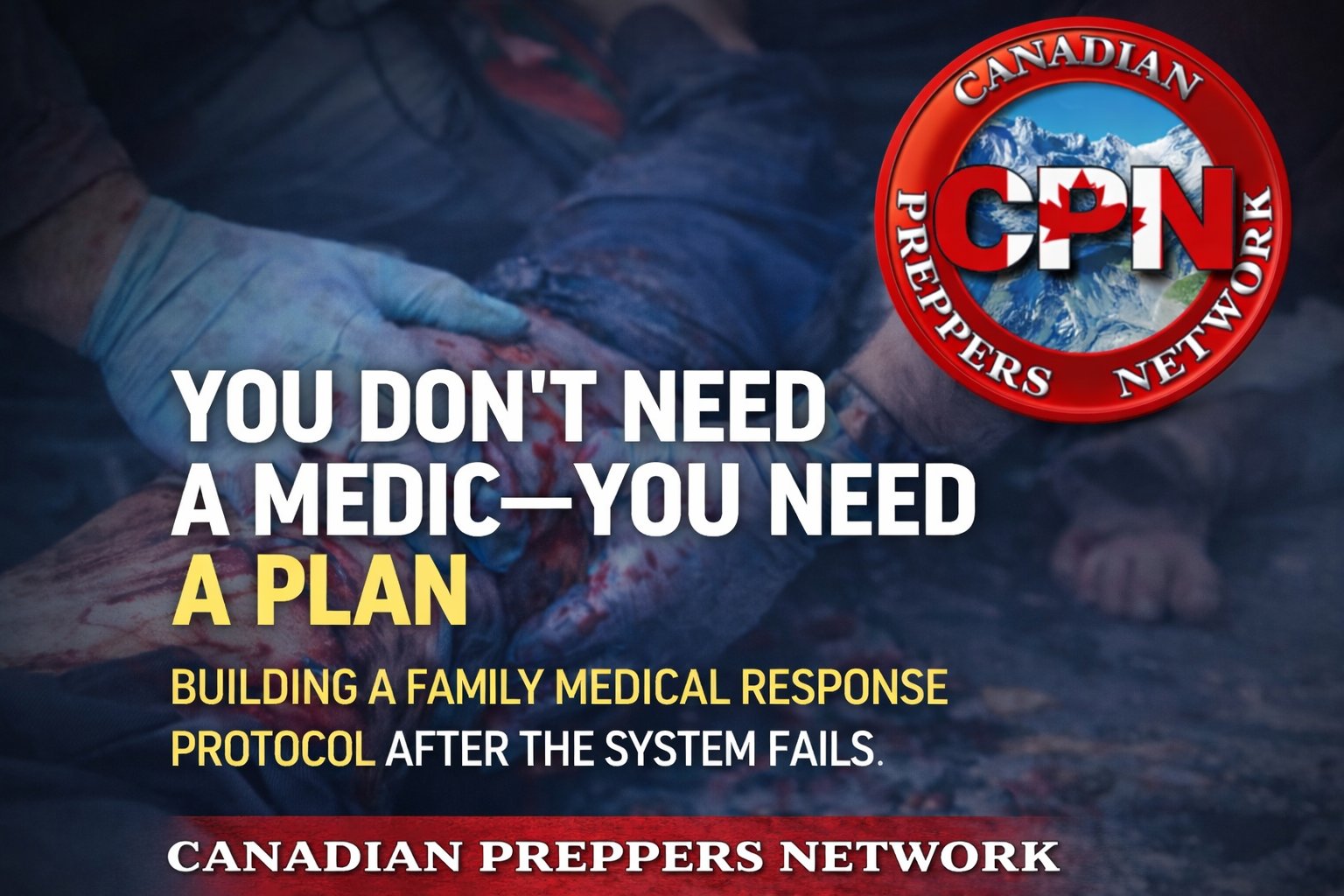
In a true collapse scenario—whether from grid failure, widespread unrest, or infrastructure breakdown—that assumption disappears. No ambulances. No ER. No resupply.
What happens in the first hour… may be all that ever happens.
After that, you’re on your own.
This is where most preparedness plans quietly fall apart.
Because having supplies is not the same as having a system.
When There Is No Backup
In a functioning society, first aid is about stabilization.
In a collapse, it becomes definitive care.
You are no longer buying time for professionals—you are responsible for the outcome.
That changes how you think about everything:
- Speed matters more
- Mistakes carry weight
- Decisions are final
There is no second opinion coming.
Step One: Assign Permanent Roles
In a collapse environment, roles are not temporary—they are fixed.
Every household or group needs:
- A primary medical lead
- A secondary support role
- A logistics role (if group size allows)
Clarity is what prevents panic.
Step Two: Build a No-Help Response Sequence
Without outside support, your priorities tighten.
1. Control catastrophic bleeding immediately
2. Secure airway and breathing
3. Prevent shock
4. Stabilize injuries
5. Begin ongoing care
There is no handoff.
Step Three: Upgrade Your Kit—This Is No Longer First Aid
A standard first aid kit is built for minor problems.
Post-collapse, your kit must handle major ones.
At minimum, you should have:
- Multiple tourniquets
- Pressure bandages
- Hemostatic agents
- Irrigation supplies
- Splinting materials
- Broad-spectrum antiseptics
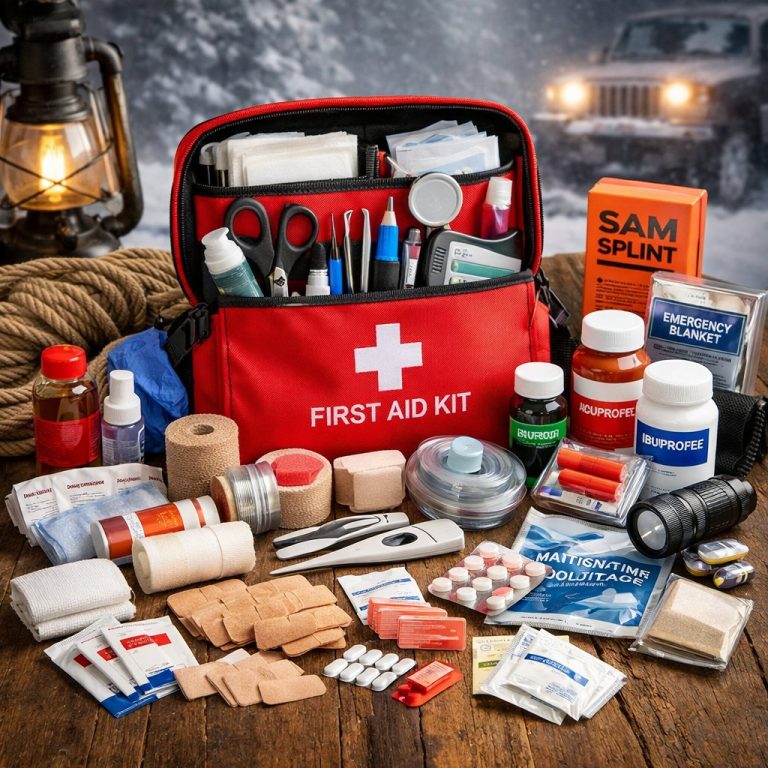
A solid baseline is the EVERLIT Emergency Trauma Kit (https://www.amazon.ca/s?k=EVERLIT+Emergency+Trauma+Kit&tag=canadianprep-20), but in a collapse scenario, you should be thinking in terms of redundancy and depth, not just having “a kit.”
For bleeding control specifically, adding dedicated tourniquets like the Recon Medical Tourniquet (https://www.amazon.ca/s?k=Recon+Medical+Tourniquet&tag=canadianprep-20) ensures you’re not relying on a single point of failure.
Step Four: Plan for Infection—The Real Killer Comes Later
In modern systems, infection is manageable.
In a collapse, it becomes one of the primary causes of death.
Your protocol must include:
- Aggressive wound cleaning
- Regular dressing changes
- Isolation of contaminated materials
This is where supplies like Medpride Sterile Gauze Pads (https://www.amazon.ca/s?k=Medpride+Sterile+Gauze+Pads&tag=canadianprep-20) and Betadine Antiseptic Solution (https://www.amazon.ca/s?k=Betadine+Antiseptic+Solution&tag=canadianprep-20) stop being “nice to have” and become essential.
Step Five: Think in Days, Not Minutes
Without EMS, your timeline stretches.
You are managing:
- The first hour
- The first night
- The first 72 hours
That means maintaining warmth, hydration, and monitoring.
Even something as simple as Swiss Safe Emergency Mylar Thermal Blankets (https://www.amazon.ca/s?k=Swiss+Safe+Emergency+Mylar+Thermal+Blankets&tag=canadianprep-20) becomes critical when shock and exposure are no longer short-term concerns.
For splinting and stabilization, compact options like the SAM Splint (https://www.amazon.ca/s?k=SAM+Splint&tag=canadianprep-20) give you the ability to manage fractures without improvised guesswork.
Step Six: Expand Beyond the Individual
No one sustains medical care alone for long.
If you are part of a group or neighbourhood network, you need:
- Identified individuals with medical training
- Shared supply caches
- A central care location
This is where preparedness becomes structure.
Step Seven: Accept the Weight of It
Not every situation will have a good outcome.
Without advanced care, some injuries will exceed your ability to treat.
But a protocol still matters—because it gives you control over what can be controlled.
Final Thought
Most people prepare to survive the event.
Very few prepare to survive the aftermath of injury without help.
A household with a clear, practiced medical plan—and the tools to support it—has something rare:
The ability to act when action is the only option left.